The safe way to clean alloy wheels is on a cool surface: pre-rinse, spray on a pH-balanced wheel cleaner, let it dwell for 10 minutes, agitate with a soft brush, then rinse thoroughly and dry. That’s the full recipe for how to clean alloy wheels without damaging them — and every word of it matters, because wheels are where I see the most paint damage done by well-meaning owners. Let me show you my process, and the one product mistake that genuinely ruins alloys.
In this guideWhy wheels need their own cleanerWhich type of wheel cleaner?Step by stepHousehold products and WD40Corroded or damaged alloysCommon mistakesProtecting wheels after cleaningFAQ
Why do alloy wheels need a dedicated cleaner?
Because the dirt on wheels isn’t normal dirt — it’s hot brake dust that embeds itself into the lacquer. Every time you brake, tiny particles of iron fly off the discs and pads, land on the wheel and bond to it. Add road salt, tar and oils, and you have contamination that car shampoo simply cannot touch.
Left alone, those iron particles don’t just sit there. They corrode, spread and eventually cause permanent pitting in the wheel’s finish. That’s why regular wheel cleaning isn’t cosmetic fuss — it protects the surface from damage that no amount of later polishing will undo.
Which type of wheel cleaner should you use?
For most wheels, most of the time: a pH-balanced iron-removing cleaner. Wheel cleaners come in four families, and knowing which is which keeps you out of trouble:
| Type | Best for | Caution |
|---|---|---|
| Neutral pH | Regular washes, ceramic-coated wheels | Won’t dissolve heavy build-up |
| Alkaline | Greasy road film, general grime | Follow the dilution, don’t let it dry on |
| pH-balanced iron remover (deironizer) | Brake dust, flash rust — the everyday choice | Smells of sulphur unless fragranced |
| Acid | Professional use on baked-on deposits | Never on damaged or flaking lacquer |
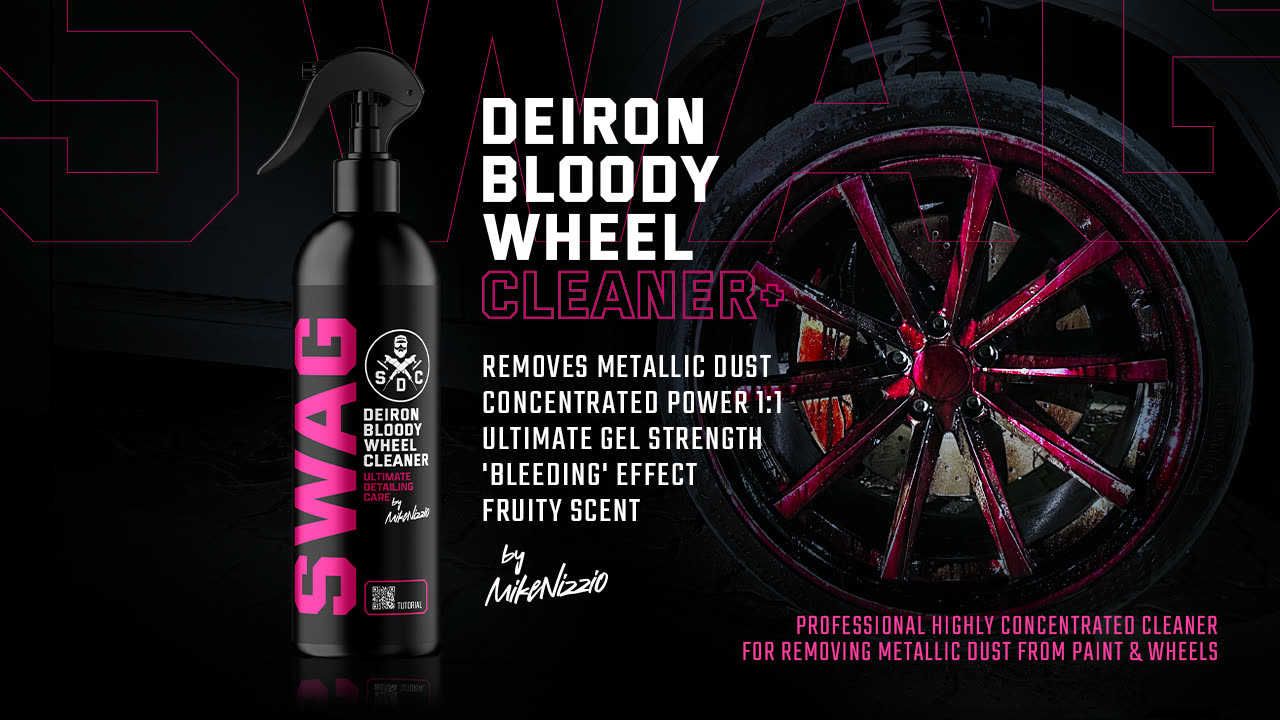
My daily driver in the studio is SWAG Deiron Bloody Wheel Cleaner RTU — a pH-balanced deironizer that’s safe on aluminium, steel, painted and polished wheels. It reacts with iron particles and “bleeds” purple, so you can literally watch it dissolving brake dust; and because I got tired of the rotten-egg smell typical of deironizers, I gave it a fruity scent instead. For heavily soiled wheels on a budget-per-wash basis, the Alkaline Wheel Cleaner concentrate is the workhorse alternative.
How to clean alloy wheels step by step
Cool wheels, pre-rinse, spray, 10 minutes of dwell, brush, rinse, dry — in that order, every time. Here is my exact routine:
- Work on cool wheels, in the shade. Never clean a hot wheel — product flashes off in seconds, leaves streaks and can stain the finish.
- Pre-rinse with water. Flushing away loose grit before you touch anything cuts the risk of scratching the lacquer later.
- Spray the cleaner evenly across the whole face, barrel edges and around the bolts.
- Wait 10 minutes. With the Deiron you’ll see the bleeding effect — the purple runs are iron dissolving. Cutting the dwell short is the single most common reason people think a wheel cleaner “doesn’t work”.
- Agitate with a soft brush. A soft detailing brush gets into spokes and crevices; stiff brushes and old sponges scratch.
- Rinse thoroughly — ideally with a pressure washer. Any residue left behind can cause discolouration.
- Dry the wheel with a microfibre or a blower so you don’t finish a clean wheel with water spots.
Watch me take a set of properly dirty wheels through this whole process:
Can you clean alloy wheels with household products or WD40?
You can — and I’d ask you not to. Washing-up liquid strips any protection and leaves salts behind. Oven cleaner is strongly caustic and etches lacquer. WD40 will shift tar, but it leaves an oily film that attracts dust, contaminates your tyres and doesn’t touch the iron contamination that actually matters.
None of these were formulated to be safe on a lacquered alloy, and the damage they cause tends to show up weeks later as staining or dullness — long after you’ve forgotten what caused it. A dedicated wheel cleaner is designed for exactly one job and rinses away clean. This is one corner where the “household hack” genuinely costs more than the proper product.
How do you clean corroded alloy wheels — and where acid goes wrong
Here is the warning I repeat more than any other: never use an acid wheel cleaner on wheels with damaged, chipped or flaking lacquer. Acid finds every break in the coating, creeps underneath and feeds the corrosion — the white, blistered worm-trails you see on neglected alloys are exactly this process. On a corroded wheel, acid doesn’t clean the damage; it accelerates it.
Products like our Acid Wheel Cleaner concentrate exist for professionals dealing with baked-on deposits on wheels with intact lacquer — diluted properly, used quickly, rinsed completely. If your alloys are already corroding under the lacquer, no chemical will fix them: that’s a job for refurbishment. Until then, stick to pH-balanced chemistry, which cleans without exploiting the damage.
The four mistakes I see most often
Almost every damaged wheel that rolls into my studio got that way through one of four habits. They’re all free to fix:
- Cleaning hot wheels — the product dries in seconds and leaves streaks or stains.
- Cutting the dwell time short — the actives never get to fully dissolve the contamination, so you scrub harder instead.
- Not rinsing properly — residue left in crevices can discolour the finish.
- Skipping protection afterwards — bare wheels re-contaminate much faster, so every wash gets harder than the last.
How to protect alloy wheels after cleaning
A protected wheel stays cleaner for longer and takes half the effort next time. After the wheels are clean and dry, I seal them with SWAG Ceramic Reloader — a spray ceramic that works on wheels, paint and glass, leaves a hydrophobic layer and makes brake dust noticeably easier to rinse off.
On my own car I refresh the protection every few washes. It turns wheel cleaning from a scrubbing session into a rinse-and-wipe job — which, honestly, is the whole point of doing the first deep clean properly. The full line-up lives in our wheel cleaning range.
Frequently asked questions
What’s the best alloy wheel cleaner?
For most drivers, a pH-balanced iron-removing cleaner — it dissolves brake dust chemically, shows you it’s working through the colour-change effect, and is safe on aluminium, steel, painted and polished finishes. Alkaline cleaners suit heavy grime; acids belong with professionals on intact lacquer only.
Can you use iron remover on wheels?
Yes — wheels are exactly what iron removers are for. Brake dust is iron, and a deironizer dissolves it instead of you grinding it around with a brush. A pH-balanced formula is safe for lacquered alloys when used as directed and rinsed well.
How do you clean black alloy wheels?
Same process as any lacquered alloy: cool surface, pre-rinse, pH-balanced cleaner, 10-minute dwell, soft brush, thorough rinse. Black wheels simply show water spots and streaks more, so drying with a microfibre afterwards matters even more than usual.
How do you remove tar from car rims?
Use a dedicated tar and glue remover on the spots after the wheel is clean and dry, let it dissolve the tar, then wipe gently — don’t pick or scrub. Follow with a normal rinse. Tar removers are solvent-based, so keep them off tyres and rubber valve stems.
How often should alloy wheels be cleaned?
With every wash, ideally — brake dust bonds harder the longer it sits. If the wheels are sealed with a ceramic protection, a rinse and a mild cleaner will handle most washes, with a deironizing deep clean every month or two.
Everything I used in this guide lives in our wheels range — the cleaners, the protection, and nothing your lacquer will hold against you.