Tyre dressing is the fastest way to make a whole car look finished — clean the rubber properly, work a gel dressing into it, give it 15 minutes to penetrate, and the tyres go deep satin black for weeks. A gleaming car sitting on grey, browned tyres looks half-done; it’s the detail people notice without knowing why. After thirteen years of prepping cars in my studio, here is everything I know about tyre dressing: why tyres fade, gel versus liquid, and the exact application routine I use.
In this guideWhat tyre dressing doesWhy tyres turn brownGel vs liquidStep-by-step applicationHow long it lastsRubber and plastic togetherFAQ
What does tyre dressing actually do?
A tyre dressing restores the dark, saturated look of the rubber and puts a protective layer between the tyre and everything attacking it. Tyres take more punishment than any other part of the car: UV radiation, rain, road grime and winter salt all work on the rubber, gradually turning it matt, grey and — over time — prone to cracking.
A proper dressing does two jobs at once. Cosmetically, dressed tyres look newer and better cared for, and they tie the whole car together visually — anyone who cares about details will tell you the same. Protectively, the layer shields the rubber from UV, salt and dirt, which helps keep it in good condition for longer.
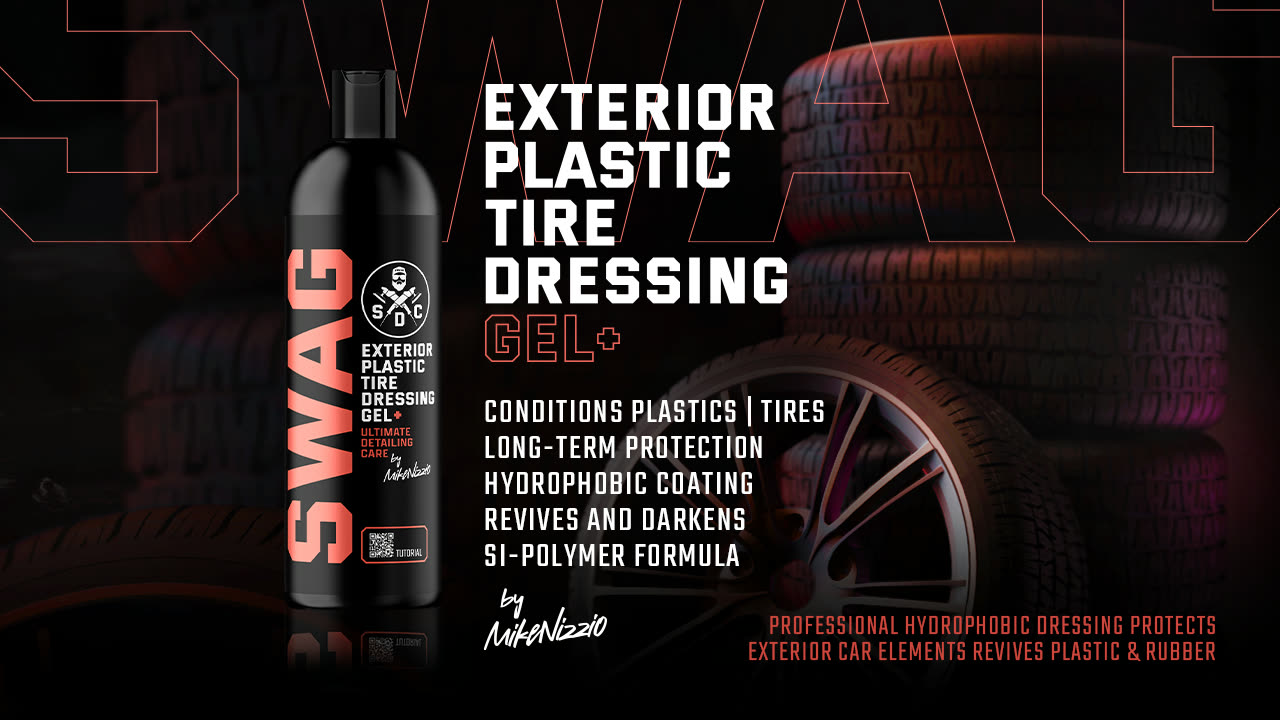
The one I formulated for this, EXTERIOR PLASTIC TIRE DRESSING Gel+ V.3, uses a Si-Polymer formula that penetrates the structure of the rubber and leaves a durable, transparent protective layer with a hydrophobic finish — water and grime struggle to stick to it.
Why do tyres turn brown?
The brown haze — detailers call it blooming — is a mix of compounds migrating out of the rubber and old product breaking down on the surface. Tyre manufacturers build waxes and protective agents into the rubber compound; as the tyre flexes and heats, these slowly work their way to the surface, where they oxidise and turn brown.
Layering fresh dressing over that browning makes it worse, not better. The new product sits on a dirty, oxidised film, discolours with it, and slides off in the first rain — which is why people conclude tyre dressings “don’t work”. The dressing never had clean rubber to bond to.
The fix is proper preparation: the browning has to come off before anything goes on. That’s a cleaning step, not a dressing step, and it’s where most tyre jobs are won or lost.
Gel or liquid tyre dressing — which is better?
For control and durability, I use a gel. Spray-on liquids are quicker to sling around, but that’s exactly the problem — they go where the spray pattern takes them, including your freshly cleaned wheels and paint, and thin liquids tend to fling off the tyre onto the arches and sills on the first drive.
| Gel dressing | Liquid / spray dressing | |
|---|---|---|
| Application | Precise, by applicator — product goes only where you put it | Fast, but overspray hits wheels and paint |
| Consistency | Thick — stays on the tyre, works into the rubber | Thin — prone to running and sling |
| Finish | Even satin, no greasy film | Often high-gloss and wet-greasy at first |
| Economy | Small amount does a full set of tyres | Much of the product never lands on the tyre |
Finish is personal taste, but I’ll argue for satin every time: a tyre should look like a new tyre, not a wet liquorice ring. The gel consistency is also what makes the application precise and economical — a small amount genuinely covers the whole set.
How do you apply tyre dressing step by step?
Clean, dry, apply thin, let it penetrate for about 15 minutes, buff the excess. This is my full routine:
1. Wash the tyres and dry them thoroughly. I use a dedicated cleaner like BASIC Tire & Wheel Regular Cleaner to strip the browning and the remains of any previous dressings. Dressing over dirt is wasted product.
2. Shake the bottle before use.
3. Apply a small amount to a sponge applicator and spread an even layer across the tyre’s sidewall. Thin and even beats thick and patchy.
4. Heavily worn tyres get a second coat. If the rubber is badly weathered, it will drink the first application — put another layer on.
5. Leave it for about 15 minutes so the product can penetrate the structure of the rubber properly.
6. Collect any excess with a microfibre. What’s left is a dry-to-the-touch satin finish that won’t sling onto your paint.
Watch me do this start to finish:
How long does tyre dressing last?
Applied to clean rubber, one treatment with the gel protects for many weeks. That durability comes from the Si-Polymer layer actually bonding into the rubber rather than sitting on top of old grime — which brings us back to preparation. Skip the cleaning and even the best dressing is a seven-day product.
If you want the maximum-durability option, I also make CERAMIC PLASTIC TIRE DRESSING COAT — the same satin philosophy with an ultra-hydrophobic, long-lasting coating formula. It’s what I reach for on cars that only come back to the studio a few times a year.
Tyres are only half the job — dress the plastics too
The same gel that darkens your tyres restores faded exterior plastics. Arch liners, bumper trim, mirror caps — they fade grey by exactly the same mechanism as tyre rubber (UV, salt, grime), and EXTERIOR PLASTIC TIRE DRESSING Gel+ treats both, which is why the name is a mouthful.
Doing tyres and trim in one session takes minutes longer and transforms the car. I’ve written a full guide on the trim side: how to restore faded black plastic trim. And for the wheels themselves, the cleaners and protection I use are in the wheels category.
Frequently asked questions
How do you remove tar from car tyres?
Use a dedicated tar remover rather than scrubbing — something like our TAR GLUE REMOVER GEL+, which dissolves asphalt spots, grease and adhesive. Apply, let it work, wipe away, then wash the tyre before dressing it.
Can you use shoe polish on car tyres?
No — and I’ve seen the aftermath, so please don’t. Shoe polish isn’t formulated for flexing rubber exposed to rain and UV: it streaks, browns quickly and washes onto your wheels in the first shower. A proper tyre dressing penetrates the rubber and bonds to it; polish just sits on top.
How do you polish car tyres at home?
Tyres aren’t polished the way paint is — they’re cleaned and dressed. Wash the sidewall until a wiped cloth comes away clean, dry it, then work a gel dressing in with a sponge applicator, wait around 15 minutes and buff off the excess. That’s the whole “polish” and it takes minutes per corner.
Should tyres be dressed after every wash?
No need — a gel dressing applied to clean rubber lasts many weeks. Wash the car as normal, and re-dress when the sidewalls start losing their satin depth. Just strip old residue first whenever you do reapply.
Everything I used in this guide — cleaners, the gel dressing and the ceramic coat — lives in our wheels range. Sort the rubber and the whole car looks finished.