If you’re wondering what to use instead of car shampoo, the honest answer is plain water and a clean wash mitt — and never, under any circumstances, washing-up liquid. Dish soap is engineered to strip grease off a roasting tin, and it does exactly the same to the wax or sealant on your paint. Everything else in the kitchen cupboard is either useless on road film or actively bad for rubber, plastic and trim. Here’s what genuinely works when you’ve run out, and what to keep well away from the car.
In this guideSo what can you use instead of car shampoo?Washing-up liquid: the myth that costs you a coat of waxThe rest of the cupboard, one by oneCan you make your own car shampoo?The genuine emergency: filthy car, empty shelfWhat a real car shampoo is actually doingIf you only ever buy one bottleFAQ
So what can you use instead of car shampoo?
Water on its own, applied properly, is the only substitute I’d put on a customer’s paint. It won’t cut baked-on road film, but it lifts loose dirt and does nothing whatsoever to your wax, trim or seals.
Anything else you own that’s neutral-pH and made for paint — a snow foam, a rinseless wash — is a reasonable stand-in. What you should not do is reach for a household cleaner on the logic that “soap is soap”. It isn’t. Household detergents are built to destroy grease, and your car’s protection is, chemically speaking, grease.
Washing-up liquid: the myth that costs you a coat of wax
Washing-up liquid is designed to strip grease and oil, so it strips wax and sealant too — that’s not a side effect, it’s the product working as intended. This is the single most common piece of bad advice in car care, and it’s usually passed on by someone who genuinely means well.
You see it in the water first. Rain stops beading and starts sheeting flat across the panel, because there’s nothing hydrophobic left on the surface, and the car then dries slower and spots more. On a coated car you’re spending the coating’s working life for nothing.
The slower damage is worse. Repeated degreasing dries out everything that isn’t paint — door and window rubbers go grey and hard, plastic trim fades, textured plastics around the mirrors go chalky. Rubber and unpainted plastic rely on their oils staying put, and a fortnightly degreasing wash takes them away.
Then there’s lubricity, which dish soap simply doesn’t have. Car shampoo is slippery deliberately, so grit slides under the mitt rather than being dragged across the lacquer. Take that away and every wash writes a few more swirl marks into the paint.
The rest of the cupboard, one by one
Every household substitute fails in one of three ways: it’s too alkaline, too abrasive, or it leaves residue that dries onto the paint. This is the list I get asked about most:
| What people reach for | What it actually does | Verdict |
|---|---|---|
| Washing-up liquid / dish soap | Strips wax and sealant, dries out rubber seals and trim, no lubrication | Never |
| Laundry detergent or powder | Strongly alkaline, often contains optical brighteners and undissolved abrasive grains | Never |
| Hand soap and shower gel | Loaded with moisturisers and fragrance that smear and won’t rinse cleanly | Never |
| Bicarbonate of soda | A mild abrasive powder — sanding your clear coat by hand, in effect | Never |
| White vinegar | Acidic, and dwelling on paint or polished alloys it can etch and dull them | Never on paint |
| Plain water and a clean mitt | Removes loose dirt, harms nothing — just won’t shift road film or grease | Safe stopgap |
| Another neutral-pH detailing product you own | Formulated for paint; a snow foam or rinseless wash covers a lot of ground | Fine |
Nothing in the “never” column was formulated to touch automotive lacquer, and none of it has any reason to be gentle with it.
Can you make your own car shampoo?
Search for how to make a car shampoo and you’ll find recipes that are, without exception, some household detergent diluted in a bucket — which is the same mistake with an extra step. Diluting dish soap doesn’t change what its surfactants do; it just slows them down.
I formulate these products for a living, and you genuinely can’t replicate one at the kitchen sink. A car shampoo balances a neutral pH, surfactants chosen to release road film rather than dissolve oils, lubricants that let dirt glide off the panel, foam that clings long enough to work, and rinsing that leaves no film behind. Those aren’t things you can buy separately and stir together.
It’s a false economy too. A proper concentrate dilutes so far that one bottle covers a long run of washes — my concentrate versus ready-to-use comparison works through those sums. DIY saves very little and risks the most expensive surface on the car.
The genuine emergency: filthy car, empty shelf
A thorough rinse today and a proper wash at the weekend beats scrubbing a dry, gritty car with the wrong chemical. This is the case people actually face, and it deserves an answer rather than a lecture.
- Rinse first, for longer than feels necessary. Most of what makes a car look filthy is loose dust and salt, and water alone takes a lot of it away before anything touches the paint.
- Keep the panels wet while you work. Letting them dry between passes is what turns dirt into a bonded film.
- Clean mitt, no pressure. Straight-line passes, top down, rinsing the mitt constantly. Weight doesn’t clean — lubrication does.
- Leave the worst alone. Bird lime, tar and bonded fallout won’t come off with water and shouldn’t be attacked dry. Soak them and deal with them properly later.
- Dry with a soft towel rather than air-drying, so you don’t swap dirt for water spots.
If the car is covered in winter road film, the answer is a pre-wash rather than a stronger bucket — something that clings, softens the grime and rinses most of it away with no contact at all. That’s the whole point of a proper pre-wash stage. Here’s a full wash from start to finish:
What a real car shampoo is actually doing
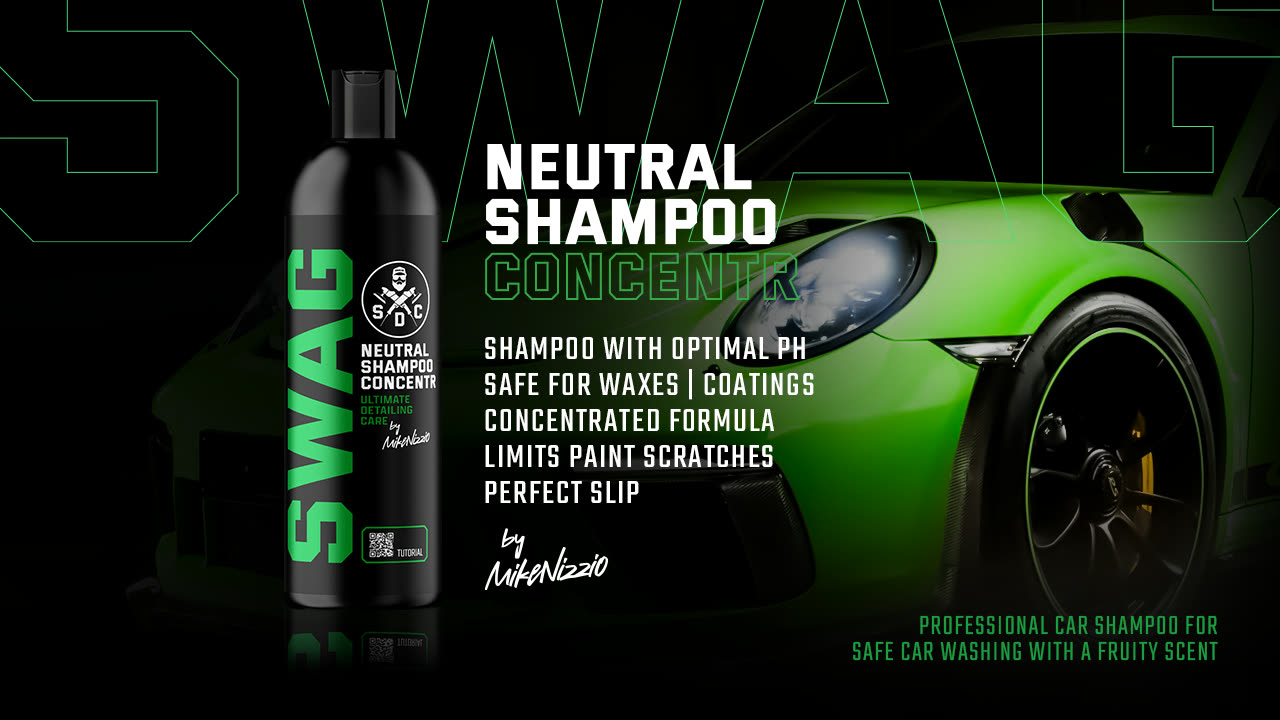
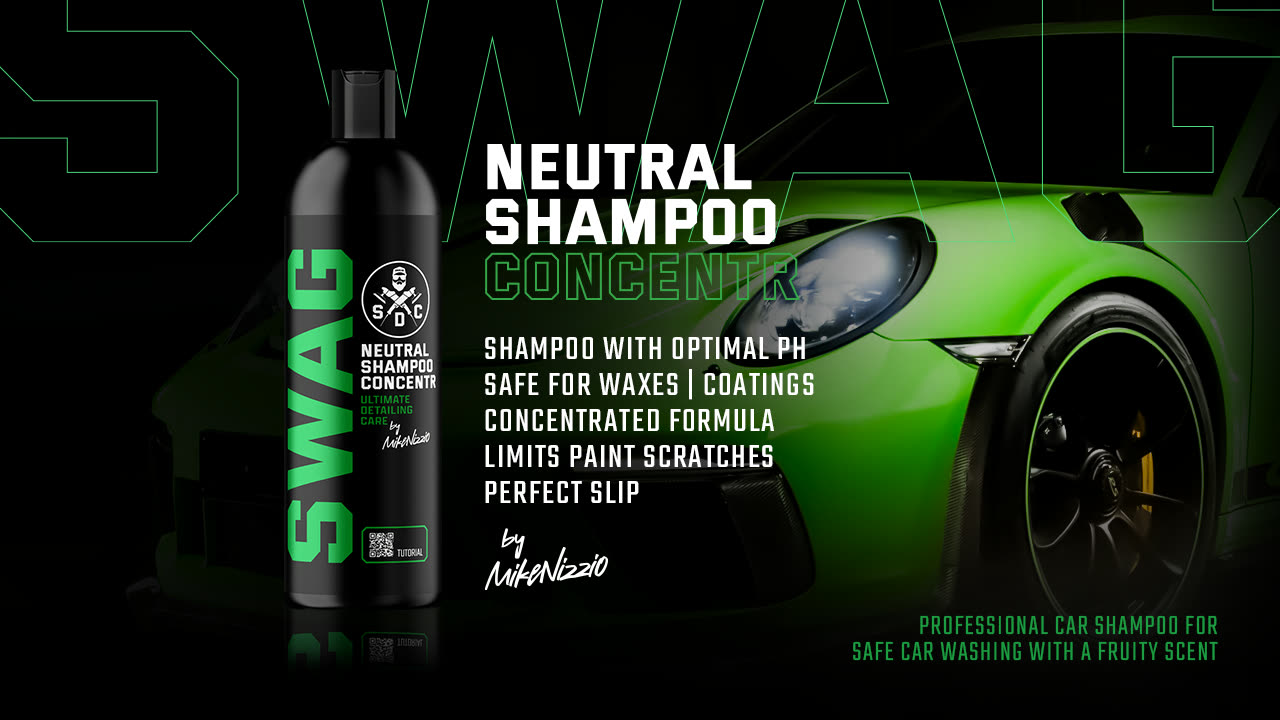
A car shampoo has to clean a surface it isn’t allowed to damage, and that constraint is the entire formulation. Neutral pH means it lifts dirt without attacking wax, sealant or a coating — which is why NEUTRAL SHAMPOO CONCENTR. V.3.1 is in almost every wash I do, mixed to the ratio on the bottle.
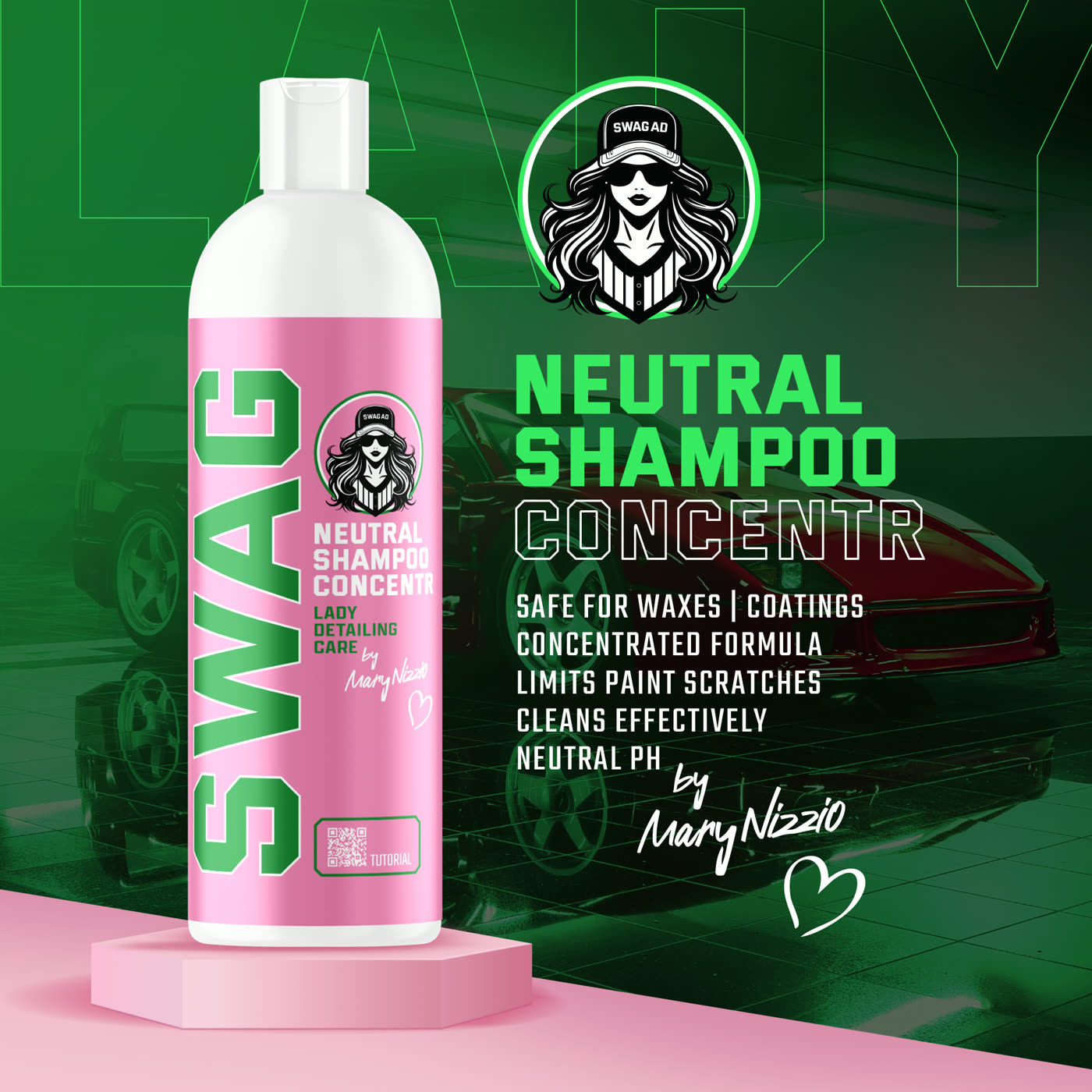
Rich foam matters more than people think: it holds the shampoo against a vertical panel long enough to work, and carries the lubricants that keep grit suspended instead of grinding. The LADY NEUTRAL SHAMPOO CONCENTR is the same thinking in a different scent.
And it has to rinse away completely. Residue is the quiet failure of household detergents — what looks clean while wet dries to a haze that then attracts dust.
If you only ever buy one bottle
Buy a neutral shampoo concentrate, and buy nothing else until you’ve used it. It’s the cheapest per wash of anything in car care, and it’s the product that protects every other product you own. If you have a pressure washer, add a foam like NEUTRAL FOAM 1:20 V.2 to take the top layer of dirt off before your mitt touches the paint.
And if you’ve been using washing-up liquid for a while, there’s no lasting harm to the paint itself. The protection is gone, that’s all. Wash the car properly, put a fresh layer of wax or sealant on, and you’re back where you started.
Frequently asked questions
Can I wash my car with washing-up liquid just once?
Once won’t ruin your paint, but it will take your wax or sealant off with it, and it gives you no lubrication while you wash. If it’s a genuine one-off, rinse thoroughly and reapply protection afterwards. If it’s your normal routine, that’s where the trim and seal damage builds up.
Is baby shampoo safe for car paint?
It’s gentler than dish soap, but it’s still not a car product. It’s formulated for hair and skin, it contains conditioning agents that smear and streak on lacquer, and it has none of the lubricity that stops grit scratching. Mild is not the same as suitable.
How do I know if my wax has been stripped?
Watch the water. On protected paint it pulls into tight beads and runs off; on stripped paint it lies flat in sheets and the panel stays wet. Beading that has disappeared since your last wash is the clearest sign you’ve degreased the car.
Does washing-up liquid damage a ceramic coating?
It won’t dissolve the coating, but it degreases the surface and dulls the hydrophobic behaviour you paid for, so the coating stops performing well before the end of its life. Coated cars want a neutral shampoo and nothing else.
Nothing under your kitchen sink was made for car paint. The shampoos and foams that were live in our Exterior Washing range, formulated and tested in my own studio.