What is a pre-wash? It’s every cleaning step that happens before anything physically touches the paint — a detergent applied, left to dwell, then rinsed off. Its only job is to remove the loose, gritty layer of road dirt so your wash mitt isn’t dragging sharp particles across the lacquer. That is not a nicety. Touching a dirty car with a mitt is the single biggest cause of swirl marks on British roads.
In this guideWhat is a pre-wash?Where it sits in the washWhy touching a dirty car causes swirlsWhat is pre-wash detergent? Foam vs TFRDwell in the shade, never in the sunRinse before anything touches the paintNo pressure washer? You can still pre-washFAQ
What is a pre-wash?
A pre-wash is a touchless cleaning stage: you apply a detergent to a dirty car, give it time to work, and rinse it away — all before a mitt, sponge or brush goes anywhere near the paint. That’s what “pre-wash” means, and it’s why the term keeps coming up in detailing.
The chemistry does the work your hands would otherwise do. Surfactants get underneath the film of dust, sand, brake dust and road salt, break its grip on the paint and hold it in suspension so the rinse water carries it off the panel.
It isn’t the whole wash and isn’t meant to be. It removes the loose material — the abrasive part. Bonded road film and anything properly stuck on still needs the contact wash. What the pre-wash buys you is a car that is safe to touch.
Where the pre-wash sits in the wash
Rinse, wheels, pre-wash, dwell, rinse — and only then does anything touch the paint. The order matters as much as the products:
- Knock the worst off with water. On a car caked in mud or winter salt, a plain rinse removes a surprising amount before you spend any product.
- Wheels and arches first. They’re the dirtiest part of the car and their cleaners are the strongest chemistry you’ll use, so any overspray gets rinsed off the bodywork later rather than drying on clean panels.
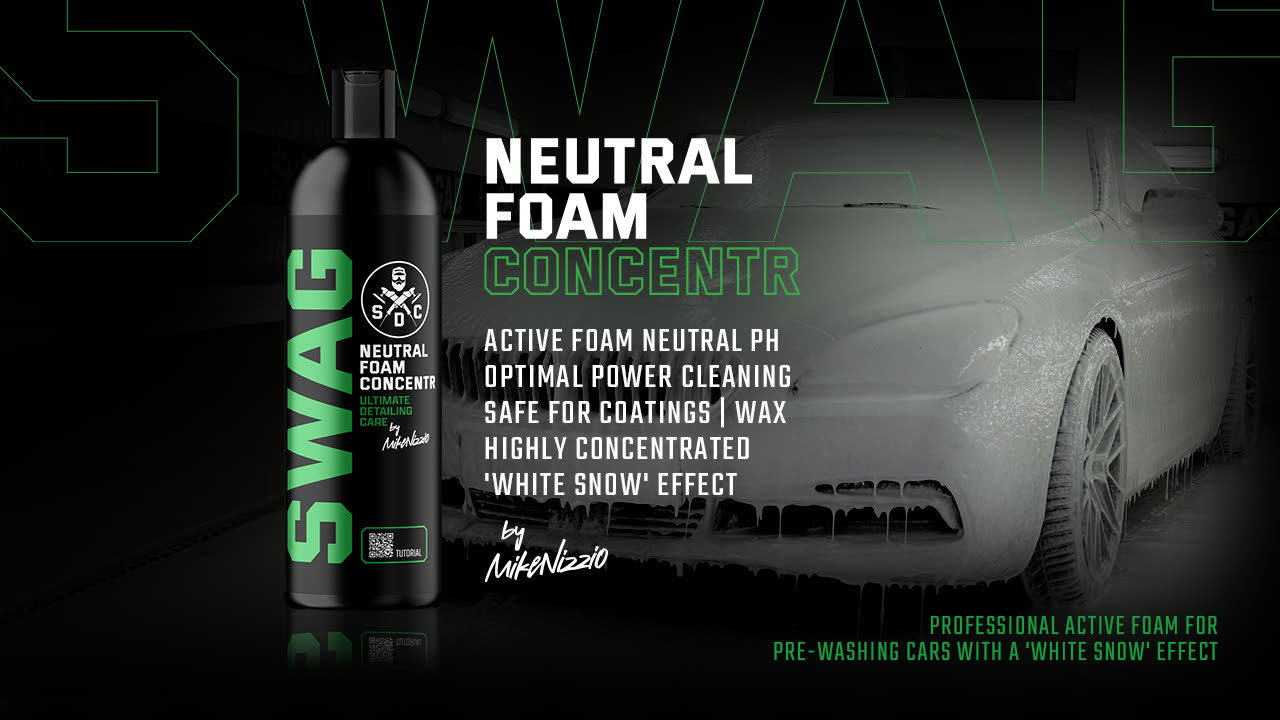
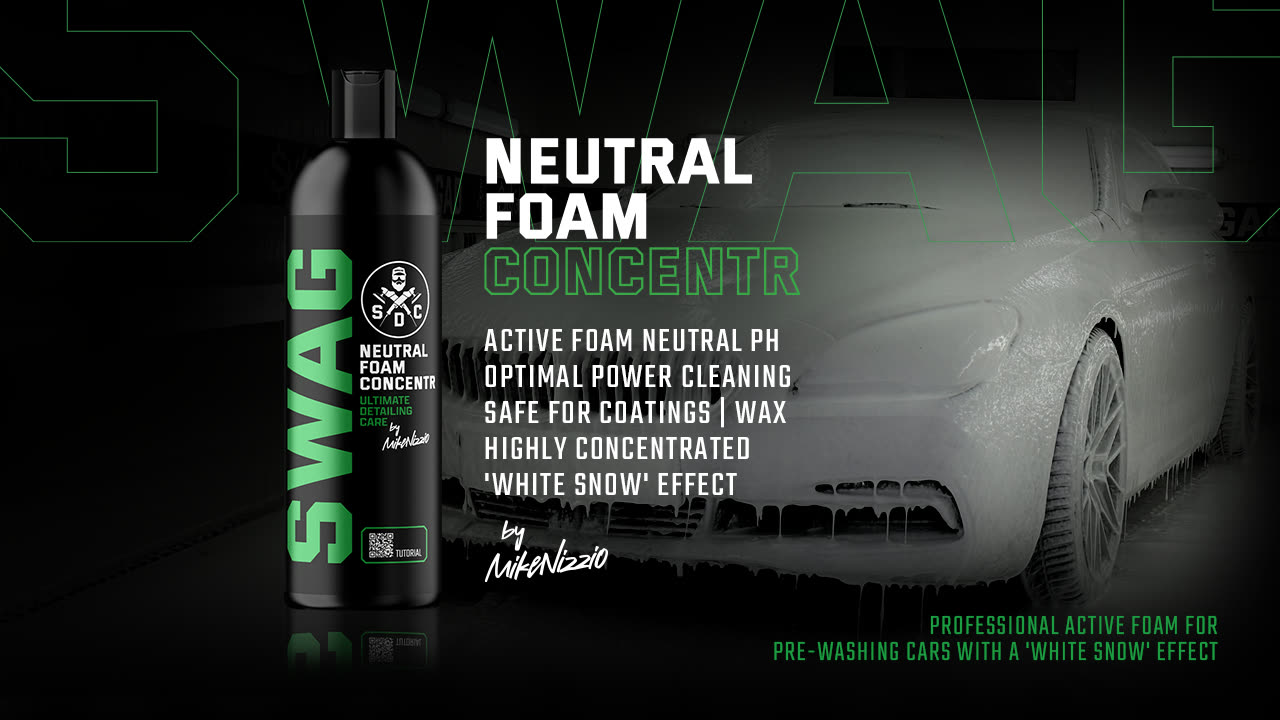
- Apply the pre-wash detergent over the whole car, bottom to top, so the lower panels — where the grime actually is — get the longest dwell.
- Let it dwell for the time on the label, in the shade, and never let it dry.
- Rinse thoroughly, top down, so what you’ve loosened flows off the car instead of settling on the sills.
- Now the contact wash — two buckets, clean mitt, straight lines. My hand wash guide covers that stage.
Here’s the foaming stage on a genuinely dirty car, start to finish:
Why touching a dirty car is what causes swirls
Road dirt is mostly mineral grit, and mineral grit is harder than clear coat. That single fact explains almost every swirl mark you have ever seen on a car park bonnet.
Put a mitt onto an unrinsed panel and you aren’t cleaning it — you’re loading the mitt with sharp particles and sliding them across the lacquer under the pressure of your own hand. Each particle cuts a fine line, and thousands of those lines in every direction read to your eye as that familiar spiderweb haze in sunlight. It’s mechanical damage, and the only cure is abrasive: you have to polish the surrounding clear coat down until the scratches are gone.
Which is why I’d rather someone spent their money on a pre-wash than on a polisher. Chemistry and a rinse prevent the damage that a machine, a compound and half a Saturday would be needed to repair — and every repair costs clear coat you never get back.
What is pre-wash detergent? Snow foam vs traffic film remover
“Pre-wash detergent” is the umbrella term for anything applied at this stage — in practice, a gentle snow foam or a stronger traffic film remover. They solve different problems, and knowing which you need saves you both money and protection.
| Pre-wash type | What it’s really for | When I reach for it |
|---|---|---|
| pH-neutral snow foam | Lifting loose dust, sand and light road dirt without touching your wax or coating | Every routine wash, and always on a protected or coated car |
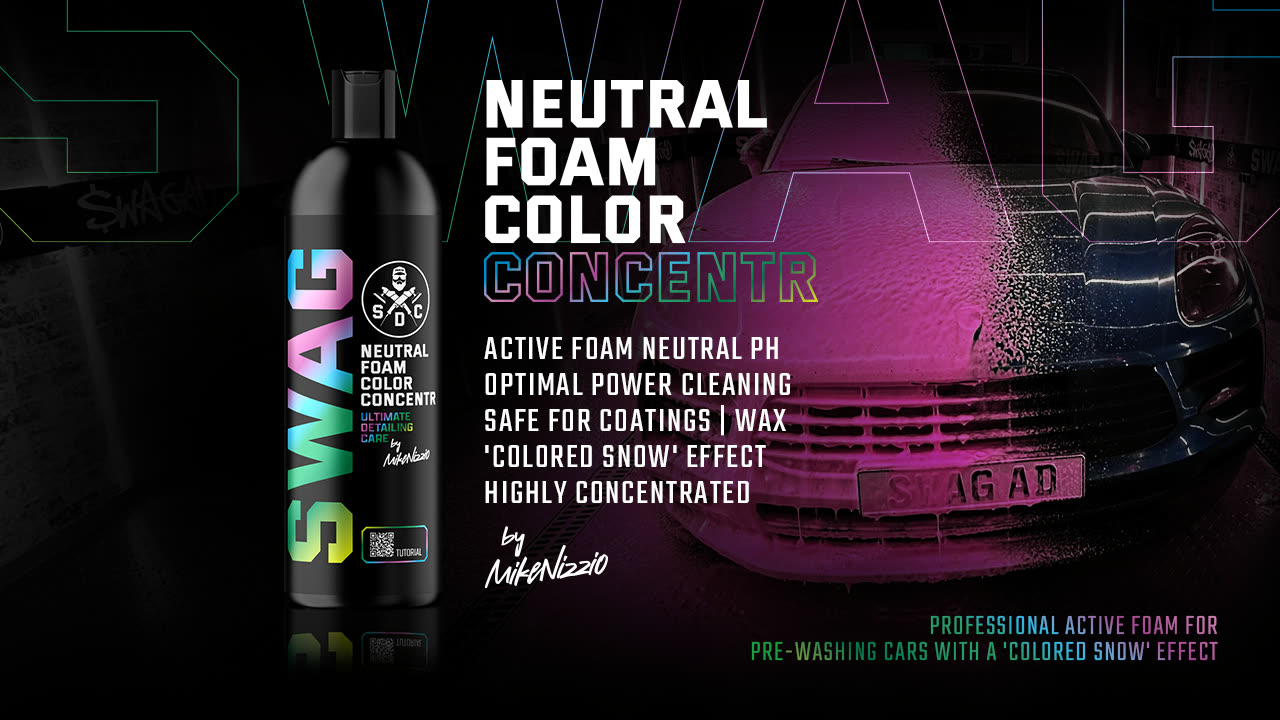
| Coloured neutral foam | The same job, with visible coverage so you can see what you’ve missed | Big vehicles, awkward shapes, or teaching someone the technique |
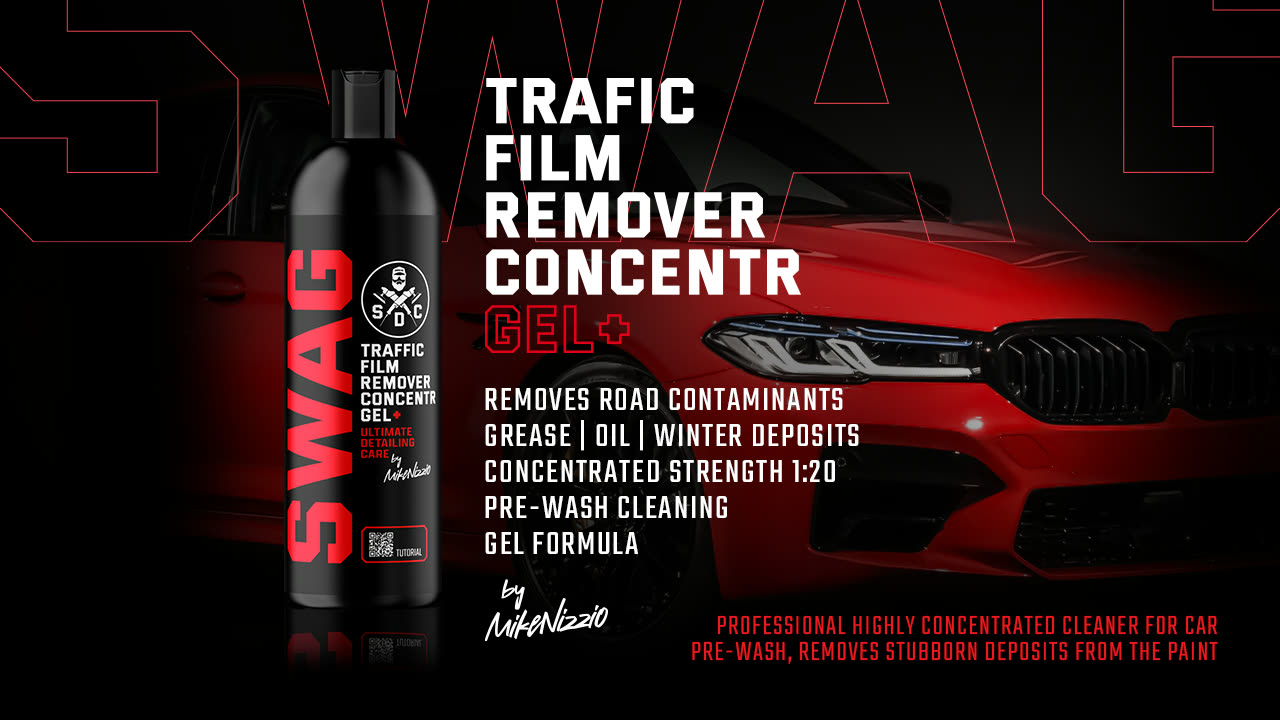
| Traffic film remover (TFR) | Cutting the greasy grey film of diesel soot, rubber and salt that water alone won’t shift | Winter, motorway miles, vans, lower panels and arches |
| Bug remover | A targeted pre-treatment for insect remains and sap, which are acidic and etch if left | Summer — front bumper, mirrors, screen, before the foam goes on |
My honest rule: neutral foam is the default, TFR is the tool you bring out when the car has earned it. Traffic film removers are stronger by design, and strong detergent used every week on waxed paint shortens the life of your protection. Use the mildest thing that gets the car clean, exactly as you would with a polish — and if you want the foam dilutions and dwell ranges spelled out, they’re in my snow foam guide.
Dwell in the shade, never in the sun
A pre-wash only works while it’s wet, so the entire technique comes down to keeping it wet for as long as the label says. Dried detergent has stopped cleaning and started leaving residue.
That means shade and cool panels. A bonnet that’s been sitting in July sun flashes the foam off long before it has done its job, leaving streaks and dried product in every panel gap — and on hot glass or dark paint, dried chemistry can leave marks that take real work to remove. Early morning, late evening, or under cover; failing that, work panel by panel rather than foaming the whole car at once.
Follow the dwell time on the bottle rather than a number from a forum — it’s set for that formula at that concentration. If the foam looks thin or patchy before the time is up, rinse early. Nothing is gained by letting it dry.
Rinse properly before anything touches the paint
The rinse is the half of the pre-wash that actually removes the dirt — rush it and you’ve simply relocated the grit. Work from the roof down so everything drains off the car, and keep going after you think you’re done.
Pay attention to the places dirt hides and then reappears: door shuts, the lower edges of bumpers, wheel arch lips, badge recesses, wiper cowls. Grime left in a shut runs back down a clean door the moment you open it, and a mitt dragged across an arch lip picks up more grit than the rest of the car combined.
Then look at the car before you touch it. Properly pre-washed paintwork should already look noticeably cleaner, with water sheeting off rather than crawling — that’s your signal it’s safe for the mitt. Foam and shampoo both live in the exterior washing range.
No pressure washer? You can still pre-wash
The pre-wash is chemistry plus dwell time, not foam thickness — a hand pump foamer or even a simple garden sprayer does the job. Thick clinging foam looks impressive and buys a longer dwell on vertical panels, but a thinner application that stays wet works perfectly well. Rinsing with a hose takes longer and needs more attention around the lower panels, yet it removes the same dirt. What you can’t do without is the dwell and the rinse — skip either and you’re back to grinding grit into your paint with a mitt.
Frequently asked questions
Is a pre-wash the same as a rinse?
No. A rinse moves water over the car; a pre-wash puts detergent on it and lets that detergent break the dirt’s grip first. A rinse is a useful opening step on a filthy car, but it leaves behind the film that does the damage when you touch it.
Can I use car shampoo as a pre-wash?
Better than nothing, but shampoo is formulated to work with a mitt providing the mechanical action — it isn’t built to cling to a vertical panel and lift dirt on its own. A dedicated foam or TFR dwells where it lands, which is the point of the stage.
How long should a pre-wash dwell on the car?
As long as the label states, and not a second past the point where it starts to dry. Warm weather shortens that window considerably, so watch the car rather than a timer. If in doubt, rinse early and repeat.
Will a pre-wash strip my wax or ceramic coating?
A pH-neutral snow foam is designed to be used every wash without affecting protection. A strong traffic film remover is built to cut grease, and used weekly on waxed paint it will shorten how long that wax lasts. Save the heavy chemistry for cars that need it.
Do I still need to wash the car after a pre-wash?
Yes, for anything more than a light dusting. The pre-wash takes off the loose, abrasive layer; the contact wash removes the film that’s chemically bonded to the paint. Think of the pre-wash as making the hand wash safe, not as replacing it.
Foams, traffic film removers and shampoos for every stage of a safe wash are in our Exterior Washing range — developed and tested in my own studio.