Car Glass Cleaner for Streak-Free Windows

SWAG Glass Care · 7 products

Car glass cleaner that degreases, dries streak-free and leaves an antistatic finish — formulated and filmed in our own studio in Poland. Car glass carries an oily film that household sprays only smear around.

  • Streak-free finish
  • Antistatic formula
  • Spray, gel or 5 litres
  • Made in Poland

Showing all 7 results

Which glass cleaner do you need?

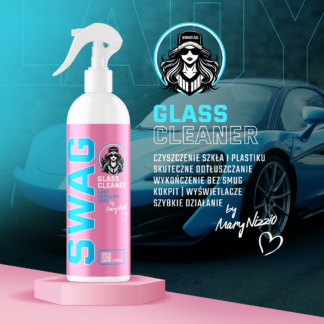
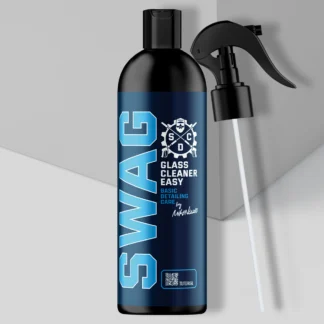
Three routes to the same clear pane. BASIC GLASS CLEANER EASY is the simple entry point; LADY GLASS CLEANER is the softer-scented one.

Everyday

Glass Cleaner+ V.3.1

Newest recipe · in and out

Our current everyday formula, and the bottle we reach for most. It cuts the oily film on both sides of the glass and leaves an antistatic finish that slows dust settling.

  • Interior and exterior glass
  • Antistatic, dust settles slower
  • 500 ml spray or 5 litre refill
View products →
Big panes

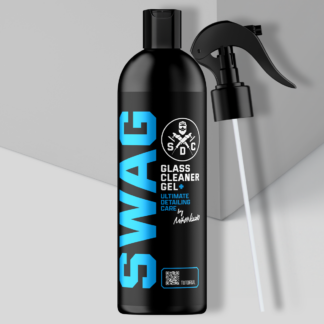
Glass Cleaner Gel+ V.2

Clings to vertical glass

A gel rather than a liquid, so it stays where you spray it. That makes tall windscreens and door glass far easier to work without product running down onto the trim.

  • Does not run off the pane
  • Less overspray on the dash
  • 500 ml and 5 litre sizes
View products →
Rain-proof

Hydrophobic Glass Cleaner+

Cleans and protects in one

Cleans the glass and leaves a water-repellent layer in the same pass. On a windscreen that works like an invisible wiper at speed, so rain beads and clears itself.

  • Water beads and rolls off
  • One pass, two jobs
  • Best used on exterior glass
View products →

How to clean car windows without streaks

Streaks are almost never the cleaner's fault. Here is what actually causes them.

What is the best car glass cleaner?

The one that degreases rather than just wets the glass. Car windows collect an oily film — plastics off-gassing inside, traffic film and wax overspray outside — and a cleaner that cannot cut it simply spreads it into rainbows. For everyday use we reach for GLASS CLEANER+ V.3.1; if you want rain to clear itself at speed, HYDROPHOBIC GLASS CLEANER+ adds that protection while it cleans. All of it is made in Poland and shipped from UK stock.

How do you use car glass cleaner?

Two cloths, always. Spray onto the first microfibre, spread the cleaner across the whole pane, then buff the glass dry with a second clean, dry towel — that second towel is what removes streaks. Work in the shade and on cool glass; in direct sun the cleaner flashes off before you can buff it and dries as a haze. Wipe the outside horizontally and the inside vertically, and any smear left tells you instantly which side it is on.

Does glass cleaner damage car paint?

An automotive glass cleaner will not harm the surrounding paint, rubber or trim in normal use — overspray wipes away with the cloth already in your hand. Household sprays are the ones to think about: many are ammonia-based, which is not recommended on aftermarket window tint and dries out rubber seals over time. Whatever you use, avoid spraying hot panels in the sun and wipe any run-off rather than letting it dry. If the label does not say what the product is for, it is not worth the risk on a car.
Step by step

  1. Clean cloths onlyA towel with wax or polish in it will streak whatever you spray on the glass.
  2. Work in the shadeCool glass gives you time to buff before the cleaner dries into a haze.
  3. SpreadSpray the cloth, then cover the whole pane rather than dotting the middle.
  4. Buff dryFlip to a second dry towel and buff until the glass looks like it is not there.
What it will not do

No glass cleaner shifts baked-on mineral deposits. Hard-water spots and sprinkler marks have etched into the surface and need mechanical help — WATER SPOT GLASS POLISH in Glass Polishing is made for exactly that. Clean with a spray from this range afterwards, and dry the glass after every wash so new spots never get the chance to set.

Car glass questions

The things people ask us about windows, streaks and water spots.

Why does my windscreen streak after cleaning?

Nine times out of ten it is the cloth, not the cleaner. Microfibres that have been used for wax, quick detailer or washed with fabric softener leave residue on glass, and a damp towel just moves it around. The other usual causes are too much product and working in direct sunlight. Fresh dry towels, a light spray and shade fix almost every streak.

Can I use household glass cleaner on my car?

You can, but it usually disappoints. Household formulas are made for windows that collect dust, not for the greasy film that forms on car glass, so they smear where an automotive cleaner degreases. They also lack the antistatic finish that keeps dust from resettling inside the cabin. And if your car has aftermarket tint, ammonia-based sprays are best avoided altogether.

What is the best water spot remover?

For fresh spots, a good glass cleaner and a second dry towel. For old, etched deposits no spray will do it — you need a polish with abrasives, worked by hand or machine, which is what WATER SPOT GLASS POLISH is for. Treat that as a one-off correction, then stop it returning by drying the car properly and using a hydrophobic cleaner so water sheets off instead of standing.

How do you get the oily film off car glass?

That film is plastics off-gassing on the inside and traffic film, exhaust residue and wax overspray on the outside, and water alone will not touch it. Use a degreasing automotive glass cleaner and work small sections so it does not dry before you buff. Badly contaminated exterior glass sometimes needs a clay bar pass first, then a normal clean afterwards. If the wipers judder or the glass squeaks under a clean cloth, the film is still there.

How do you clean the inside of a windscreen?

Do it last, once cabin dust has settled, and spray onto the cloth rather than the glass so nothing lands on the dashboard. The inside collects a film from plastics and vinyl warming in the sun, so it usually takes two passes: one to lift the film, one to buff clear. Drop each window a few centimetres to reach the top edge that hides in the seal. A gel is easier here, because it does not run down onto the trim.

Around the glass

What sits either side of a glass cleaner in the SWAG range.

M
Written by
Mike Nizzio · Founder, SWAG Detailing

13 years in detailing and a working studio in Poland. Every SWAG product is formulated, tested and filmed in-house before it earns the label.

Showing all 7 results