Here is how to restore black plastic trim that has gone grey: clean it thoroughly, dry it, work a Si-Polymer gel dressing into the plastic, give it 15 minutes to absorb, and buff off the excess. Faded trim is one of the most common problems I see on cars coming into my studio — a five-year-old car with grey bumper strips and chalky mirror caps looks ten years old. The good news: it’s also one of the cheapest, most satisfying fixes in detailing.
In this guideWhy trim fadesStep-by-step restorationKeeping it blackInterior plasticsTrim and tyres togetherFAQ
Why does black plastic trim fade and turn grey?
Unpainted exterior plastic is under constant attack, and unlike paint it has no clearcoat to defend it. Four things do the damage: UV radiation, rain and moisture, road salt, and general road grime. Working together, they strip the colour out of the plastic, leave it matt and chalky, and over time make it brittle and prone to cracking.
Textured trim suffers fastest because the rough surface has more area exposed to the sun and holds dirt in every pore. Once the surface layer has oxidised, washing alone won’t bring the colour back — the car can be spotless and the trim still looks grey.
Beyond looks, there’s a value argument: plastics kept in good condition genuinely affect what a car is worth when you sell it. Trim condition is one of the first things a buyer’s eye lands on, even if they can’t name it.
How to restore black plastic trim step by step
The restoration itself takes minutes per panel — most of the job is preparation. The product I formulated for this is EXTERIOR PLASTIC TIRE DRESSING Gel+ V.3 — a Si-Polymer gel that revives the colour and protects the plastic in one application. My routine:
| Step | What to do | Why it matters |
|---|---|---|
| 1. Prepare | Wash the plastic elements and dry them thoroughly | Dressing bonds to plastic, not to dirt or damp |
| 2. Apply | Put a small amount of gel on a sponge applicator | A little goes a long way — the gel is highly efficient |
| 3. Spread | Work it evenly across the faded plastic | Even coverage means an even satin finish |
| 4. Absorb | Leave for about 15 minutes | The formula needs time to penetrate the plastic’s structure |
| 5. Finish | Remove any excess with a clean microfibre | Leaves satin depth, not a greasy film |
The result you should see: refreshed plastics, a deeper and more expressive colour, and a surface that’s protected against fading again — with an elegant satin look rather than a shiny, oily one.
Watch me do this start to finish:
How do you stop plastic trim fading again?
Protection is the half of the job most people skip — restoring the colour without sealing the surface just restarts the clock. This is where the formula matters: the Si-Polymer layer left behind is hydrophobic, so it repels water and grime and makes the trim easier to keep clean, and it shields the plastic from UV degradation — the main cause of the fading in the first place.
Top the treatment up when you notice the satin depth starting to flatten, and the trim simply never gets the chance to go grey again. On cars I maintain regularly, trim care is a two-minute add-on to a normal wash.
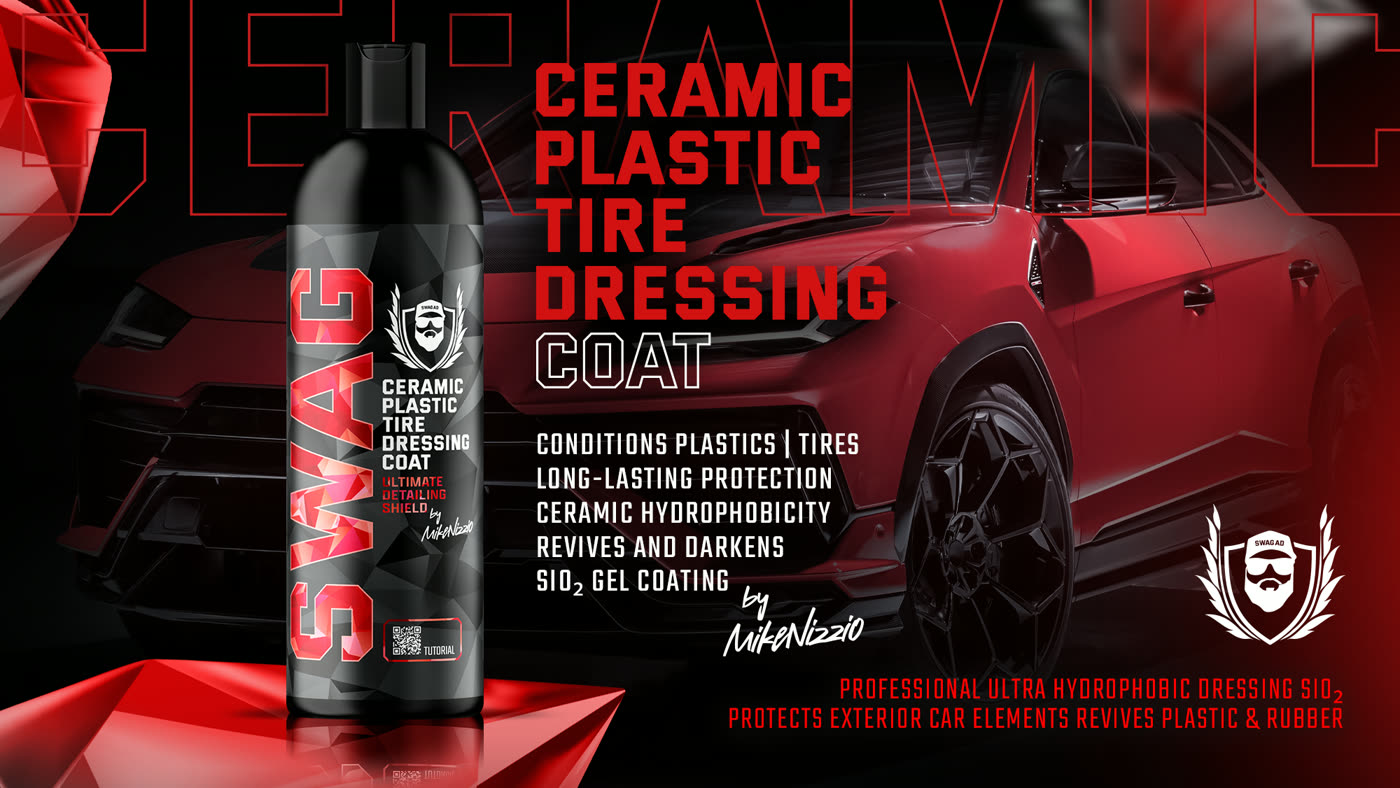
For the longest-lasting protection, there’s also a coating version: CERAMIC PLASTIC TIRE DRESSING COAT — the same satin finish with an ultra-hydrophobic, long-lasting formula. It’s my choice for customers who want to treat their trim once and forget about it for as long as possible.
What about faded interior plastics?
Interior plastics fade too — dashboards and door cards sit in direct sun behind glass — but they need a different product. An exterior gel is built for trim that faces rain and salt; inside the car you want something lighter that cleans, revives colour and leaves a natural finish without slickness or shine on surfaces you touch.
For dashboards and door plastics I use INTERIOR DRESSING CREAM SATINE+ — it protects the surface and enhances the colour with a satin effect that looks factory-fresh, never greasy. The rest of my interior arsenal is in the interior cleaning range.
Do the trim and tyres in one session
The same gel that restores your trim also dresses your tyres — so do both while the applicator is in your hand. Faded trim and browned, grey tyres are caused by the same enemies (UV, salt, grime), sit centimetres apart, and are fixed by the same product. Treating one and not the other is like ironing the front of a shirt.
I’ve covered the rubber side in detail — why tyres brown, gel versus liquid dressings, and the full application routine — in my tyre dressing guide. Read the two together and you have the complete rubber-and-plastic care system I use in the studio.
Frequently asked questions
Can you ceramic coat plastic trim?
Yes. A ceramic-type coating designed for plastics, like our CERAMIC PLASTIC TIRE DRESSING COAT, bonds to trim and gives ultra-hydrophobic, long-lasting protection with a satin finish. Apply it only to clean, completely dry, freshly restored plastic — a coating locks in whatever is underneath it, good or bad.
How do you get car polish off black plastic trim?
Those white polish stains sit in the texture of the plastic. Scrub the area with an all-purpose cleaner and a soft brush to lift the dried residue out of the grain, dry it, and then restore the trim with a gel dressing. On deep texture it may take a couple of cleaning passes — and next time, mask the trim before polishing.
How do you remove tar from car plastic?
Use a dedicated tar and glue remover, let it dissolve the spots, and wipe them away gently rather than scrubbing dry tar across the surface. Wash the area afterwards, dry it, and re-dress the plastic — tar removers strip any protection along with the tar.
How do you polish black plastic on a car?
Textured black plastic isn’t polished like paint — abrasives can burnish the texture and leave shiny patches you can’t undo. The safe route to a like-new look is clean, dry, dress: the colour depth comes from the dressing penetrating the plastic, not from cutting the surface.
How do you polish chrome car trim?
First check whether it’s real metal or chromed plastic — a magnet or a look at the part’s back edge usually tells you. Real metal brightwork can be machine- or hand-polished with a dedicated metal polish; chromed plastic has only a thin decorative layer, so clean it gently and protect it rather than polishing through it.
Everything I used in this guide lives in our SWAG cosmetics range — restore the trim once, protect it properly, and it stays black.