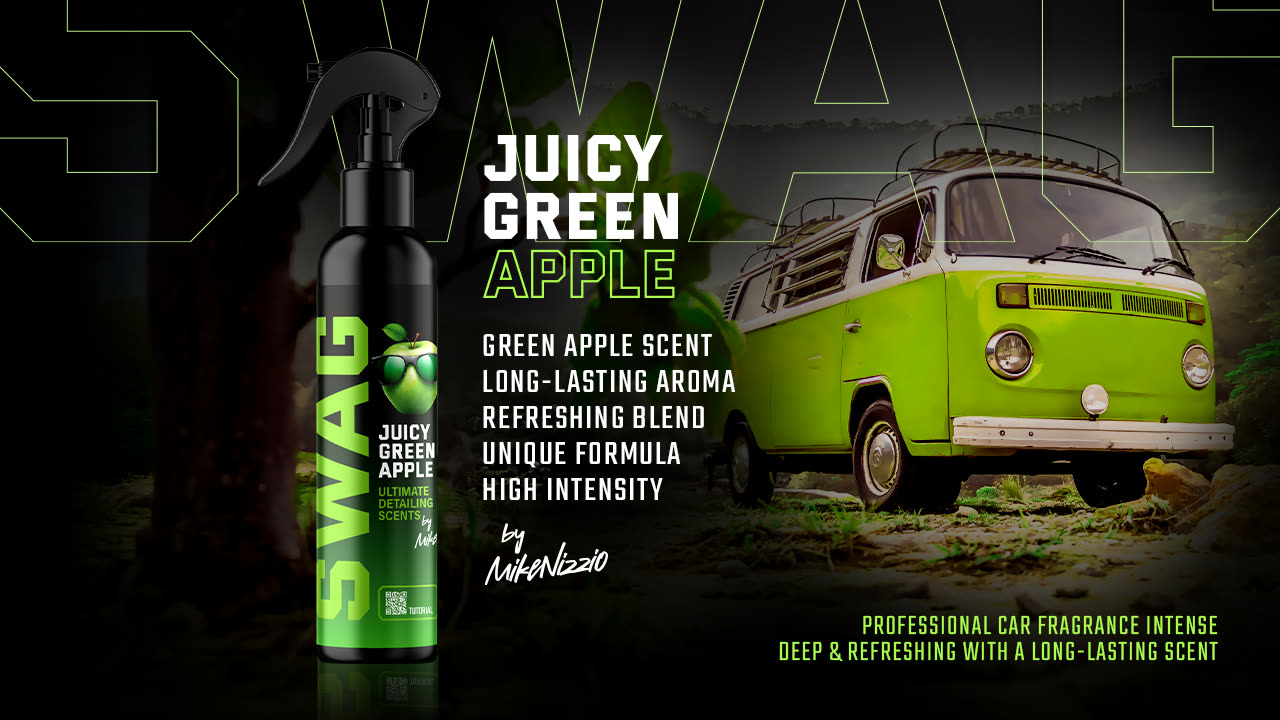
The best car air freshener is a spray fragrance applied to a hanging tag and the fabrics inside the car — not a piece of scented cardboard from the petrol station. After thirteen years of handing freshly detailed cars back to customers, I can tell you the interiors that still smell good a month later all follow the same pattern: clean fabric first, a quality car air freshener second, and a light top-up now and then. Here is exactly how I do it.
In this guideClean first, fragrance secondWhy cheap fresheners fadeSpray vs hanging formatsHow I apply a spray fragranceChoosing a scentMaking it lastFAQ
Why does my car still smell bad with an air freshener in it?
Because an air freshener masks odours — it does not remove what is causing them. Coffee soaked into the carpet, a wet dog on the back seat, cigarette smoke in the headliner: all of that lives in the fabric, and no fragrance on earth will out-compete it for long.
In my studio, every interior job starts with cleaning, not perfuming. Seats, carpets and mats hold the vast majority of the smell in a car, so give them a proper clean before you spend a penny on fragrance. Everything I use for that stage is in our interior cleaning range — once the source of the odour is gone, even a modest amount of fragrance suddenly performs the way it should.
A good modern car air freshener also does more than smell nice: the formulas we make are built to neutralise unpleasant odours, not just sit on top of them. But neutralising works on the leftovers, not on a sponge full of spilt milk. Clean first. Always.
Why do cheap car air fresheners fade so quickly?
Cheap fresheners fade because they carry very little actual fragrance oil, and a car is a brutal environment for scent. A cardboard hanger is a thin sheet dipped in diluted fragrance — most of what you smell in the first two days is the solvent flashing off. Once that’s gone, you’re left with a faintly scented picture of a pine tree.
The interior of a car makes it worse. In summer the cabin can cook well past 50°C behind glass, which drives fragrance off at a sprint; in winter the heater does the same thing more slowly. Every time you open the doors, the scented air leaves with you.
That is why the concentration and quality of the fragrance composition matter more than the format hanging off your mirror. A well-made, long-lasting formula releases scent gradually instead of dumping it all in the first 48 hours — which is exactly what we chase when we develop our own compositions in-house.
Which car air freshener format is best — spray or hanging?
For lasting results, a spray fragrance beats a pre-scented hanger, because you control where the scent goes and you can recharge it. A hanging tag or vent clip is fire-and-forget: convenient, but once it’s spent, it’s landfill. A 150 ml spray bottle is effectively dozens of “new air fresheners” on demand.
Here is how the common formats compare from my experience handing cars back to customers:
| Format | Strengths | Weaknesses |
|---|---|---|
| Scented cardboard hanger | Cheap, zero effort | Strong for days, then dead; no odour control |
| Vent clip | Spreads scent with airflow | Only works with blowers on; can be overpowering up front |
| Gel pot / tin | Steady low-level release | Subtle to the point of invisible in larger cabins |
| Spray + hanging tag | Rechargeable, adjustable strength, works on fabrics too | Needs 30 seconds of your time occasionally |
This is why every SWAG fragrance ships as a spray with a hanging tag included — you get the convenience of a hanger with the lifespan and flexibility of a spray. Best of both formats in one bottle.
How do you use a spray car air freshener properly?
Spray the hanging tag until it is damp, hang it up, and lightly mist the textile parts of the interior. This is the routine I recommend with our own fragrances, and it takes under a minute:
First, shake the bottle gently before first use so the fragrance composition is evenly distributed. Then spray the included tag until it becomes moist — that tag is your slow-release diffuser. Hang it from the mirror or a seat frame.
Next, give the textile elements of the interior — carpets, fabric seats, boot carpet — a light misting. Fabric holds and releases scent far longer than air does, which is the trick most people miss entirely. Dose according to your own preference, but keep it moderate: a scent you barely notice after five minutes of driving is pitched about right.
When the scent starts to soften after a week or two, repeat the application. That’s it — no new purchase, no dead cardboard tree.
Which scent should you actually pick?
Pick fruity scents for daily drivers and family cars, and leather or woody notes for elegant, dark-trimmed interiors. Scent is personal, but after watching hundreds of customers choose, clear patterns emerge.
If you like sweet and fruity, SWEET WILD BLACKBERRY is our intense wild-blackberry composition and consistently the one customers reorder — refreshing without being childish. For something more playful, LEMON COLA PUNCH pairs citrus freshness with a soft sweet cola note.
For an executive saloon with dark leather, a fruity bomb feels wrong. That’s what AUTHENTIC DARK LEATHER is for — a composition inspired by genuine leather that reinforces the character of the interior instead of fighting it. The full line-up, including the nostalgic 90’s series, lives in our Car Scents category.
How do you keep a car smelling good long term?
Little and often beats heavy and rare. One aggressive soaking of fragrance will give you a headache on Monday and nothing by Friday. A moderate application, refreshed when you notice it fading, keeps the cabin at a steady, pleasant level indefinitely.
Three habits make the difference. Hoover regularly — dust and crumbs are odour carriers. Deal with spills the same day, before they soak in and start to sour. And keep the fragrance on fabric, not on plastics or glass, because textiles are what actually hold the scent between drives.
Frequently asked questions
What is the best air freshener for a car?
A spray-format fragrance with a hanging tag gives the best combination of strength, control and lifespan. It can be reapplied indefinitely, works on interior fabrics as well as in the air, and you adjust the intensity yourself — three things a disposable cardboard hanger can’t do.
How long do car air fresheners last?
Cheap cardboard hangers typically smell of very little after a week. A quality spray fragrance applied to a hanging tag and interior textiles keeps a noticeable scent for several weeks, and because it’s a spray, you simply reapply when it softens rather than buying again.
Are car air fresheners bad for you?
Used sensibly, no — but moderation matters. Apply a modest amount, let the cabin air out for a moment after a fresh application, and dial back if any passenger finds it overpowering. A scent should sit in the background, not dominate the cabin.
How do car vent air fresheners work?
A vent clip holds a scented membrane or pad in the airflow from your blowers, so moving air carries the fragrance through the cabin. The catch is they only really work while the ventilation is running, and sitting in the direct air path they can feel harsh — another reason I prefer scenting the fabrics themselves.
Every fragrance I mentioned here — fruity, leather and the nostalgic 90’s line — is in our Car Scents range. Find the one that suits your interior, and remember: clean first, fragrance second.