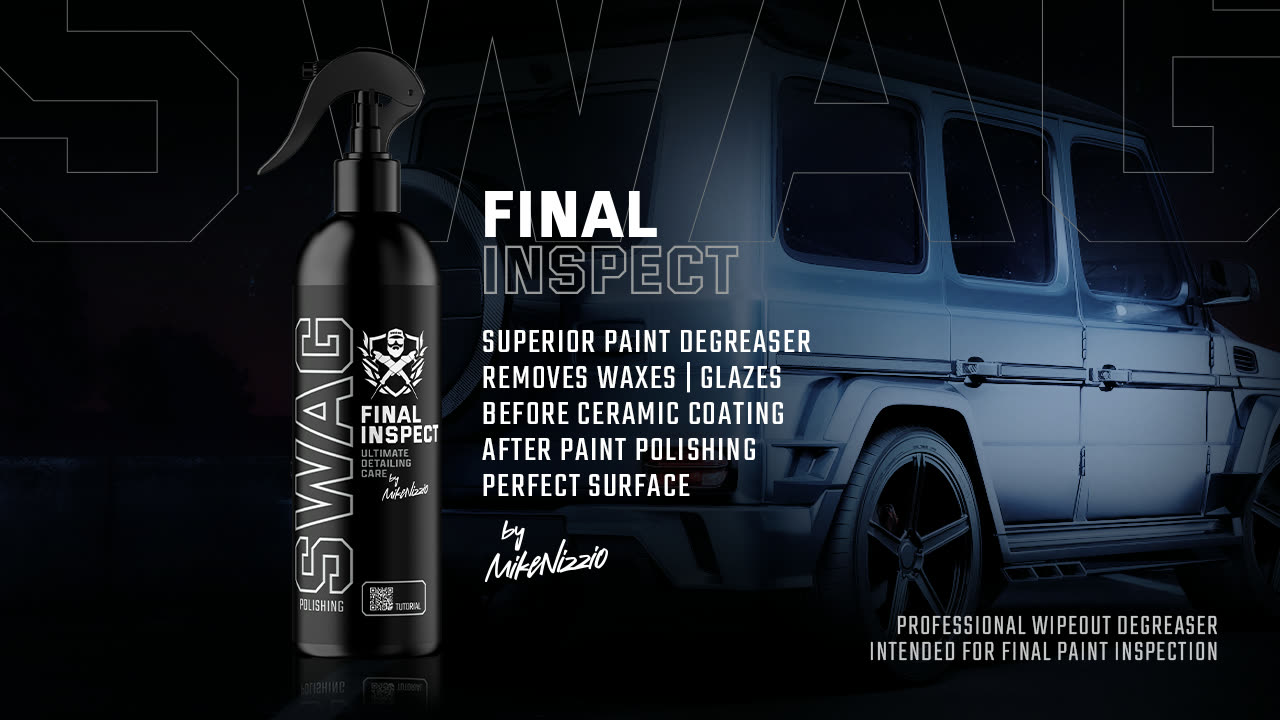
A panel wipe is a fast-evaporating degreaser that strips polishing oils, old wax and glaze residue off your paint — and it’s the step that decides whether your wax or coating lasts. Protection products bond to paint, not to the film of oils sitting on it. In 13 years of detailing I’ve seen more coatings fail from a skipped panel wipe than from any application mistake. It takes minutes and costs almost nothing; here’s exactly how I do it.
In this guideWhat is a panel wipe?Why degrease before wax or coatingWhen to use itStep-by-step methodWhat I use in the studioFAQ
What is a panel wipe?
It’s a wipe-out solvent that leaves paint chemically bare. After washing, and especially after polishing, your lacquer is covered in an invisible layer: carrier oils from the polishing paste, remnants of old waxes and glazes, fingerprints, general grease. A panel wipe dissolves all of it and evaporates quickly, leaving a perfectly clean, sterile surface with no residue of its own.
It’s not an all-purpose cleaner and it’s not a shampoo. An APC cleans dirt; a panel wipe removes what cleaning leaves behind. Different jobs, different chemistry.
Why must you degrease paint before wax or coating?
Because protection bonds to paint — and oils are a barrier between the two. Apply a ceramic coating over polishing oils and it cures onto the oil film, not the lacquer. It’ll look fine for a week or two, then the hydrophobics collapse and the “two-year coating” is gone in a month. Wax is more forgiving, but the same rule applies: a degreased surface means noticeably better adhesion and durability of whatever goes on top.
There’s a second reason professionals never skip it: inspection. Polishing oils mask defects. Wipe a panel down after compounding and you see the true state of the paint — any swirls or holograms the oils were hiding. In my studio nothing gets signed off until it’s been degreased and checked under the inspection lamp. That’s why the correction workflow runs polish → panel wipe → protect, in that order, every time (the polishing half is covered in my machine polishing guide).
When should you use a panel wipe?
Any time something needs to bond to your paint — or you need to see it honestly. The four situations where it’s mandatory for me:
| Situation | Why panel wipe first |
|---|---|
| After polishing, before checking your work | Removes oils that hide defects — see the real result, repeat the pass if needed |
| Before ceramic coating | SiO₂ needs a sterile surface to bond — this is non-negotiable |
| Before wax or sealant | Strips old wax and glaze residue so the fresh layer grips paint, not leftovers |
| Before PPF or vinyl wrap | Adhesive on a greasy edge lifts — degreased paint keeps film down |
How to use a panel wipe step by step
Spray onto the cloth, not the car, and work one panel at a time. The routine I use with Final Inspect V.2:
- Prepare the surface — the paint must be cool and dry. Never degrease a panel that’s hot from the sun or the polisher.
- Spray the product onto a microfibre rather than flooding the panel — you control coverage and keep it off trim and glass.
- Wipe the panel thoroughly in circular motions, turning the cloth as it loads up, until every trace of oil and residue is gone.
- Check under an inspection lamp. Streaks or smears mean there’s still residue — and this is your moment to spot any remaining paint defects.
- Repeat if needed. Heavily waxed or freshly compounded panels sometimes take a second pass for a perfect result.
Watch me do it on a freshly polished car:
Which panel wipe do I actually use?
FINAL INSPECT V.2 — I formulated it for exactly this job. The formula evaporates fast, which speeds up the work and minimises streaking; it delivers a genuinely sterile, streak-free surface; it’s safe on all painted elements; and it cuts through old waxes and glazes without a fight. It was built for final inspection before ceramic coatings, and that remains the hardest test a degreaser faces.
If you polish regularly, the 5-litre version is the sensible buy — a panel wipe gets used at the end of every single correction job. Both live in our Paint Degreasing category, alongside the dedicated wrap-prep cleaner.
Once the paint is bare and inspected, protect it straight away — bare lacquer is an open door. My honest comparison of the options is in which car wax is best.
Frequently asked questions
Do you polish before ceramic coating?
Yes, almost always. A coating locks in whatever is underneath it — including swirls — so the paint should be corrected first, then panel-wiped to remove the polishing oils, then coated. Coating over defects means living with them for the life of the coating.
Is a panel wipe the same as an all-purpose cleaner or degreaser?
No. An APC is a water-based cleaner for dirt and grime; a panel wipe is a solvent that removes oils, waxes and silicones at a molecular level and flashes off without residue. APC before polishing, panel wipe after — they’re neighbours in the workflow, not substitutes.
Do you need to remove old wax before waxing a car?
For best results, yes. Fresh wax bonds poorly to degraded old layers, so you get uneven durability and patchy beading. One pass with a panel wipe gives the new wax clean paint to grip — it’s the difference between weeks and months of protection.
How do you prep PPF for ceramic coating?
The same principle as paint: the film must be completely clean and degreased before the coating goes on. Wash, dry, then wipe the film down with a panel wipe that’s safe for the surface, and check it under good light before applying anything.
Can you use a quick detailer before wax instead?
No — most quick detailers add gloss agents and lubricants, which is the opposite of what you want under wax or coating. Use them after protection, as maintenance. Before protection, the only correct product is a residue-free degreaser.
Everything I used in this guide lives in our Paint Degreasing range — small category, but it’s the one that makes every other product work properly.