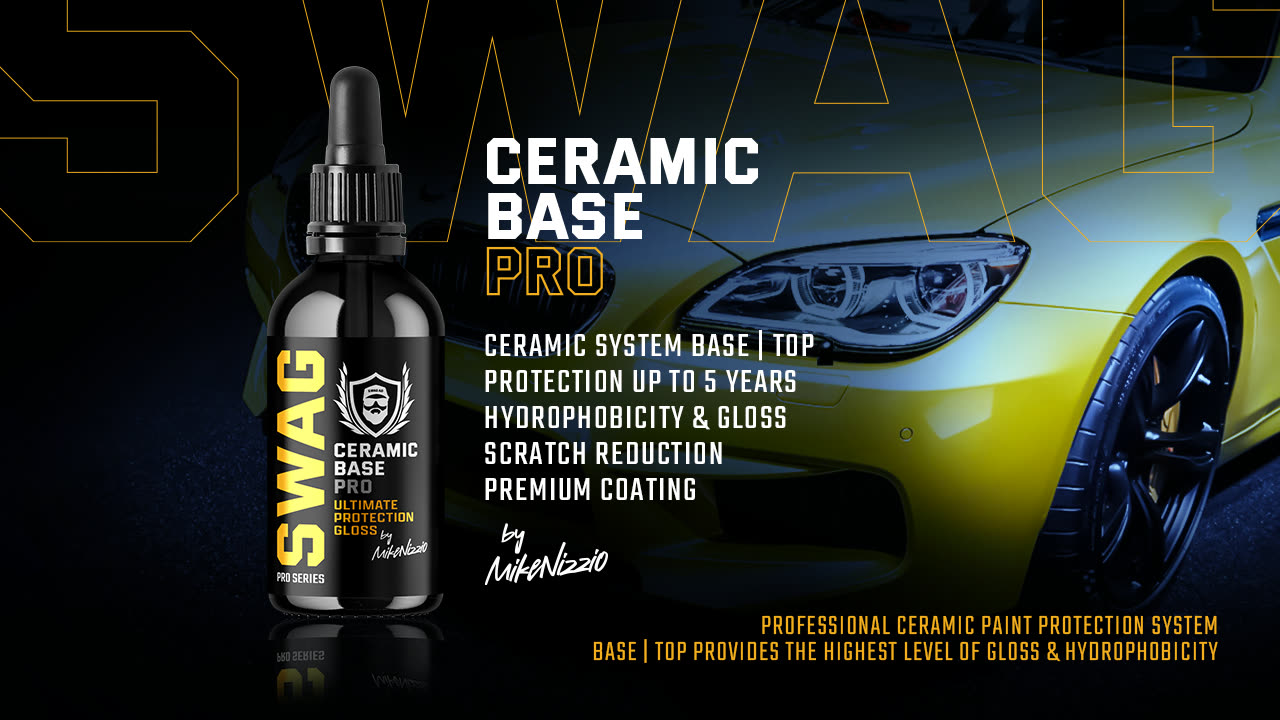
Ceramic coating is worth it if you want long-term paint protection and a car that stays cleaner and washes easier — but only if the paint is prepared properly and your expectations are honest. A coating is not a force field: it won’t stop stone chips or careless scratches. What it does deliver is hard, hydrophobic protection that outlasts any wax. I’ve coated hundreds of cars in my studio, and in this guide I’ll tell you when it makes sense, when it doesn’t, and whether you should do it yourself.
In this guideWhat is ceramic coating?What it does — and doesn’tIs it worth it?Pro vs DIYWhat does it cost?Choosing a coatingPrep is everythingLiving with a coated carFAQ
What is ceramic coating?
A ceramic coating is a liquid, typically based on SiO₂ (silicon dioxide), that chemically bonds to your paint and cures into a hard, glass-like protective layer. Unlike a wax, which sits on the surface and washes away over weeks, a cured coating becomes part of the surface. It can only be removed by abrasion — machine polishing — not by shampoo or weather.
The cured layer is sacrificial protection — bird droppings, road salt, UV and winter grime hit the coating instead of your clear coat — and it’s extremely hydrophobic: water beads up and rolls off, taking loose dirt with it.
What a coating actually does — and what it doesn’t
After 13 years in the studio, my honest summary is: coatings transform maintenance, they do not make a car invincible. On the real-benefits side: washing becomes dramatically faster because dirt doesn’t grip the slick surface; water spots and grime bond less; gloss gets a deep, wet character; and the protection holds for years rather than the weeks you get from a wax.
Now the honest part — the things some marketing won’t tell you. A coating is microns thin. It will not stop stone chips. It will not make the car scratch-proof: drag a dirty sponge across coated paint and you will still mar it. It doesn’t mean you never wash the car again — it means every wash is easier and safer. And a coating locks in whatever is underneath it, so if you coat over swirls and scratches, you’ve just preserved them beautifully.
If anyone promises you a scratch-proof, maintenance-free car, walk away. What you’re actually buying is time: less of it spent washing, more years before the paint needs correcting again.
Is ceramic coating worth it?
Worth it: if you keep the car more than a couple of years, wash it yourself, park outside, or simply care how it looks — yes. Paint correction plus protection is a one-off investment; every wash for years afterwards is quicker, and the finish stays at a level a waxed car can’t hold.
Not worth it: if the car is a short-term lease you never wash yourself, or if you’re not prepared to do (or pay for) the prep properly. A coating slapped over dirty, swirled, unprepped paint is money wasted — it will neither bond nor look right. In my studio the coating itself is the quickest part of the job; the preparation is where the value is created.
Professional application vs doing it yourself
A professional buys you machine paint correction, a controlled dust-free environment and experience; DIY buys you a fraction of the price and real satisfaction — and with modern consumer-friendly coatings it’s absolutely achievable.
The pro route makes sense when the paint needs serious correction, when a new car should be perfect from day one, or when you have no garage — coatings don’t like curing outdoors in dust, damp or direct sun.
The DIY route is realistic if you can offer the car a clean, shaded space, a few hours, and the discipline to follow the prep steps. Apply in small sections, level the product before it flashes, and don’t rush the cure. Watch me apply the pro system start to finish:
How much does ceramic coating cost?
Professional ceramic coating is priced mostly on preparation, not on the bottle — which is why quotes vary so much between cars and studios. A newer car needing light polishing is a very different job from a neglected daily that needs multi-stage correction before the coating can even come out of the box. When you compare quotes, you’re really comparing hours of paint correction and the studio’s standards, so ask what prep is included rather than chasing the lowest number.
DIY changes the equation: you pay for a coating kit and prep products, and invest your weekend instead of labour rates. For a hobbyist with a garage, it’s the best value in detailing.
Which coating should you choose? The SWAG line-up
Match the coating to your experience, not your ambition. Here’s how I position the three tiers I formulated:
| Coating | Who it’s for | Character |
|---|---|---|
| CERAMIC PRO BASE 9H + PRO TOP | Studios and confident enthusiasts | Two-layer system: hard 9H base coat plus a top coat for the finish — hydrophobic protection for years |
| CERAMIC ONE | First-time coaters who want a true coating | Single-layer ceramic coating — simpler application, still hydrophobic protection for years |
| CERAMIC WAX COAT GEL UV | Entry point — wax-style application | SiO₂ gel coating applied like a wax: very forgiving, precise application, ceramic protection with a wet-look finish |
My advice for a first attempt: start with the gel — it applies like a wax, so the technique feels familiar and the precision is easy to control. If you’re comfortable with paint prep already, CERAMIC ONE gives you a genuine long-term coating in one layer. The BASE 9H + TOP system is what we use on studio jobs — I’d save it for your second coating, or a very methodical first. The whole family lives in our SWAG Ceramics range.
Prep decides the result: polish, then panel wipe
A coating bonds to the paint surface, so whatever is on that surface — polish oils, old wax, grease — is what your expensive coating actually sticks to. The sequence I never deviate from: wash, decontaminate, machine polish to remove defects, then degrease every panel before the coating touches the car.
That degreasing step is called a panel wipe, and skipping it is the number one DIY coating failure I see. Polish residue left on the paint means the coating bonds to oils instead of paint, and durability collapses. I use Swag FINAL INSPECT on every panel — it strips the residue and shows the true, naked paint. I’ve written a full guide on this: why you must degrease paint before wax or coating.
Living with a coated car
A coated car still gets washed — just faster, and with the right chemistry. Use a pH-neutral shampoo, never automatic brush washes, and dry the car rather than letting water evaporate into spots. Coating-safe maintenance products exist for a reason: a coating-strengthening shampoo and a topping spray like our CERAMIC COAT RELOADER keep the hydrophobic effect sharp between years.
Treat the coating as the thing you maintain instead of the paint, and it will keep doing its job season after season.
Frequently asked questions
What is ceramic coating made of?
Most coatings are based on silicon dioxide (SiO₂) carried in solvents; the liquid cross-links as it cures into a hard, transparent layer bonded to the paint. Higher-grade systems split this into a hard base layer and a top layer that delivers the slickness and water behaviour.
Does ceramic coating protect against scratches?
Only against the very lightest marring — it is not scratch-proofing. A coating’s real protection is chemical and environmental: bird droppings, UV, salt, grime. Bad wash technique will still scratch a coated car, which is why I bang on about wash method as much as products.
How do you remove a ceramic coating?
Machine polishing. A cured coating won’t wash or dissolve off with normal chemicals — it has to be abraded away, which conveniently is the same step you’d do to prep the paint for a fresh coating. If a coating is failing patchily, polish the whole panel back and start clean.
How do you wash a ceramic coated car?
Pre-wash with snow foam, then a pH-neutral or coating-safe shampoo, two buckets, and a proper dry. Skip aggressive traffic film removers on every wash and never take a coated car through brush car washes — the coating makes washing easier precisely so you can do it gently.
Is Supagard a ceramic coating?
Dealer-applied paint protection packages are sealants applied quickly on the forecourt — a different product class from a studio ceramic coating applied after machine correction. The prep is the difference: a coating over uncorrected paint can never look like one over polished paint, whatever the brand.
Every coating I mentioned — from the entry-level gel to the studio BASE 9H + TOP system — lives in our SWAG Ceramics range. Pick the tier that matches your experience, prep properly, and the paint will thank you for years.