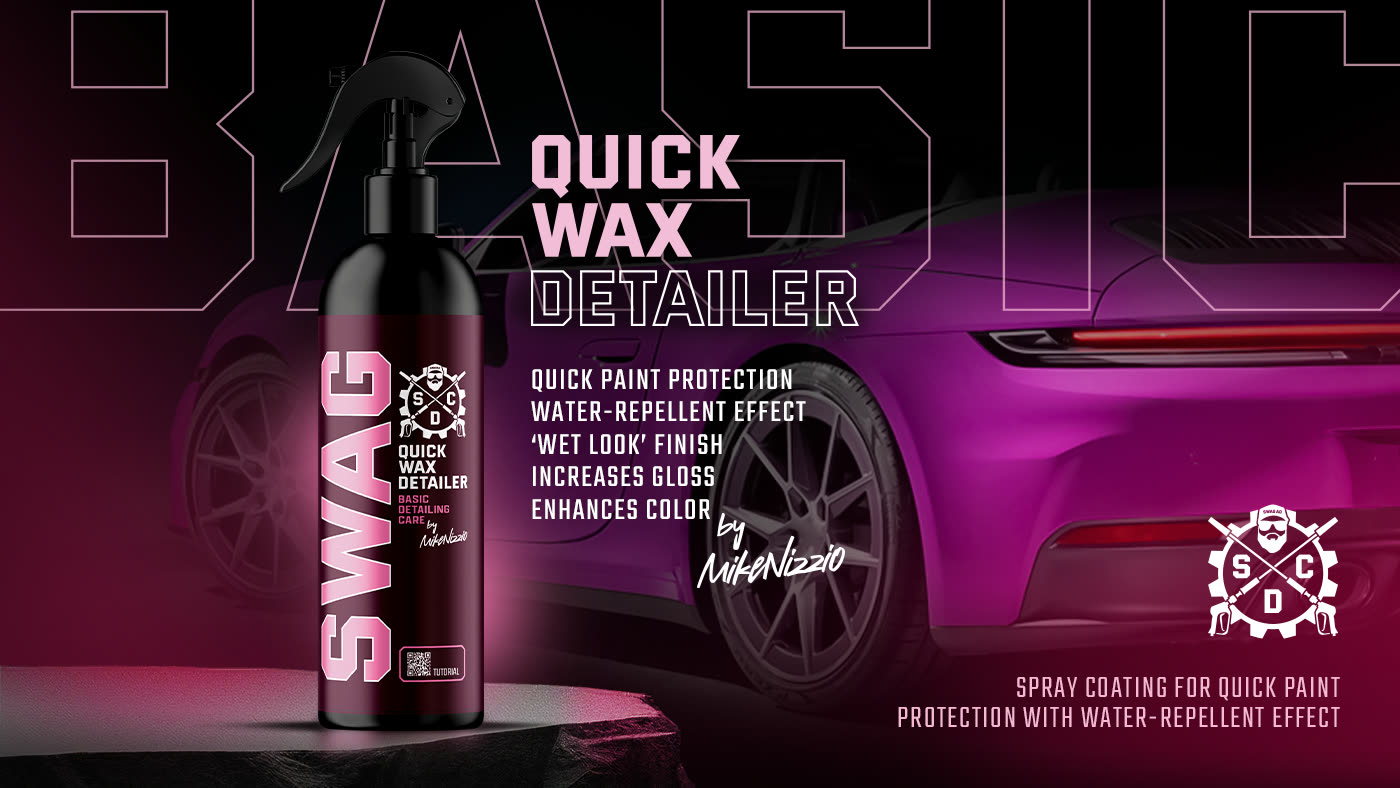
Which car wax is best? For most drivers, a hybrid wax — synthetic polymers blended with natural carnauba — gives the best balance of gloss, protection and ease of use. A pure sealant lasts longer but looks flatter; a ceramic coating lasts longest of all but demands serious prep. After 13 years of running my own studio and formulating every SWAG product myself, my honest answer is: the best protection is the one that matches how much time you’re willing to give it.
In this guideWax vs sealant vs ceramic comparedWhich car wax is best for most drivers?When a ceramic wax makes senseHow to apply wax so it lastsMachine applicationMaking any wax last longerFAQ
What is the real difference between wax, sealant and ceramic?
They all do the same job — put a sacrificial, hydrophobic layer between your clear coat and the world — but they differ hugely in chemistry, durability and effort. Carnauba-based waxes are the classic choice: warm gloss, easy on, easy off, shorter life. Synthetic sealants are polymers that bond harder and last months. Ceramic products use SiO₂ to build a semi-permanent glass-like layer.
Here’s how I’d compare them after applying all three to hundreds of cars in my studio:
| Type | Typical durability | Look | Effort | Best for |
|---|---|---|---|---|
| Hybrid wax (carnauba + synthetic) | Weeks to a few months | Deep, warm gloss | Low — hand or machine | Enthusiasts who wax regularly |
| Spray sealant / touchless coat | Several months when topped up | Bright, glassy | Very low — applied during the wash | Daily drivers, quick maintenance |
| Ceramic (SiO₂) wax or coating | The longest of the three | Wet look, high slickness | Higher — paint must be spotless and degreased first | People who want to protect once and maintain |
None of these is “wrong”. I run wax on my own weekend car because I enjoy applying it, and ceramic on the studio van because I don’t.
Which car wax is best for most drivers?
If you only buy one product, make it a hybrid wax — it forgives beginner mistakes and still performs like a professional product. The reason I formulated our Hybrid Wax as a blend of high-grade synthetic waxes and natural carnauba is simple: carnauba is the hardest, most exclusive car wax in the world, but on its own it doesn’t last. Pair it with synthetics and you get the depth of colour carnauba is famous for, plus real staying power.
What you should expect from a good hybrid wax: strong hydrophobicity (water beads and rolls off, taking dirt with it), a noticeably slicker surface, UV protection that slows oxidation, and a self-cleaning effect — grime simply struggles to stick, so every wash afterwards is quicker.
What a wax will not do is remove swirls or scratches. That’s a polishing job — I’ve covered it separately in my machine polishing guide.
Is a ceramic wax worth the extra effort?
Yes — if you’re willing to prep the paint properly first. A ceramic wax like our Ceramic Wax Coat Gel UV sits between a traditional wax and a full ceramic coating: SiO₂ chemistry and a wet-look finish, but in a gel you can apply precisely at home without a coating course behind you.
The catch with anything ceramic is bonding. SiO₂ needs a completely clean, oil-free surface — any leftover wax, glaze or polish residue and it sits on top of the contamination instead of the paint, and durability collapses. This is exactly why I never skip a panel wipe before ceramic products; I’ve explained the whole thing in my panel wipe guide. If you won’t degrease first, buy the hybrid wax instead — you’ll be happier.
How do you apply a car wax so it actually lasts?
Clean paint, thin layers, and patience before the buff — that’s 90% of wax durability. This is the exact routine I use in the studio with Hybrid Wax:
- Prepare the surface. The paint must be clean and dry. If the panel feels rough, wash and clay it first to pull out embedded contamination.
- Shake the bottle before use.
- Apply a few drops of wax to a soft applicator — a few drops, not a puddle. Thick layers don’t last longer, they just waste product and fight you during the buff.
- Spread in circular motions over the panel in a thin, even layer.
- Wait a minimum of 15 minutes so the wax can bond with the paint. Rushing this step is the single most common mistake I see.
- Buff with a soft, high-GSM microfibre until the haze is gone and the panel is glass-smooth.
Can you apply wax by machine?
You can, and on big panels it’s faster — the rules just get stricter. Put a few drops of wax on a polishing pad, spread it evenly at low speed with no extra pressure — the machine is only there to lay a thin, uniform film, not to work the product in. Then it’s the same as by hand: wait a minimum of 15 minutes, and buff off with a clean microfibre for the final gloss.
Watch me demonstrate the full application start to finish:
How do you make any wax last longer?
Top it up during your regular washes instead of waiting for it to die. The pattern I use on customer cars: wax the paint properly once, then maintain the layer with a hydrophobic topper at every wash. Used this way with our Hydro Coat touchless coating, I’ve kept the water behaviour and protection going for up to 5 months from a single waxing.
Between washes, a quick detailer does the same job on a smaller scale. A couple of sprays of Hydrophobic Quick Detailer+ after drying restores the slickness and adds gloss in a minute per panel. Everything in this family lives in our paint maintenance range, and the ceramic side in SWAG Ceramics.
Frequently asked questions
What is car waxing?
Car waxing is applying a thin protective layer of wax over your paintwork. It shields the clear coat from UV, road salt, rain and contamination, adds gloss and depth of colour, and makes the car easier to wash because dirt struggles to stick to the slick surface.
Why wax a car at all?
Because unprotected clear coat oxidises and dulls over time. Regular waxing extends the life of your paint, keeps the colour deep, and means contamination sits on the wax — a sacrificial layer — instead of etching into the lacquer itself.
How do you polish and wax a car — in which order?
Always polish first, wax last. Polishing removes defects and leaves oils on the surface; degrease those off with a panel wipe, then apply your wax to bare, clean paint. Wax on top of polish residue simply won’t bond properly.
What is the best car wax for the UK climate?
A hybrid wax topped up regularly. British rain and road salt kill soft pure-carnauba waxes quickly, so the synthetic content matters here — and topping up with a hydrophobic spray during winter washes keeps the protection alive when you least want to spend hours outside.
Is spray wax as good as paste wax?
Not as durable, but far more convenient. I treat spray products as maintenance for an existing wax layer rather than a replacement for one. Wax properly a few times a year, spray-top between — that combination beats either product used alone.
Everything I used in this guide lives in our paint maintenance range — the same formulas I run daily in my own studio, no rebrands, no shortcuts.