Clean a dashboard with a balanced-pH interior cleaner sprayed onto your cloth rather than onto the panel, work in sections, dry-buff with a second microfibre, and finish with a matte dressing instead of a glossy one. Nine times out of ten, dashboard cleaning goes wrong not because the plastic is dirty but because someone reached for a shine product — and a shiny dash reflects in your windscreen and collects dust within a day. Here’s the method I use to get an even, factory-matte finish that stays that way.
In this guideWhy dashboards go shinyWhat shine costs youWhat to clean it withSpray the cloth, not the panelVents and switchesMatte, satin or glossWhat never to useFAQ
Why do dashboards end up shiny in the first place?
Because most dashboard shine products are built around oils and heavy silicones that sit on the surface as a film, and that film is what reflects light. They sell well because the first ten minutes look dramatic — dull grey plastic suddenly looks wet and new. What they’re doing is coating the texture rather than cleaning it.
A modern dashboard is moulded with a fine grain precisely so it scatters light instead of reflecting it; fill that grain with something greasy and you’ve flattened the texture optically. There’s a second cause nobody mentions: not cleaning properly before dressing. Skin oils, sun cream and the film that builds up in any cabin are shiny in their own right, and a damp cloth smears them into a gloss rather than removing them.
What a shiny dashboard actually costs you
Three things: glare, dust and a hazy windscreen. On a bright day a glossy dash top throws its own reflection into the base of the windscreen, and with a low winter sun it lands exactly where you’re trying to read the road.
Oily films are also slightly tacky and often hold a static charge, so dust is drawn straight to them — that’s the cycle where the car looked incredible on Sunday and dusty by Tuesday. It isn’t your car, it’s the product. And solvent-heavy dressings on a hot dash slowly release into the cabin and condense on the glass, leaving a film that smears the moment you use the wipers. If you’re forever cleaning the inside of your windscreen, look at the dashboard first, then clean the glass with something like SWAG Glass Cleaner+ V.3.1.
What should you use for dashboard cleaning?
Two products and two cloths cover almost every dashboard: a balanced-pH all purpose cleaner to remove the dirt, and a matte dressing to put colour and protection back. Cleaning and dressing are separate jobs, and doing both with one greasy wipe is how the shiny-dash problem starts.
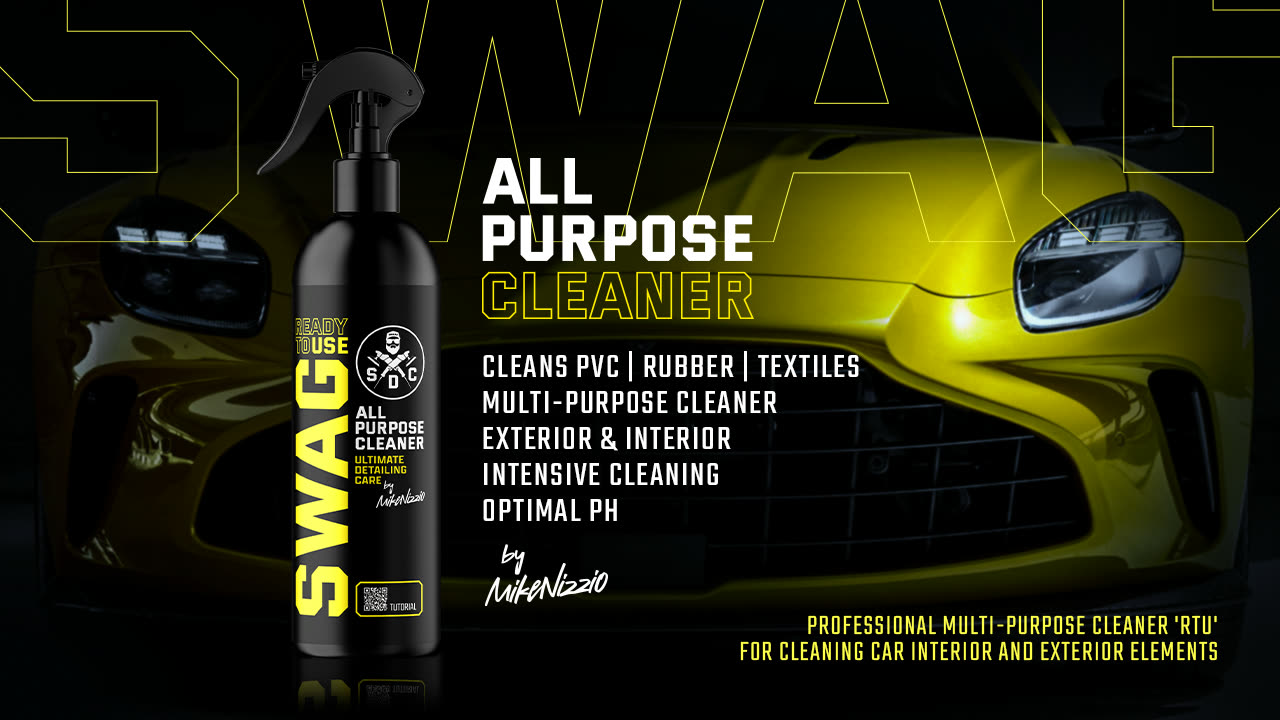
For the cleaning half I use SWAG APC RTU V.2. It’s mixed to a safe working strength and balanced rather than aggressive, which matters here: strongly alkaline degreasers pull plasticiser out of soft-touch surfaces and leave them chalky over the years. Add two microfibres — one damp with product, one bone dry — and a soft detailing brush, and that’s the whole kit. Here’s the APC in use:
Spray the cloth, not the dashboard
This one habit separates a professional finish from a patchy one. Product sprayed straight at the panel runs into instrument bezels, mists onto the windscreen, soaks into the seams around airbag covers and lands unevenly. Spray the cloth and you control exactly how much goes where.
- Dust and vacuum first. Soft brush plus vacuum nozzle down every seam — wiping a dusty dash with a damp cloth makes mud and drags grit across soft-touch plastic.
- Fold the cloth into quarters — eight clean faces per towel. Turn to a fresh one as soon as the face you’re using looks grey.
- Mist the cloth, then work one section at a time: dash top, instrument surround, centre stack, passenger side.
- Let the cleaner do the work. Give it a moment to soften the film instead of scrubbing — two gentle passes beat one hard one.
- Dry-buff immediately with the second microfibre. Almost everyone skips this, and it’s what removes residue before it dries into a streak or a shine.
- Dress last, sparingly — onto the applicator, thin and even, then buff. If the panel looks wet, you’ve used too much.
Screens are the exception: infotainment and instrument displays carry their own coatings, so they get a dry or barely damp microfibre and nothing else.
Vents, switch surrounds and the bits that make it look done
A dashboard reads as clean or dirty from a metre away, and what people notice at that distance is the detail — vent slats, the grooves around switches, the seam where the dash meets the windscreen. Wipe the flat panels, skip those, and the car still looks unfinished.
Do vents with a soft detailing brush, dry first to knock the dust out, then lightly dampened with cleaner if the slats look filmy. Hold the vacuum nozzle just below as you brush, or you’re relocating dust onto the dash top you’ve already done. Never spray cleaner into a vent — that’s spraying into the ventilation ducting. Switch surrounds and column shrouds want the same brush plus a microfibre over a fingertip. Do the door tops in the same session, too — a spotless dash beside grubby door cards looks stranger than leaving both alone.
Matte, satin or gloss: choosing the finish
Choose the finish deliberately — it’s the decision that really changes how the car looks. Here’s how the three behave on a daily driver:
| Finish | How it looks | Dust and glare | Where I use it |
|---|---|---|---|
| Matte interior dressing | Factory — colour restored, no reflection | Lowest of the three | Dash top and anything in the driver’s sightline. My default. |
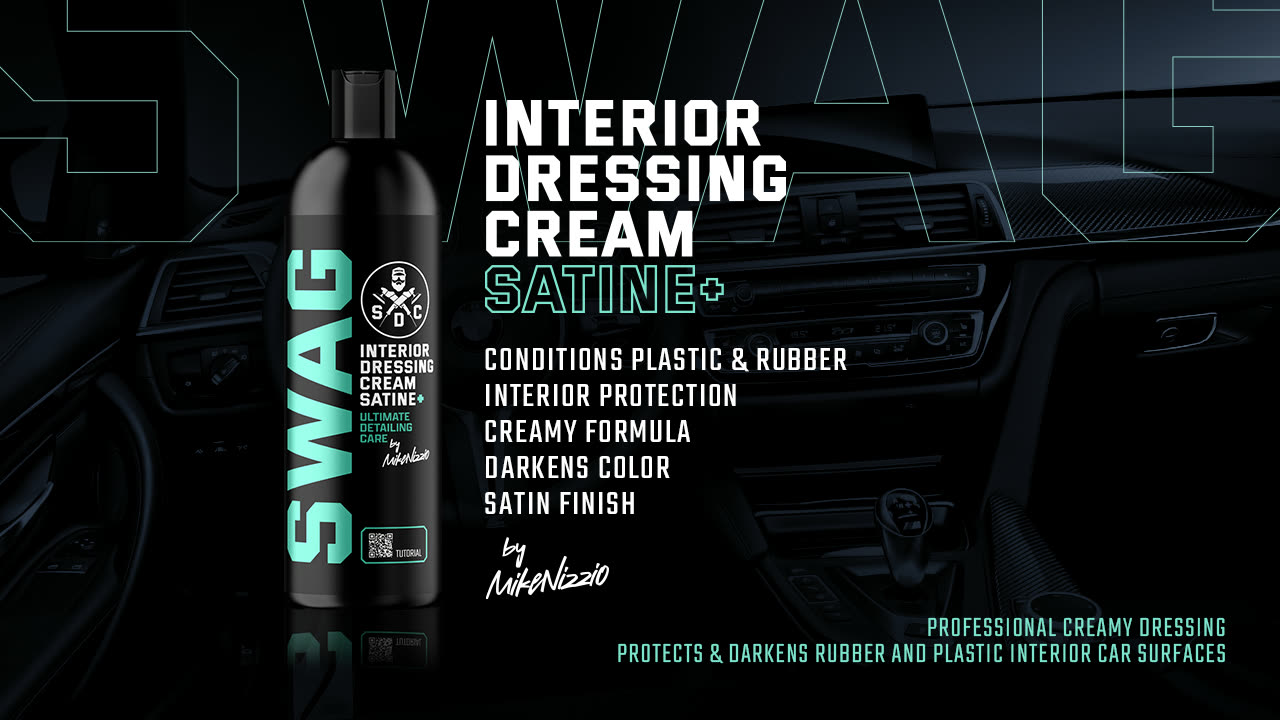
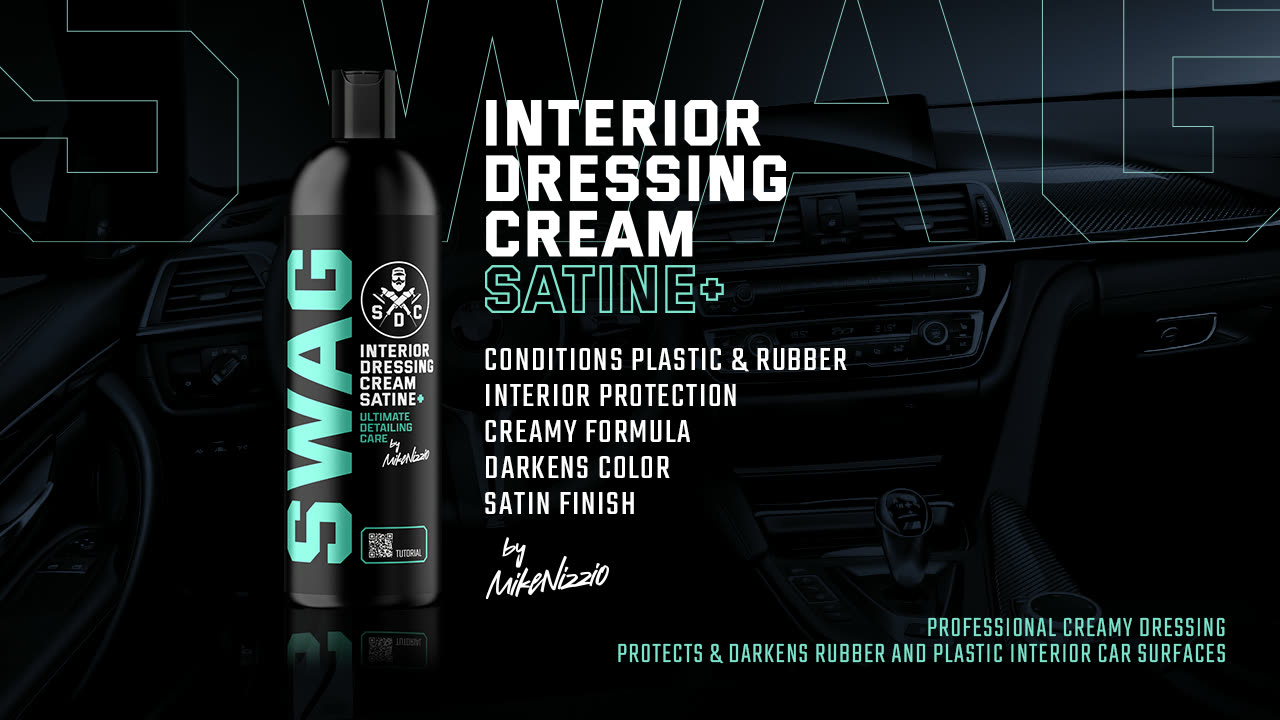
| Satin dressing cream | Slight sheen, deeper colour on tired plastic | Low if applied thinly | Door cards, lower console, faded black plastic that needs lifting |
| Glossy oil-based shine | Wet-look for a day, then patchy | Highest — dust magnet and windscreen glare | Never on a dashboard, in my studio |
Whichever you pick, apply it thin — a dressing should leave a protective, UV-tolerant layer, not something you can feel with a fingertip. Mixing finishes by panel, dead matte on the dash top and a little depth on the door cards, is what makes an interior look considered rather than sprayed.
What never to use on a dashboard
Household furniture polish, washing-up liquid, glass cleaner and generic wipes are the four things I take out of customers’ cars most often. Furniture polish is silicone shine in a can, and its entire purpose is the effect you’re trying to avoid. Washing-up liquid leaves residue that dulls unevenly and attracts dirt. Glass cleaner belongs on glass — many carry solvents that haze or dry interior plastics with repeated use. Generic wipes are the sneakiest: convenient, apparently effective, and most leave fragrance and oil behind that dries to a light gloss and builds up over months.
Nor should you take a melamine sponge to soft-touch plastic — it’s abrasive, and on a matte dash it leaves a polished patch you cannot undo. If something needs more than a balanced cleaner and a little patience, it needs a second pass, not a harsher tool. Everything I trust on interior plastics is in the interior cleaning range.
Frequently asked questions
What can I use to clean a car dashboard at home?
A microfibre lightly dampened with warm water safely removes dust and light marks — a perfectly good weekly wipe. For skin oils, sun cream and the film that builds up over months you need a proper interior cleaner with a balanced pH; water alone smears that film rather than lifting it.
Why does my dashboard reflect in the windscreen?
Because something on the surface is glossy: a shine product, or built-up oily residue. Clean the dash back with an all purpose cleaner, dry-buff it, then re-dress with a matte product. The reflection goes with the gloss.
Can I use baby wipes on my dashboard?
I’d rather you didn’t. They’re mild enough for one-off use, but they carry oils and fragrance that dry to a faint sheen, and weekly use builds a film you’ll eventually have to strip. They also can’t reach vents or switch grooves, which is where dashboards really look dirty.
How do you clean dashboard vents properly?
Soft detailing brush first, dry, with the vacuum nozzle held just underneath to catch what you knock loose. If the slats still look filmy, dampen the brush tip with cleaner — never spray into the vent itself, because that puts liquid straight into the ventilation ducting.
Is dashboard dressing bad for the plastic?
A good one isn’t. It leaves a thin protective layer that helps the surface cope with UV, which is what actually fades and hardens a dash over the years. The ones to avoid are the heavy greasy dressings: they attract dust, can migrate onto the windscreen and never look even.
Clean first, dress second, keep it matte. The cleaner and dressings I used are in our interior cleaning range, with the glass side in glass cleaning.