Yes, a leather conditioner has a real job — but it is not the job the marketing implies. Almost every car seat built in the last few decades wears pigmented, coated leather, so a leather conditioner is not soaking into a thirsty hide. It maintains the polymer finish sitting on top of that hide: how it feels, how flexible it stays, how it copes with sunlight. That is worth doing. “Feeding the leather” simply isn’t what is happening.
In this guideWhat a leather conditioner actually doesIs your leather coated or uncoated?Why “feeding the hide” is the wrong ideaSo when do you actually need one?Cream or hydrophobic protection?How I apply itWhat it will never doFAQ
What does a leather conditioner actually do?
It leaves a thin, flexible, UV-resisting film on the coating that forms the visible surface of your seat. That film does three things: keeps the coating supple so it flexes instead of crazing, slows the UV attack that hardens and bleaches it, and leaves the surface slick enough that dye transfer and grime sit on top rather than settling into the grain.
Notice what is missing: nothing about nourishment, nothing about the leather “drinking” anything. After thirteen years of stripping down tired interiors I will be blunt — on a modern car the hide is barely involved. The finish is what you see, what you touch, and what fails.
Is your car’s leather coated or uncoated?
Put one drop of water on a hidden part of the seat and watch it for half a minute. If it beads and sits there, you have coated leather — which is what the overwhelming majority of cars leave the factory with. If it darkens the surface and disappears into it, you are looking at something aniline or semi-aniline, and the rules change.
| Leather type | How you spot it | What it needs |
|---|---|---|
| Pigmented / coated nearly all car seats |
Water beads; uniform colour; a repeating embossed grain | Gentle cleaning plus a conditioner that maintains the coating |
| Semi-aniline some luxury trims |
Slight darkening under water; softer, more natural grain | The same routine, applied more sparingly and tested first |
| Aniline, nubuck, suede rare in cars |
Water soaks straight in and leaves a dark ring | Specialist products only — do not treat it like coated leather |
If you drive an ordinary saloon, hatchback or SUV you almost certainly landed in the first row. Do the test anyway — it stops you treating the one interior in a hundred that genuinely is uncoated like all the others.
Why “feeding the leather” is the wrong mental model
A pigmented coating is a barrier — that is its entire purpose — and barriers do not let oils through. When a product claims to sink in and restore the hide’s natural oils, ask how it gets past a layer engineered to keep coffee, sun cream and denim dye out.
The confusion is understandable, because seats really do feel dry and lifeless as they age. That sensation comes from the coating, not the hide: years of body oils, sun and abrasive grit leave the finish hardened, micro-scratched and matted. Clean it properly and half the “dryness” disappears before you apply anything at all — which is why my order of work is always clean first, then protect. Accept that model and a lot of leather folklore collapses, household oils above all, as I explain in this piece on homemade leather cleaners.
So when do you actually need a leather conditioner?
After every proper clean, and periodically on the panels that take real punishment — not as a weekly ritual on the whole interior. Cleaning removes grime, but it also removes whatever protection was on the surface, and leaving the coating bare afterwards is the one genuinely avoidable mistake I still see constantly.
The panels that matter are the driver’s outer bolster, the seat base, the top of the backrest sitting in direct sun, and the armrest. Those four take the abrasion and the UV; the rear bench of a family car often looks factory-fresh a decade later because nothing ever happens to it.
Frequency is where I refuse to invent a number. A convertible on a south-facing driveway is on a different rhythm to a garaged car with tinted glass. The sensible interval is measured in months rather than weeks, and more product more often is not better — it just leaves a tacky layer that attracts dust.
Conditioner cream or hydrophobic leather protection?
The cream is the maintenance product; the hydrophobic impregnation is the barrier product. Most people want the cream, some want both. They are not competitors so much as answers to two different worries.
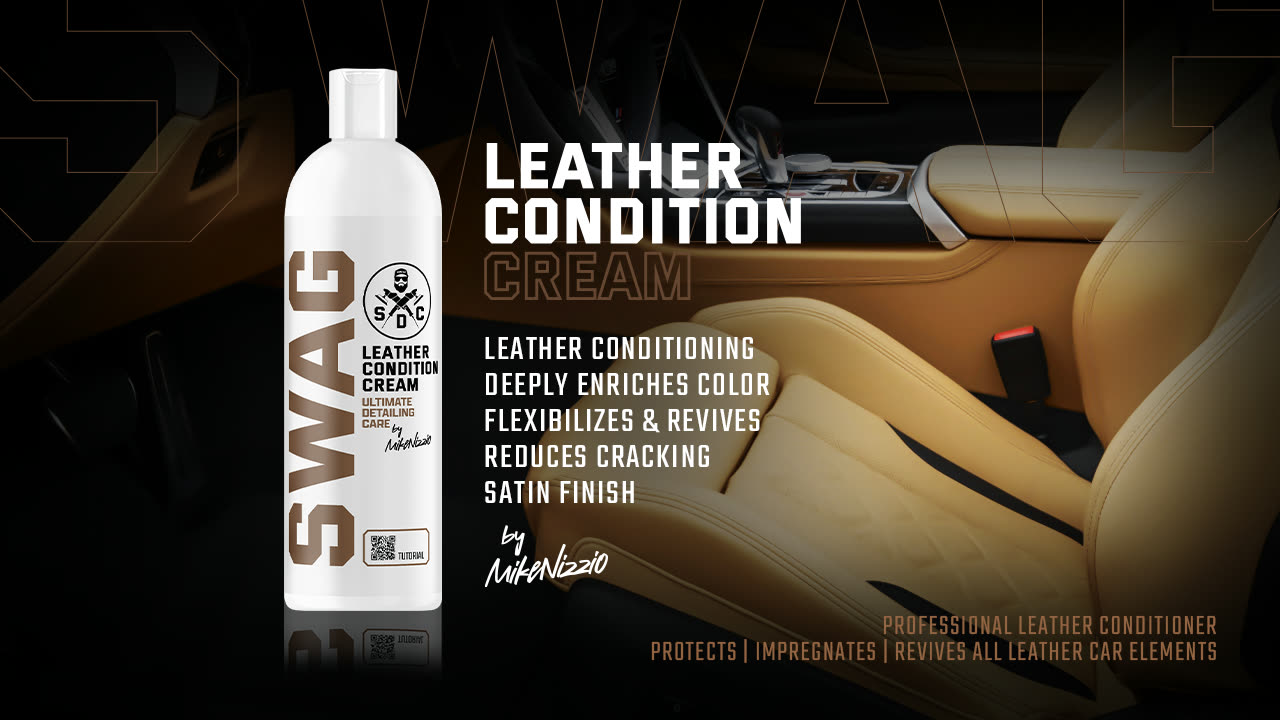
SWAG Leather Conditioner Cream V.2 is what I reach for on the vast majority of cars. It keeps the coating flexible, guards against cracking and gives the colour back some depth without turning the seat into a mirror. If your concern is a seat that is starting to look tired and grey at the edges, that is the bottle.
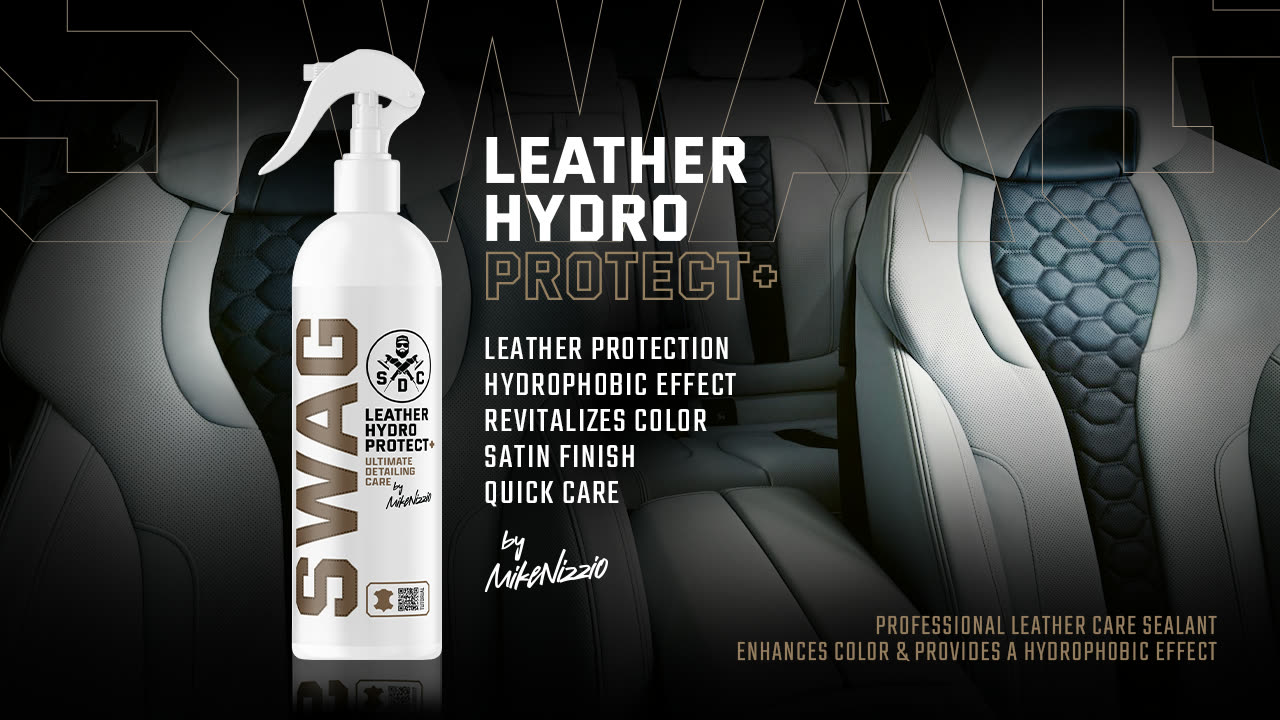
SWAG Leather Hydro Protect+ is the impregnation. It makes liquids bead and roll instead of settling into the grain, and it darkens the grain slightly. On a family car with children, dogs and takeaway coffee it earns its place — just test a hidden section first, so the darkening is a decision rather than a surprise.
How I apply a leather conditioner in the studio
Thin, even, onto the applicator rather than the seat, and only ever onto leather that is clean and fully dry. The whole thing takes me a fraction of the time the cleaning does.
- Clean first, always. Conditioner over grime seals the grime in. Use a dedicated leather cleaner such as SWAG Leather Cleaner RTU with the foamer head, following the label rather than guessing.
- Let it dry properly. Damp leather traps whatever you put on top of it.
- Product on the applicator, not the seat. A small amount on a foam or microfibre applicator gives control; squirting it onto the panel gives blotches.
- Work panel by panel in overlapping passes, into the seams and piping where the flexing happens.
- Level it off with a clean, dry microfibre. Slippery or glossy means too much — take it back off.
- Let it settle before anyone sits down, or half of it leaves on a pair of trousers.
The cleaning stage that has to come first, on a genuinely filthy Macan interior:
What a leather conditioner will never do
It will not repair a crack, rebuild a worn-through bolster or bring back colour that has already gone. I would rather tell you that now than sell you a jar of hope.
Once the coating has split, the damage is structural: filling, re-colouring and sealing is a trim specialist’s job, and no cream from any brand — mine included — changes that. Conditioning keeps you out of that situation, which is the whole argument for doing it while the seat still looks fine. The prevention side is covered properly in how to stop leather seats cracking and fading.
Frequently asked questions
Do you really need to condition leather car seats?
Yes, but understand what you are conditioning. On coated seats you maintain the finish — its flexibility and its UV resistance — not the hide. That is still worth doing, because the finish is the part that cracks and fades.
How often should you use a leather conditioner?
After every proper clean, and then on a rhythm measured in months rather than weeks. A car that lives outside in the sun needs it more often than a garaged one. Applying more, more frequently, does not help — it just leaves a tacky surface that collects dust.
Is leather conditioner the same as leather protection?
No. A conditioner cream maintains the coating’s feel, flexibility and colour depth. A hydrophobic impregnation adds a liquid-repelling barrier and usually darkens the grain a little. Conditioner is the default; impregnation is the upgrade for interiors that take abuse.
Can you apply a conditioner without cleaning first?
You can, and you will regret it. Conditioner over an unwashed seat locks body oils and grit under the film, and trapped grit is precisely what wears the coating out. Clean, dry, then protect — in that order, every time.
Does leather conditioner stop seats cracking?
It reduces the risk significantly, because a supple coating flexes rather than crazing. It cannot reverse cracks that already exist. Prevention works; restoration is a different trade.
Can I use olive oil instead?
No. Oils cannot cross a pigmented coating, so they sit on the surface, attract dust and eventually turn rancid. It is the most damaging piece of leather advice circulating online.
The cream and the impregnation I described both live in our leather conditioning range, and if you would rather buy the cleaner and the protection together, the leather care sets pair them up. Protect the coating while it is still healthy — that is the whole game.