Leather cracking in a car is almost never the hide splitting — it is the coating on top going hard and brittle until it can no longer flex, with sunlight doing most of the work. Fading is the same enemy from another angle: UV bleaching the pigment. Both are largely preventable with shade, gentle cleaning and protection. Neither is repairable with a cream once the surface has split, and anybody telling you otherwise is selling something.
In this guideWhat causes leather crackingWhy leather fadesWhere it always startsPrevention 1: shade and gentle cleaningPrevention 2: protecting the coatingThe honest limit: once it has crackedThe rhythm I’d give a daily driverFAQ
What actually causes leather cracking in a car?
Three things stacked together: a coating that has lost its flexibility, constant mechanical flexing, and abrasive grit ground in every time somebody sits down. Sun accelerates all three. Remove any one and the seat lasts far longer.
Picture the coating as a very thin layer of flexible paint. Healthy, it stretches and returns as the foam under it compresses. As UV and heat drive the plasticisers out, it stops stretching — but it still gets flexed twice a day, so instead of moving it crazes. That fine spider-web pattern on an ageing driver’s bolster is the stage before proper cracks.
Grit is the underrated part: dust, sand and denim fibres sit in the grain and act like fine sandpaper under body weight. Leather cracking is a maintenance problem as much as a sunlight problem, which is why the fix starts with cleaning rather than a miracle cream.
Why do leather seats fade?
Fading is UV breaking down the pigment in the coating — a light problem, not a dirt problem, and no amount of cleaning brings the colour back. Glass blocks some of the UV spectrum but not all, and a parked car in summer is a greenhouse aimed at your interior.
You can confirm it in ten seconds. Compare the top of the rear backrest, sitting under the rear screen in direct sun, with the same leather down in the footwell shadow. If one is lighter and slightly greyer, that is UV, not wear.
Dark interiors hide fading but suffer the worst heat build-up, which is what drives cracking. Cream interiors fade less visibly but display every mark and worn patch. Different symptoms, same cause.
Where damage always starts
The driver’s outer bolster, the front edge of the seat base, the top of the backrest and the armrest — in that order, on almost every car I have worked on. If you only protect four surfaces, protect those.
The outer bolster takes the whole entry-and-exit routine: body weight dragged across it, keys, belt buckles, jeans rivets, a rucksack twice a day. It fails first by a wide margin, which is why a ten-year-old car so often has one visibly older seat and three that look nearly new. The backrest tops take the UV; the armrest takes the sweat and the sun cream. That changes how you work — you do not need to obsess over the whole interior, only to be consistent on four small areas that do all the suffering.
Prevention, part one: shade and gentle cleaning
Park in shade when you can, use a sunshade when you cannot, and clean the seats gently and often rather than aggressively and rarely. Unglamorous advice that does more than any product I sell.
In the UK it is easy to assume sun damage is somebody else’s problem. It is not — a car facing south through a run of clear July days reaches brutal cabin temperatures, and that heat does the same work to the coating as the UV. A folding sunshade is the most cost-effective piece of leather protection in existence.
On the cleaning side the enemy is grit, so remove it before it gets ground in: vacuum the seams and the seat base, then clean with a dedicated pH-appropriate leather cleaner, following the label ratio rather than mixing it stronger. What you must not do is fall back on kitchen remedies — I set out exactly why in why homemade leather cleaners wreck car seats, and every one of them accelerates the damage this article is trying to prevent. Here is that cleaning stage on a car left far too long:
Prevention, part two: protecting the coating
Protection keeps the coating flexible and puts a sacrificial layer between the finish and everything trying to wear it out. Clean leather with nothing on it is still exposed leather.
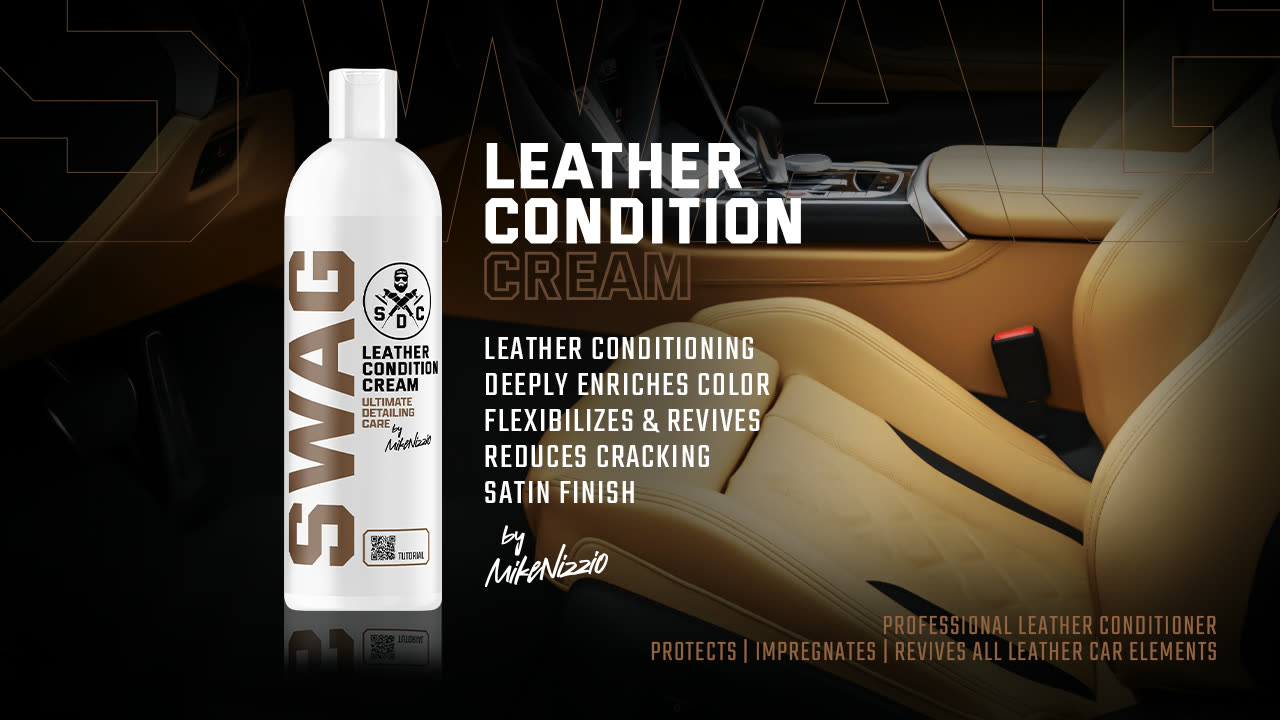
SWAG Leather Conditioner Cream V.2 is the default — it maintains flexibility, guards against cracking and puts depth back into colour that has started to look tired. Apply it thin, onto an applicator rather than the seat, and level it off with a clean microfibre. A glossy seat means too much product, not good protection.
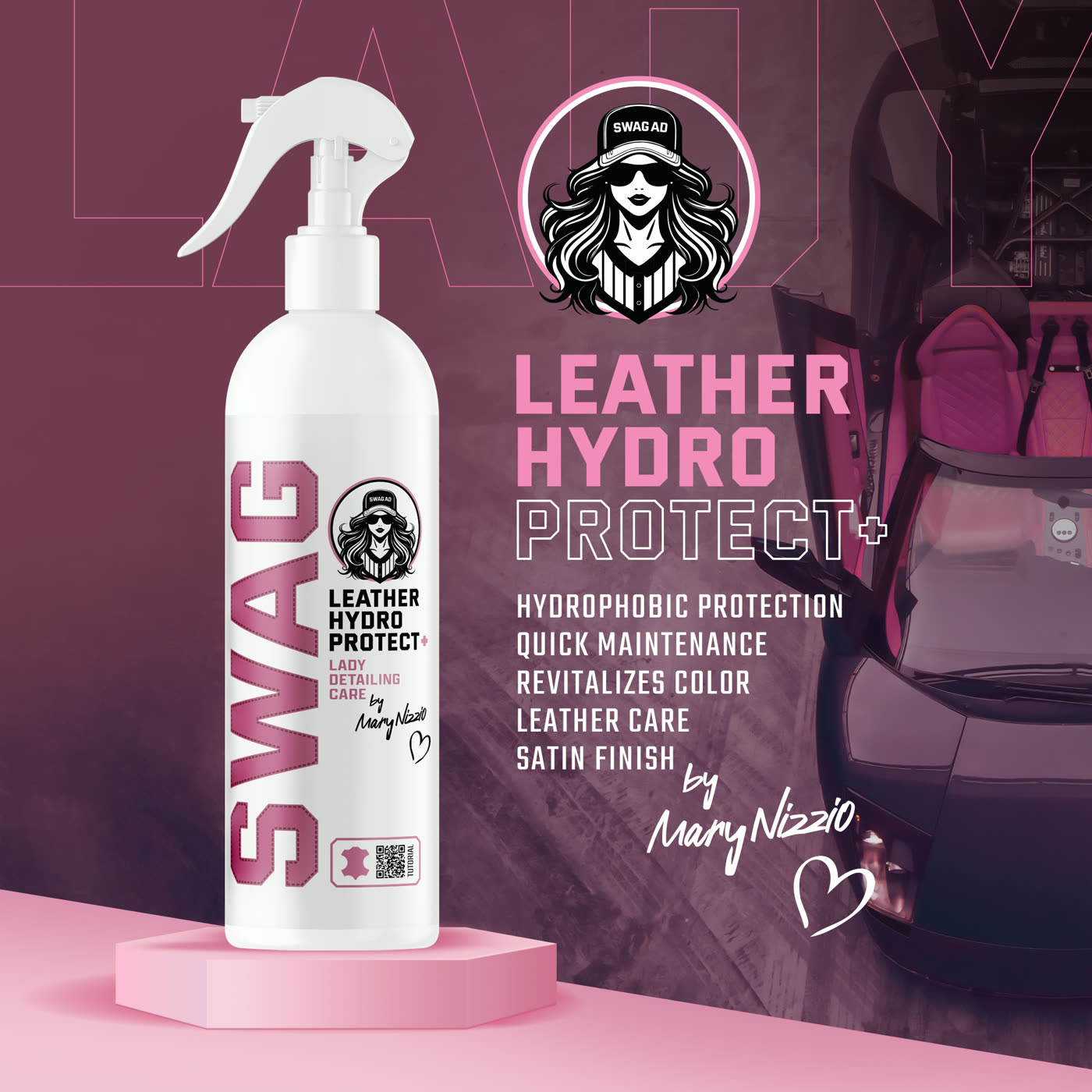
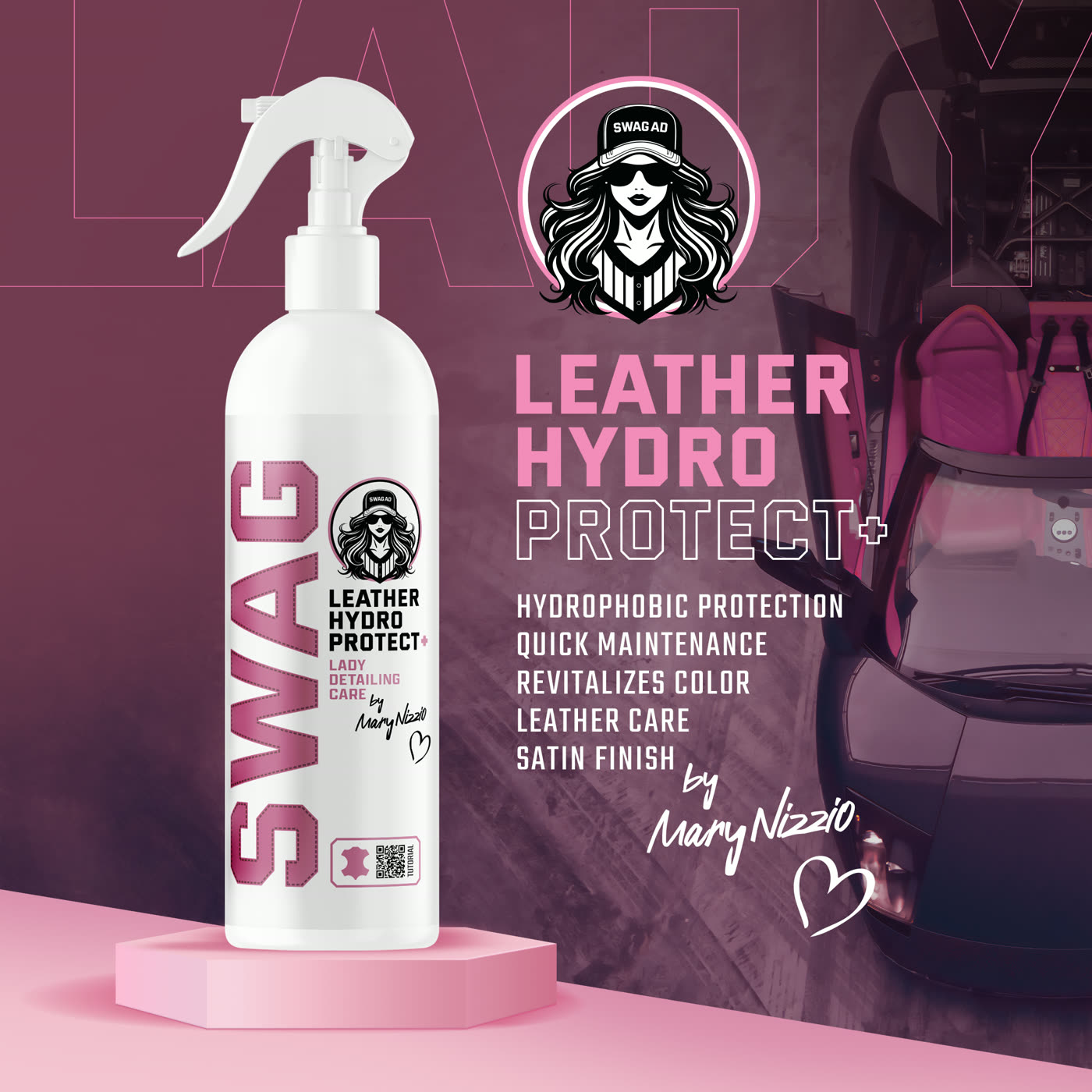
Where the car lives outside or carries children and dogs, I add SWAG Leather Hydro Protect+, which impregnates the surface so liquids bead rather than settle into the grain. It darkens the grain slightly, so test a hidden panel first.
Honest expectation-setting: protection wears off the driver’s bolster far faster than anywhere else, because that is the surface being abraded daily. Top up the high-contact areas on a different schedule to the rest, and judge by feel — protected leather stays smooth and slightly slick, bare leather feels dry and grabby. What conditioning does and does not achieve is covered fully in do you actually need a leather conditioner?
The honest limit: what to do once it has already cracked
Once the coating has physically split, no conditioner, cream or oil repairs it — that is a filling, re-colouring and sealing job for a trim specialist. I would rather lose the sale than have you buy a jar expecting it to close a crack. What matters is working out which stage you are at, because three of the four are still yours to fix.
| Stage | What you see and feel | What actually helps |
|---|---|---|
| 1 — Dirty and dull | Grubby grain, flat colour, slightly grabby to the touch | A proper clean plus protection — most “ruined” seats are only this |
| 2 — Dry, stiffening finish | Coating feels hard and papery; colour looks tired on high spots | Clean, then condition consistently; last point at which prevention still wins |
| 3 — Crazing | Fine spider-web lines on the bolster, no colour loss yet | Conditioning slows it down but will not remove it — get strict about protection now |
| 4 — Open cracks or colour loss | Splits you can catch a fingernail in; bare patches; bleached panels | Professional repair and re-colour — no consumer product fixes this |
Most cars that arrive at my studio “beyond saving” are sitting at stage one. They clean up, take protection, and look years younger by the afternoon. The ones at stage four leave with a phone number for a trim shop.
The maintenance rhythm I would give any daily driver
Little and often, weighted towards the four surfaces that fail, and nothing aggressive at any point. This is the whole routine:
- Vacuum the seams and base whenever you clean the car — the anti-grit step, two minutes.
- Wipe the high-contact areas — bolster, seat front edge, armrest — with a leather cleaner at the maintenance strength on the label. Not the whole interior, just the bits that get used.
- Deep clean the full set of seats a couple of times a year, or whenever the foam stops staying clean. Method in my full leather cleaning guide.
- Protect after every proper clean, and top up the driver’s bolster more often than the rest.
- Shade it — sunshade in summer, and think about which panels catch the light where you park.
If you would rather have the cleaner, the cream and the applicators in one go, the SWAG Leather Care Set V.1 covers the routine above.
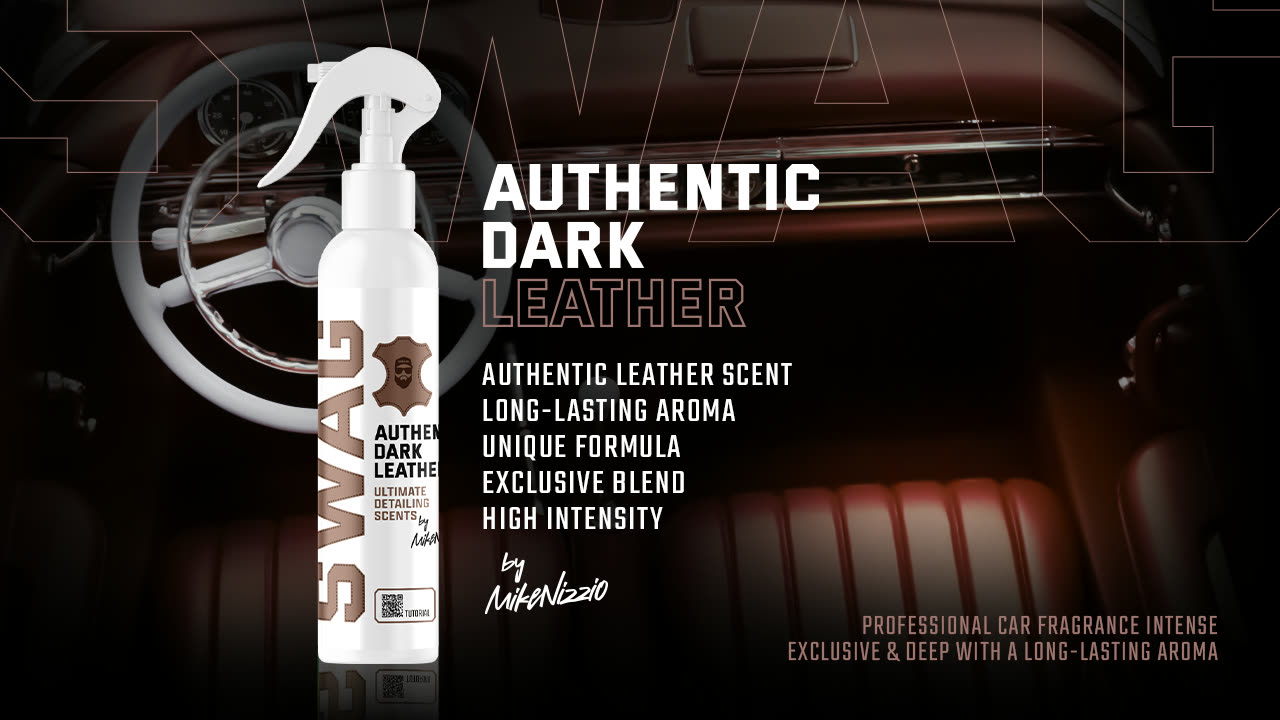
Then, purely because it makes the effort feel worthwhile, I finish an interior with SWAG Authentic Dark Leather. To be clear, a fragrance does nothing for the coating — it is the reward at the end, not part of the protection. But an interior that smells as good as it looks is why people keep doing this every few months instead of every few years.
Frequently asked questions
Can cracked leather car seats be repaired?
Not with a cream. Once the coating has split, repair means filling, re-colouring and sealing — a trim specialist’s job. Conditioners prevent cracking and slow crazing; they cannot close a crack that already exists.
Does sun really damage leather car seats in the UK?
Yes. Glass filters part of the UV spectrum but not all of it, and cabin heat build-up in a parked car does as much damage as the light itself by driving flexibility out of the coating. A sunshade and some thought about which way you park make a real difference over a car’s life.
Can you restore faded leather colour?
A conditioner brings back some depth on leather that merely looks tired and grey, which is often mistaken for fading. Genuine UV bleaching of the pigment needs re-colouring. Clean and condition first, then judge — the improvement surprises people more often than not.
Why does only the driver’s seat crack?
Because it does all the work. The outer bolster takes body weight, jeans, keys and belt buckles every time somebody gets in or out, while the rear bench does almost nothing. Protect that one bolster more often than everything else and you fix most of the problem.
Do leather seat covers prevent cracking?
They help with UV and abrasion, but only if the leather underneath is clean and protected first. A cover over dirty leather traps grit and moisture against the finish, which is worse than no cover at all.
How do I know if my seats are heading for trouble?
Run your hand over the driver’s bolster, then over the rear seat. If the front feels drier, harder or grabbier, the coating there has started to go and you are still at the stage where prevention works. Fine spider-web lines mean you are one stage further on.
Cracking is cheap to prevent and expensive to fix — that asymmetry is the whole argument. The cream and the impregnation both sit in our leather care sets and our leather conditioning range.