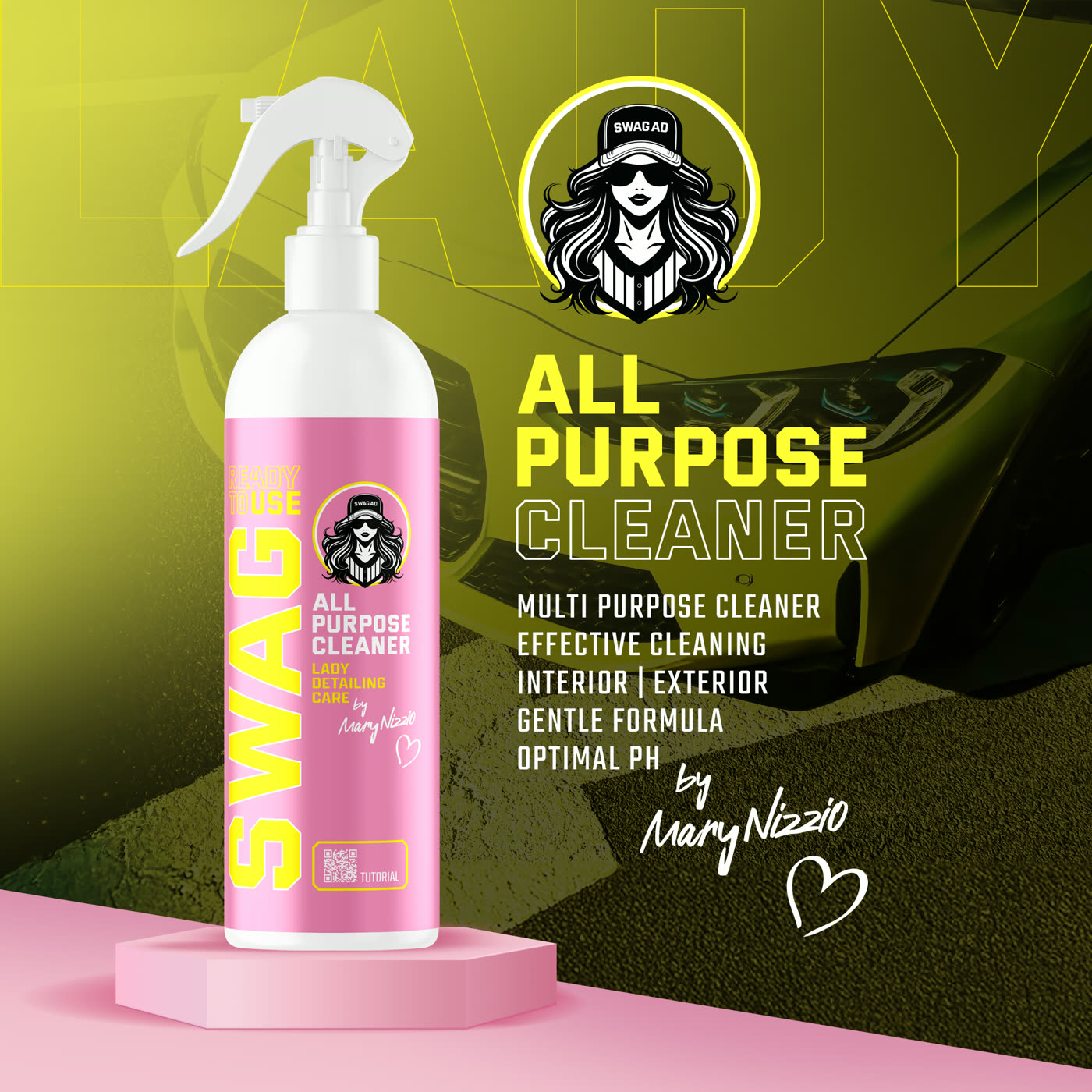
Concentrate is dramatically cheaper per use and lets you tune the strength to the job; ready-to-use is dearer per spray but removes every chance of a mixing mistake. Which is better value depends less on the dilution ratio on the bottle and more on how often you detail and how much you trust yourself with a measuring jug. In my studio almost everything is concentrate. For most people washing a car once a fortnight, a mix of the two is the sensible answer — and here’s how I’d split it.
In this guideWhat the dilution ratio on the label really meansConcentrate vs ready-to-use, side by sideWhere concentrate genuinely winsWhere ready-to-use is the smarter buyMixing a concentrate without ruining itStronger is not betterWhat I’d actually buyFAQ
What the dilution ratio on the label really means
A dilution ratio tells you how many parts of water one part of product turns into — so 1:20 means one measure of concentrate makes twenty-one measures of working solution. That’s the whole trick, and it’s why the numbers on a shelf of concentrates look so different from each other.
Those numbers aren’t a hierarchy of strength. A shampoo that dilutes enormously isn’t “weaker” than a cleaner that dilutes modestly — they solve different problems. A wash shampoo has to make a whole bucket of lubricated foam, so it goes a very long way. An all-purpose cleaner has to break down grease on a trim panel, so it works close to its own strength.
Which is the first honest point about value: two bottles of the same size are not the same amount of cleaning, and the ratio on the concentrate is the only figure that tells you by how much. Always mix to the ratio on that specific label — different products, and different versions of the same product, are not interchangeable.
Concentrate vs ready-to-use, side by side
It’s a genuine trade, not a case of one format being better made than the other. The chemistry is the same; the difference is how much water you’re paying to have shipped to your door.
| Concentrate | Ready-to-use (RTU) | |
|---|---|---|
| Cost per use | Far lower — one bottle makes many bottles of working solution | Higher, because most of what you buy is water |
| Effort before you start | Needs a spray bottle, clean water and a measure | None — unscrew the trigger and go |
| Room for error | Real — a mix that’s too strong can mark trim or fabric | None; the strength was set in the factory |
| Flexibility | Excellent — one bottle covers light and heavy jobs | Fixed at one strength for every job |
| Storage | Compact — a small shelf holds a lot of cleaning | Bulky for the same number of uses |
| Best for | Regular detailing, whole-car jobs, anyone doing this monthly or more | Occasional use, interiors, gifts, keeping one in the boot |
Read the “room for error” row twice. That single line explains why professionals buy concentrate and why plenty of sensible people shouldn’t.
Where concentrate genuinely wins
Concentrate wins on cost per use, on flexibility, and on how much cleaning you can store in a small space. Detail your own car regularly and the sums stop being close very quickly.
The flexibility is what I’d argue for first, though. One bottle of APC CONCENTR. GEL+ 1:20 V.2 becomes a mild interior cleaner, a mid-strength trim cleaner and a strong mix for engine bays and wheel arches, all within the range its label sets out. A ready-to-use bottle can only ever be one of those three. That’s the real economy: not just cheaper cleaning, but fewer products on the shelf.
Wash products make the point even more bluntly. NEUTRAL SHAMPOO CONCENTR. V.3.1 1:400 dilutes so far that the per-bucket cost stops mattering, and coated cars have CERAMIC COAT SHAMPOO CONCENTRATE going further still. Nobody sensible buys wash shampoo ready-mixed. Here’s the concentrate I reach for most often:
Where ready-to-use is the smarter buy
RTU is worth its premium wherever a mixing mistake would cost more than the price difference — and interiors are exactly that place. A too-strong cleaner on paintwork gets rinsed away; the same mix on a fabric seat, an aged dashboard or a leather bolster can mark it permanently.
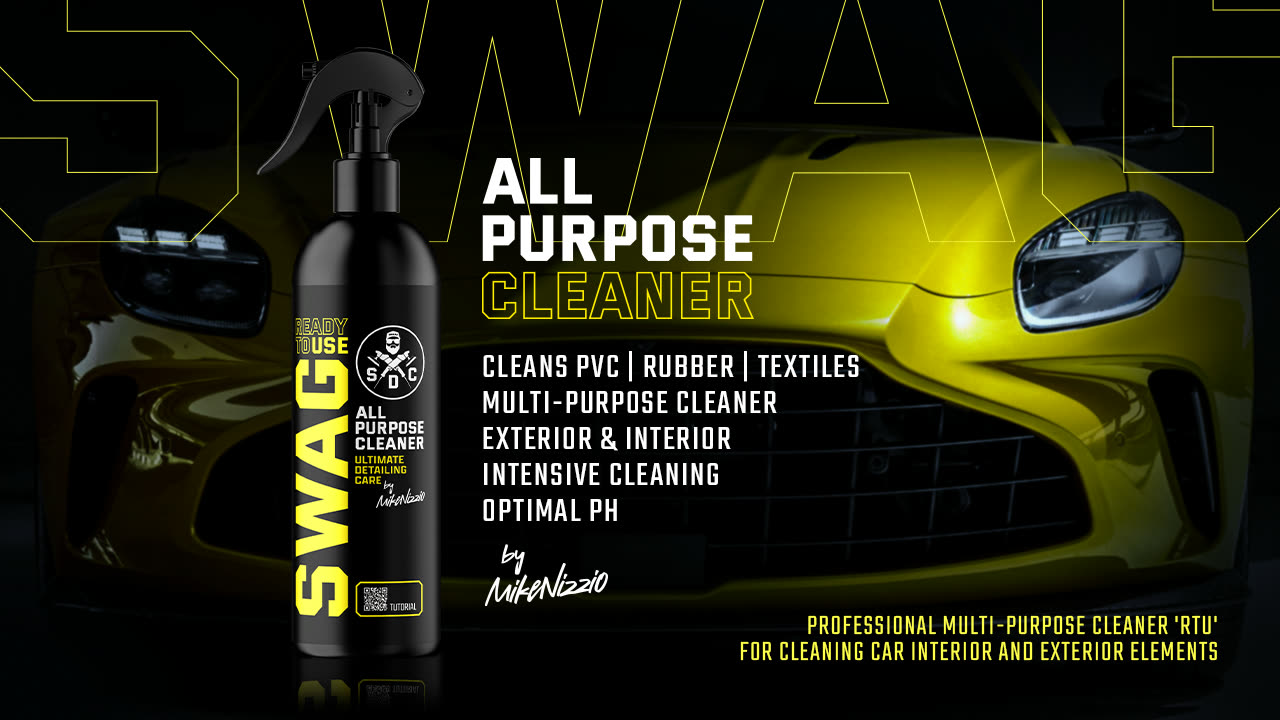
So APC RTU V.2 lives in my interior kit even though the concentrate sits two shelves away, and TEXTIL BONNET CLEANER RTU V.2.1 comes out for a quick seat job. Grabbing a bottle and starting beats measuring for a five-minute task.
RTU also makes sense if you detail two or three times a year — a concentrate you use twice just sits in the garage, and the per-use saving never adds up. It’s the format I’d give a beginner, too: learn what each product does at its intended strength first, then take the mixing on.
Mixing a concentrate without ruining it
Every saving a concentrate offers depends on one discipline: mix to the ratio on the label, measured rather than guessed. Eyeballing a glug into a spray bottle is how people conclude a product “doesn’t work” or “stained my trim” — the same mistake in opposite directions.
- Use a chemical-resistant trigger bottle with graduations, or a small measuring jug. A tired kitchen sprayer will fail on you mid-panel.
- Water in first, product second. It avoids a bottle full of foam you can’t see through, and it mixes far more evenly.
- Measure both parts to the label ratio for the job in front of you. Where the label gives a range, start at the gentler end.
- Label the bottle — product, strength, date. A shelf of unmarked clear liquids is how the wrong chemical ends up on leather.
- Mix what you’ll use. Working solution isn’t as stable as the concentrate it came from, so a batch for the year is a false saving.
- Test on a hidden area the first time you use a new strength on a new material.
That’s the whole discipline, and it takes about a minute. My APC dilution guide goes further on choosing the right strength per surface.
Stronger is not better
The most expensive habit in DIY detailing is mixing everything strong “to be sure”. Over-strong cleaner doesn’t clean faster — it clings, dries before you can wipe it and leaves residue that has to be cleaned off again.
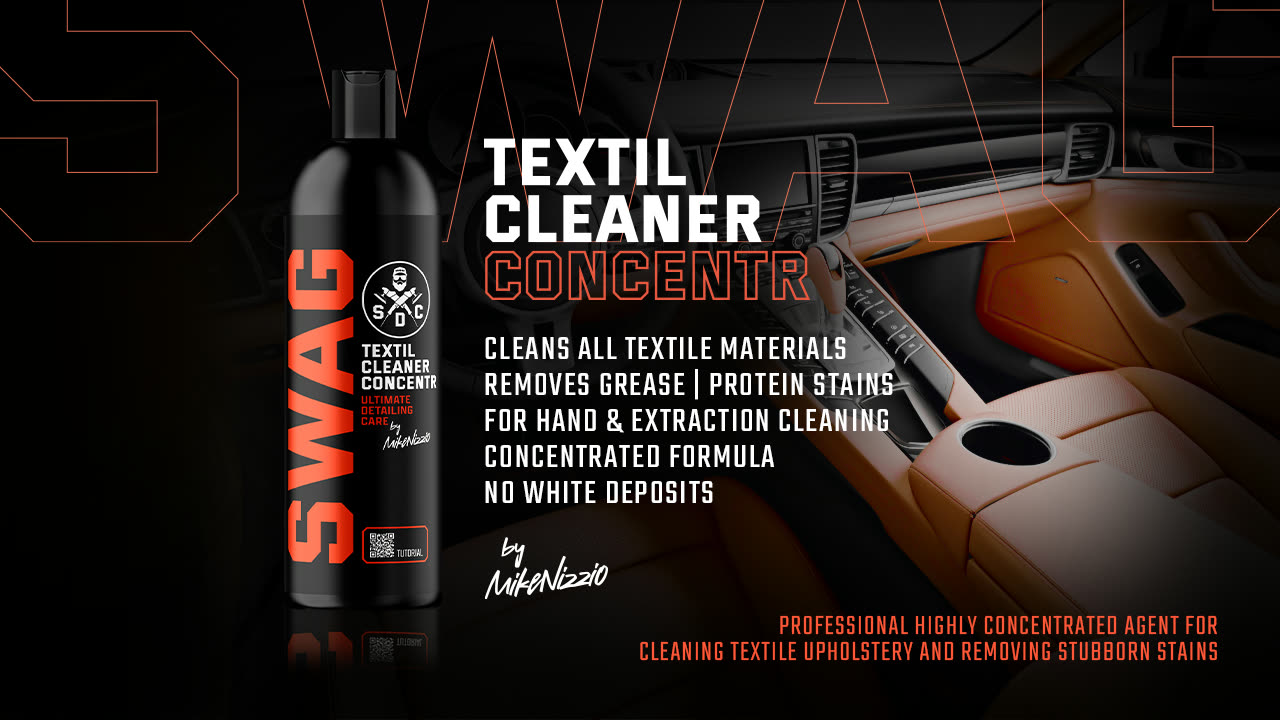
Start gentle and step up only where the surface needs it — that’s the ability a concentrate gives you and a ready-mixed bottle can’t. TEXTIL CLEANER CONCENTR PRE-SPRAY V.2.1 can go on stronger for a bad patch and gentler across the rest of the seat, from the same bottle, within the label’s range.
Dwell time and agitation do far more work than raw strength anyway. A correctly mixed cleaner left to sit and worked with a brush beats a strong mix wiped off in a hurry, with none of the risk.
What I’d actually buy
Concentrate for anything you use by the bucket, ready-to-use for anything you spray onto delicate surfaces. That single rule sorts most shopping lists: shampoo and foam as concentrate always, all-purpose cleaner as concentrate if you detail regularly and RTU if you don’t. Textile and leather cleaners are the judgement call — concentrate if you want to vary the strength, RTU if you’d rather not think about it while kneeling in a footwell.
And if you’re buying a first kit rather than one bottle, the INTERIOR SET RTU is deliberately all ready-to-use — the fastest way to put someone off detailing is a stain they made themselves in week one.
Frequently asked questions
Is concentrate always cheaper than ready-to-use?
Per use, yes — sometimes by a very large margin, because you’re not paying to ship water. Whether it’s cheaper for you depends on usage: a concentrate you finish is excellent value, and one that sits half-used for years isn’t.
What does 1:20 mean on a bottle?
One part product to twenty parts water. Measure both — the ratio is set by the formulation, so it’s specific to that product and that version of it, and swapping numbers between bottles is how surfaces get damaged.
Can I make a concentrate stronger than the label says?
Don’t. The label range is the range the product was tested across, and beyond it you’re relying on luck with materials you can’t replace. If the correct mix isn’t shifting something, add dwell time and agitation, or use a product designed for that job.
How long does mixed solution last in the bottle?
Mix for the session or the week rather than the season. Diluted product is less stable than concentrate, and an old unlabelled bottle is a guessing game you don’t want to play on a customer’s interior.
Concentrates and ready-to-use bottles of the same formulas sit side by side in our SWAG Cosmetics range — pick the format that suits how you work, and mix to the label either way.