How long do car air fresheners last? Far more depends on how and where you use them than on which one you buy — the same product can fade in days in one car and hold for weeks in another. I get asked for a number constantly and I refuse to give one, having watched identical fragrances behave completely differently in a sun-baked convertible and a garaged saloon. What I can give you is every variable that decides it, and the habits that reliably stretch it.
In this guideThe honest answerThe variables that decide itHeat and sunlightVentilation, doors and windowsNose blindnessHow to use a car air freshener so it lastsWhen to top upFAQ
How long do car air fresheners last?
In ranges rather than numbers: a cheap scented cardboard hanger is usually noticeably weaker within days, a gel or vent product fades gradually over weeks, and a spray fragrance lasts as long as you keep topping it up. That last point is the important structural difference. A hanger has a finite life; a bottle has a rhythm.
Anyone quoting an exact duration is guessing, because none of the conditions that matter are standard — cabin size, parking spot, climate settings, how often the doors open. The useful reframe: think about how fast the scent is being carried away, not how much is in the bottle. A fragrance doesn’t run out so much as get removed, by heat, by airflow and by every door opening.
The variables that decide it
Six things account for almost all the difference between a fragrance that lasts and one that disappears by the weekend. Read down this table and you will usually spot your own answer in the first two rows.
| Variable | What it does | What to do about it |
|---|---|---|
| Format | Cardboard releases fast and then stops; gels release slowly; sprays are entirely under your control | Choose a refillable format if longevity matters to you |
| Dose | One heavy soaking is strong for a day, then largely gone; the excess evaporates before you smell it | Moderate applications, more often — little and often always wins |
| Cabin temperature | Heat accelerates evaporation dramatically; a parked car in summer is an oven | Park in shade, use a windscreen shade, keep the tag out of direct sun |
| Direct sunlight | A tag hanging in the sun behind glass is the harshest spot in the car | Hang it lower or on a seat frame rather than on the mirror |
| Ventilation setting | Fresh air constantly flushes scented air out; recirculate keeps it in | Nothing to fix — just expect a heavily ventilated car to need topping up sooner |
| Open windows and doors | Every opening exchanges the cabin air; a taxi or a school run empties it repeatedly | Scent the fabrics, not just the air — fabric holds what airflow takes |
There’s a seventh that isn’t about the product at all: what the car smells like underneath. Where there’s an underlying odour, your nose keeps separating the two and the fragrance feels finished long before it actually is.
Heat and sunlight do most of the damage
A car parked in summer sun becomes far hotter inside than the air outside, and heat drives fragrance off at a sprint. This is why the same freshener that felt long-lived through a British winter seems to vanish in July — nothing changed except the temperature behind the glass.
Sunlight adds a second problem on top of the heat. A tag swinging from the mirror sits in the hottest, brightest part of the cabin, right against the windscreen. Move it somewhere shadier — a seat frame, the back of a headrest — and you extend its working life without changing anything else. Winter isn’t free either: heater vents blowing across a vent clip do the same thing more slowly, which is why vent products feel like they burn through fastest of all.
Ventilation, doors and how you actually drive
Scented air leaves the car every time you do. Six short trips a day with the doors opening constantly loses fragrance far faster than one long motorway run — same product, same dose, completely different result.
The climate setting works the same way: on fresh air the system continuously replaces cabin air with outside air and takes the fragrance with it. Recirculate holds it longer, though I wouldn’t choose recirculate for that reason alone — air quality on a long drive matters more than fragrance economy.
The way around all of it is to stop treating fragrance as something that lives in the air. Air gets replaced; textiles don’t. Carpets, fabric seats and the boot lining hold scent and release it slowly, which is why misting the fabrics lightly outlasts spraying into the cabin.
It might still be working — you’ve just stopped noticing
Your nose adapts to a constant smell within minutes, so a fragrance you can no longer detect in your own car is often still perfectly present to everyone else. This is worth knowing before you conclude a product has failed, and before you double the dose.
The test is simple: leave the car shut for a few hours, go and do something else, then come back and open the door. That first breath is honest. If you can smell it then, the fragrance is fine — and adding more will only make it overpowering for your passengers, which is how people end up with a car that gives them a headache. Trust the door test, not your fifth minute of driving.
How to use a car air freshener so it lasts longer
This is how I apply fragrance on every car I hand back — the difference between a bottle that lasts and one that empties in a fortnight. None of it takes more than a minute.
- Clean the interior first. Vacuum, and clean the fabrics with something like SWAG Textil Bonnet Cleaner RTU. On a clean base you need far less fragrance.
- Spray the hanging tag until it is damp, not dripping. The tag is a slow-release diffuser — soaking it just puts fragrance on your carpet.
- Hang it out of direct sun. The mirror is the traditional spot and the worst one for longevity.
- Mist the textiles lightly — carpets, fabric seats, boot lining. Keep it off glass, screens and polished plastics, and follow the label on the bottle you’re using.
- Stop while it’s still moderate. Whatever you over-apply evaporates in the first day without ever being enjoyed.
- Top up when it softens, rather than waiting for it to disappear completely.
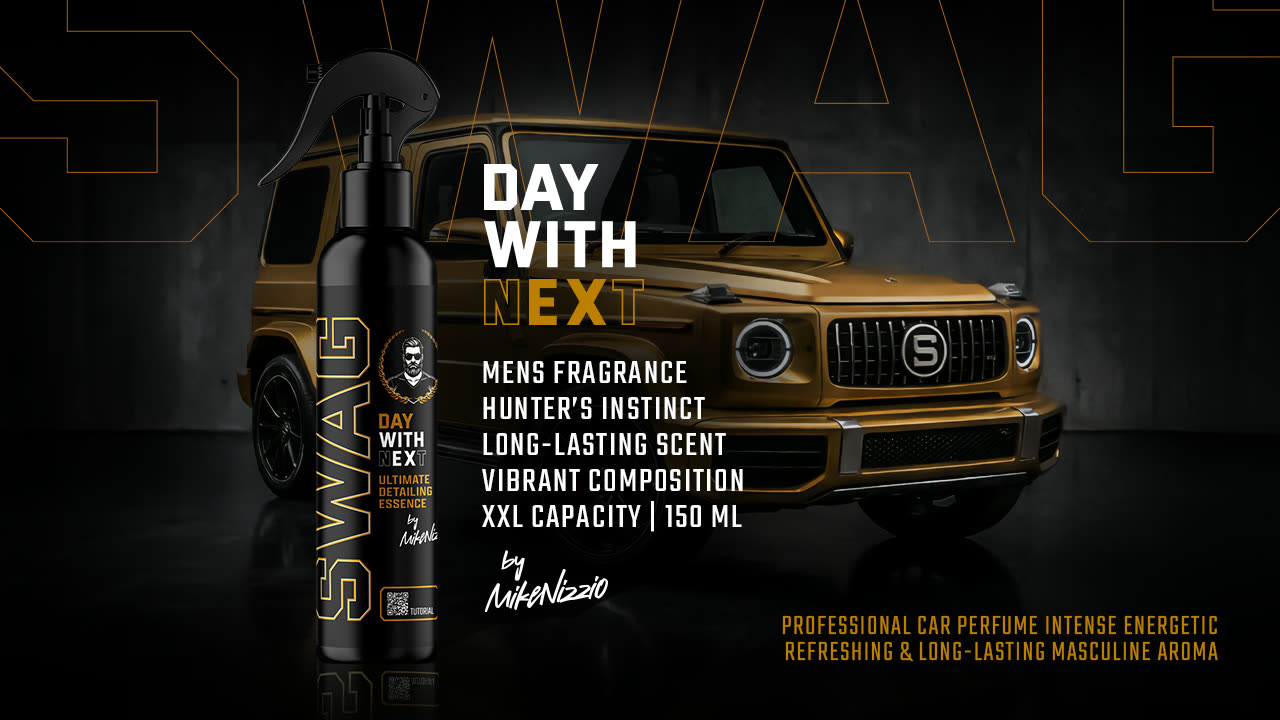
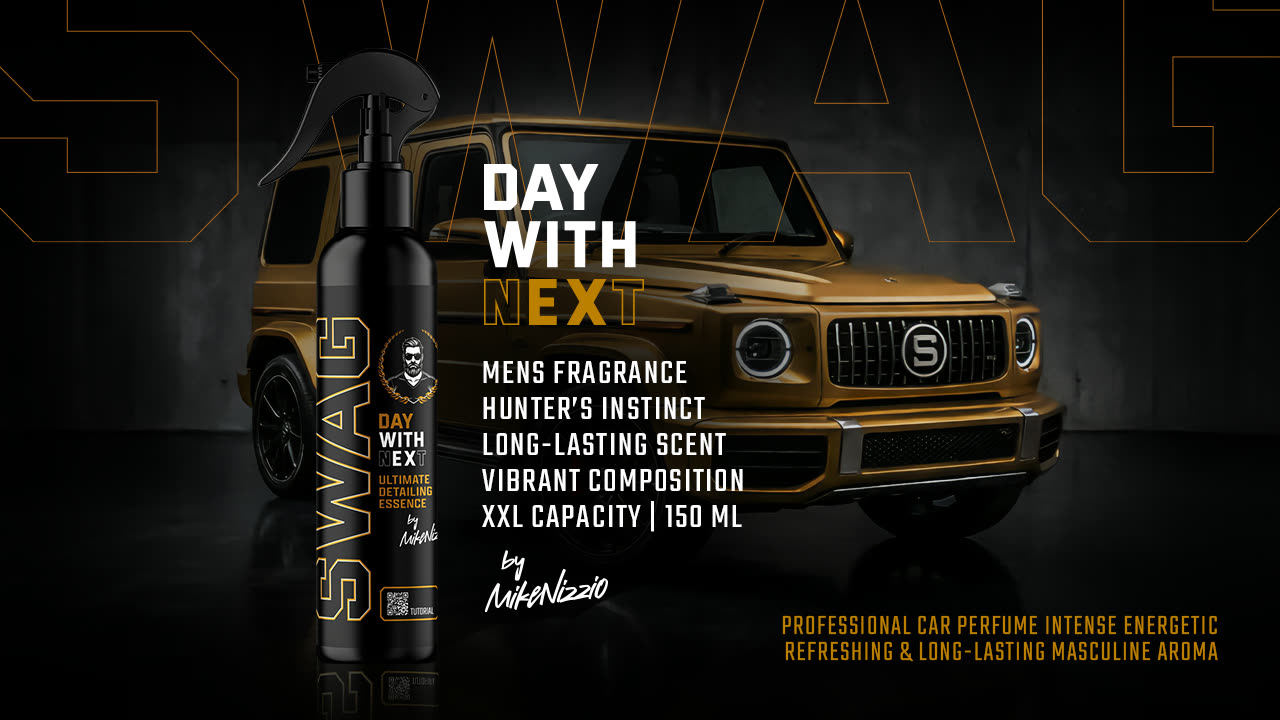
Because the SWAG fragrances are sprays supplied with a hanging tag — Red Cherry Bomb and Day With [N]ex[t] among them — the same bottle recharges that tag over and over. That’s the real answer to longevity: not a product that never fades, but one you refresh in thirty seconds.
When to top up, and when something else is wrong
Top up when the door test comes back weak, not on a schedule. A calendar reminder ignores every variable above; your nose after a few hours away doesn’t.
If a fragrance vanishes unusually fast, check three things before blaming the product. Is the car parked in full sun? Is the dose reaching the fabrics, or only the air? And is there an underlying smell competing with it — damp carpet, a saturated pollen filter, something forgotten in the boot? That third one is the usual culprit, and it’s covered in the damp and musty smell guide. Still deciding which fragrance to commit to? My guide to choosing a car air freshener walks through the families and formats.
Frequently asked questions
How long does a hanging car air freshener last?
A pre-scented cardboard hanger is typically strong for the first days and then fades steadily — much of that early intensity is solvent flashing off rather than fragrance. A hanging tag you recharge from a spray bottle lasts as long as you keep spraying it.
Why does my car air freshener stop smelling so quickly?
Usually heat, dose or nose blindness. A car parked in the sun loses fragrance rapidly, a single heavy application burns off fast, and after a few days your own nose stops registering a scent that passengers still notice clearly.
How often should I reapply a spray car air freshener?
When it softens rather than on a schedule — and in smaller amounts than most people use. Little and often keeps the cabin at a steady level and gets more days out of the bottle than occasional heavy applications.
Does heat make car air fresheners fade faster?
Yes, significantly. Heat accelerates evaporation, and a closed car in summer sun gets far hotter than the outside air. Parking in shade, using a screen shade and hanging the tag out of direct sunlight all help.
Is it better to spray the fabrics or just use the tag?
Both, lightly. The tag gives a steady baseline; the fabrics act as a reservoir that keeps releasing scent after every door opening. Air gets replaced constantly — textiles don’t.
A fragrance you can refresh beats one that simply runs out. The full spray-and-tag range is in car scents, and the cleaning products that make any of them last longer are in interior cleaning.