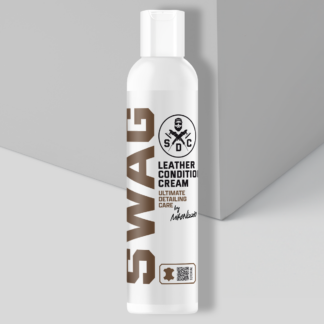
Leather Conditioner Cream
Our newest leather recipe. It nourishes the finish, lifts the colour slightly and keeps the surface from drying out and cracking.
- Use after every deep clean
- Keeps the finish from cracking
- 150 ml, 250 ml and 500 ml
Leather conditioner and hydrophobic protection for car seats, formulated and tested in our own studio in Poland. Cleaning alone leaves leather drier every time — conditioning is the step that keeps the surface supple and protected.
Showing all 8 results


Two different jobs — one feeds and protects the finish, the other makes it shrug off spills.
Our newest leather recipe. It nourishes the finish, lifts the colour slightly and keeps the surface from drying out and cracking.
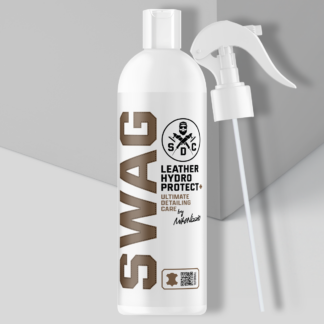
The impregnation rather than the cream. It leaves the surface hydrophobic, so coffee, rain and road salt bead up instead of soaking into the grain.
The same cream in a 1000 ml set, for people who condition leather more than once a season. The sensible format if you look after more than one car.
The honest version — what modern seats are made of, and why conditioning is protection rather than repair.
Gently, and in stages. Vacuum the grit out of the seams first, then work a dedicated leather cleaner in with a soft brush, one panel at a time, and wipe the dirt off with a clean microfibre before it dries. Never soak the seat or let cleaner stand in perforations — those holes drain straight into the foam underneath. Once the leather is dry, condition it: cleaning without conditioning leaves the surface drier every time, and that is how cracking starts.
One that lifts grime without attacking the finish. Almost every modern car seat is coated leather — a thin, pigmented top layer over the hide — so you are cleaning that coating, not feeding the skin underneath. Harsh all-purpose cleaners and solvent wipes dull or lift that layer, and once it goes the colour goes with it. Home remedies are worse: vinegar is acidic enough to haze the finish, and olive oil never dries, so it stays tacky and traps dust.
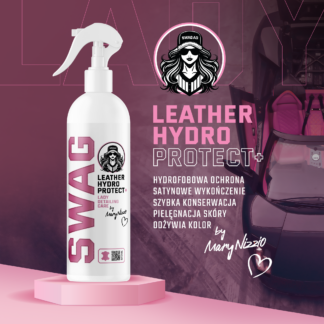
The same way as any other hide, only more often. Light leather shows dye transfer from jeans and jackets long before it looks dirty, so little and often beats one heavy scrub a year. Work in small sections and change to a clean side of the cloth as soon as it picks up colour, or you simply move the dye around. Test any product under a seat first — HYDRO PROTECT+ darkens the grain slightly, which flatters black leather but changes the look of cream.
Every car's leather is coated, dyed and sometimes repaired differently, so the only reliable test is a patch nobody sees — under a seat, or on the edge of a bolster. And no conditioner rebuilds cracked or worn-through leather. It protects what is still there and improves how it feels; anything past that is a trim shop job.
What owners ask us before they touch the seats.
It is a protective cream for the finish on your seats, not a miracle food for the hide. On modern coated leather it keeps the surface flexible, tops up the protection that cleaning strips away, and improves how the seat feels under your hand. If your car sees daily use, sun through the glass, or regular cleaning, it is worth doing.
Two to four times a year suits most cars. A daily driver parked in the sun, or one with light-coloured seats, wants the shorter interval; a garaged weekend car needs far less. Condition after every deep clean regardless of the calendar, because cleaning is what removes the previous layer.
Yes, and it is worth keeping them apart. A cleaner is built to lift dirt and then be wiped away; a conditioner is built to stay on the surface and protect it. Products that promise both compromise on each — they clean less than a cleaner and protect less than a cream. Clean first, let it dry, then condition.
No. Suede, nubuck and Alcantara are napped materials, and a cream mats the fibres down, darkens them and leaves a shiny patch you cannot brush out. Clean those with a dedicated textile cleaner and a soft brush instead — Upholstery Cleaning covers that. The same applies to the suede inserts on sports seats.
No. Cracks are the coating and the hide failing, and nothing wipe-on rebuilds either; a conditioner can make them look less dry, and that is the honest limit. Fading is dye loss, which needs re-colouring rather than cream. Conditioning is preventative — it is what stops a seat getting there in the first place.
What sits either side of leather care in the SWAG range.
Showing all 8 results