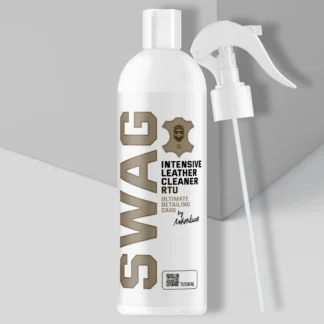
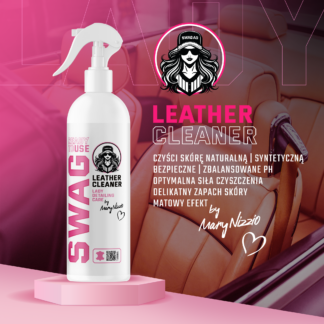
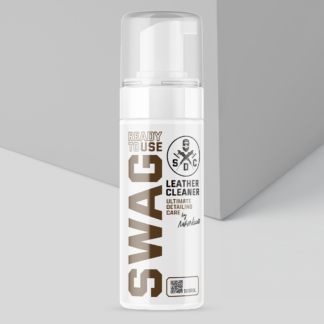
Leather Cleaner RTU
Ready to use · no mixing
Spray, agitate, wipe. Nothing to dilute and nothing to get wrong, which is what most people want for a car or two.
- Comes ready mixed
- 150 ml with a foamer, or 500 ml
- The safe default for coated seats
Car leather cleaner built for the coated finish on modern seats — formulated and tested in our own detailing studio in Poland, on real cars with real wear, before anything goes into a bottle.
Showing all 4 results

The choice is really about how much leather you clean, and what the seats are actually made of.
Spray, agitate, wipe. Nothing to dilute and nothing to get wrong, which is what most people want for a car or two.
The same cleaning job from a concentrate you mix yourself, so one bottle covers far more work. Follow the ratio printed on the label.
Alcantara and synthetic suede are textiles, not leather, and a leather cleaner is the wrong tool. This one is made for the nap.
Most leather damage we see is not dirt — it is the wrong product, or the right product used too hard.
On almost every modern car, the seats are coated leather: a pigmented, sealed finish over the hide. So a leather cleaner is cleaning that coating, not the hide underneath. That is why pH matters and why household cleaners cause trouble — strip or dry the coating and you get the shine loss, then the cracking, that people blame on the leather itself.
An APC is built to cut grease and it does not know when to stop. Used neat on a seat it can lift colour from the coating and leave the finish dry and squeaky. A dedicated leather cleaner is deliberately gentler, and on a coated finish gentle plus a soft brush beats aggressive every time.
Every couple of months for a daily-driven car, and sooner on light-coloured seats or a driver's bolster, which takes the most contact. Regular gentle cleaning is far kinder than leaving grime to build and then attacking it. Once clean, protection belongs in Leather Conditioning.
Ventilated and perforated seats drain into the foam beneath. Keep the product on the cloth rather than the seat, and never soak a perforated panel.
What people ask us before they touch a set of seats.
The one matched to your seats and your workload. For most people a ready-to-use cleaner is the right answer — nothing to mix and nothing to get wrong. If you clean leather regularly, a concentrate does the same job for far less per use. If your seats are Alcantara or synthetic suede, you need the dedicated suede cleaner instead.
No. A cleaner removes dirt, body oils and grime from the coating; a conditioner is applied afterwards to maintain the feel and help protect it. They are two steps in the same job, which is why the conditioning products live in their own range.
No — Alcantara and synthetic suede are textiles with a raised nap, not coated leather. Leather cleaner will not clean them properly and heavy rubbing flattens the nap permanently. Use the dedicated Alcantara and synthetic suede cleaner.
Often, if you catch it early. Fresh transfer on a light seat usually lifts with a leather cleaner and a soft brush over a couple of gentle passes. Old transfer that has sat in the grain for months may never come out completely, and forcing it with pressure does more harm than the stain.
The same way, but more often — they take the most hand contact and the most body oil in the car. Keep the product on the cloth, work in sections, and avoid letting anything run into the switchgear.
Cleaning is the first half of the job — here is where the rest of it lives.
Showing all 4 results