If you want to know how to clean car windows without streaks, the answer is the two-cloth method: one microfibre carries the glass cleaner, a second dry microfibre buffs the glass to a perfect finish. Pair that technique with a proper automotive glass cleaner and work in the shade, and streaks simply stop happening. In my studio, glass is the last thing we touch on every car — and the first thing the customer notices.
In this guideWhy streaks appearWhat detailers useThe two-cloth methodInside glassTight spotsMistakes to avoidWater spots & protectionFAQ
Why do car windows streak in the first place?
Streaks are almost always one of three things: the cleaner evaporating too fast, grease left on the glass, or a dirty cloth redistributing the mess. Clean glass isn’t just cosmetic either — smears, film and residue on a windscreen genuinely cut your visibility, especially at night against oncoming headlights. That makes this a safety job, not a vanity job.
Sunlight is the biggest culprit. Spray any cleaner onto a hot windscreen and it flashes off before you’ve finished wiping, leaving those streaks you then chase around the glass. The second culprit is the greasy film that builds up on glass — road grime outside, plasticiser haze inside — which a weak cleaner smears rather than dissolves.
What do car detailers use to clean windows?
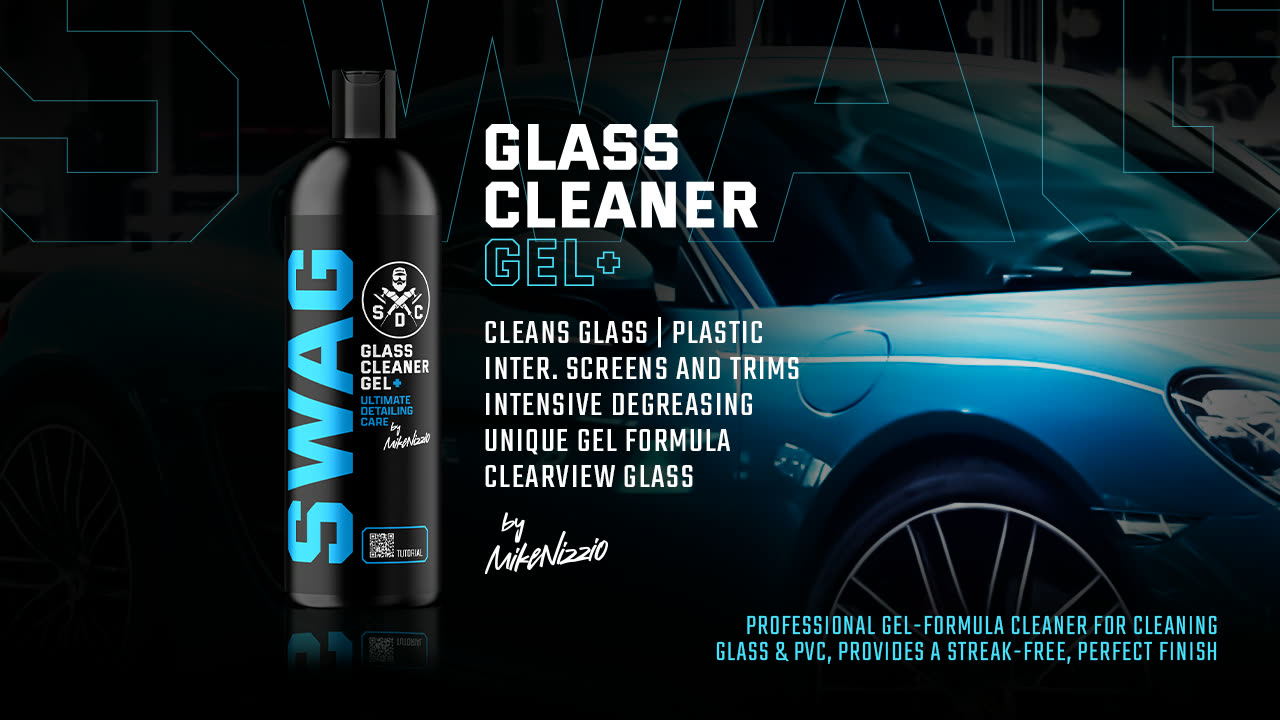
A dedicated automotive glass cleaner that degreases, two clean microfibres, and nothing else. The product I developed for this, Swag GLASS CLEANER+ V.3.1, does three jobs at once: it cleans without streaking, it properly degreases the surface, and it’s antistatic — so dust is slower to resettle on the glass afterwards.
It also evaporates quickly without leaving runs, and it’s safe on the plastics around the glass, which matters when you’re working around trim, mirror housings and dashboard edges. I use it on exterior and interior glass, mirrors and navigation screens alike — one bottle for every transparent surface in the car.
Household glass sprays are formulated for house windows. On a car they can leave film, and you don’t want experimental chemistry dripping onto your trim and paint. Use products made for the job.
The two-cloth method step by step
Cleaner on the first cloth, wipe, then buff dry with the second cloth — that’s the entire secret. Here is exactly how we do it in the studio:
- Park in the shade and make sure the glass is cool to the touch.
- Shake the bottle to activate the formula.
- Spray the cleaner onto a dedicated glass microfibre — not directly onto the glass.
- Wipe the pane with gentle, circular motions, covering edge to edge.
- Take the second, dry microfibre and buff the surface to remove every trace of remaining product.
That final dry buff is the step everyone skips, and it’s the one that makes the glass disappear. The first cloth cleans; the second one finishes.
Watch me do this start to finish:
How to clean car windows on the inside
Interior glass gets a greasy haze from plastics and fingerprints, so spray onto the cloth, never onto the glass, and work in straight overlapping passes on the windscreen. Spraying the cloth keeps overspray off your dashboard, headlining and electronics.
The windscreen is awkward — the dashboard blocks your reach and the rake of the glass hides missed patches. Sit in the passenger seat for the driver’s side and vice versa, use the back of your hand to press the cloth into the bottom corners, and always finish with the dry cloth. Because the cleaner is antistatic, the interior film also takes longer to come back than with a household spray.
Tight spots and stubborn dirt
For grime packed into the crevices — window seals, the strip at the bottom of the glass, around badges and wiper arms — spray the cleaner on the spot and agitate it with a soft brush. A soft detailing brush loosens the dirt that a cloth just glides over.
Once the brush has broken the grime up, wipe the area clean and finish with the dry microfibre as usual. This is also my fix for the black gunk that collects where the glass drops into the door.
The mistakes that cause streaks
Nearly every streaky-glass complaint I hear traces back to one of these:
| Mistake | What happens | What I do instead |
|---|---|---|
| Cleaning in full sun | Cleaner flashes off instantly, leaving streaks | Shade only, cool glass only |
| Household sprays and ordinary detergents | Film, smears, risk to surrounding surfaces | A dedicated automotive glass cleaner |
| Dirty or old rags | Redistributed grime — and they can scratch the glass | Two clean microfibres, washed regularly |
| Skipping the dry buff | Residue dries into visible smears | Always finish with the second, dry cloth |
Water spots and keeping glass clearer for longer
If your glass has hard mineral rings that no cleaner shifts, that’s water spotting — a cleaning product won’t remove it, because the deposits are bonded to the glass. Those need mechanical help: Swag WATER SPOT GLASS POLISH is the paste I use to polish deposits and water spots off glass before they etch in permanently.
And if you want the rain to simply stop sticking, there’s the hydrophobic route: Swag HYDROPHOBIC GLASS CLEANER+ cleans and leaves an “invisible wiper” protective layer in one step. On the motorway, water beads and rolls off the windscreen — once you’ve driven with it, plain glass feels broken. The full line-up is in our Glass Cleaning category.
Frequently asked questions
What is the best car glass cleaner?
One that degreases, evaporates fast without runs, and has antistatic properties so dust resettles slower. Streak-free results come from the combination of a proper automotive formula and the two-cloth technique — neither works fully without the other.
Can I use household glass cleaner on my car?
I wouldn’t. Household sprays are made for house windows and can leave film on automotive glass, and their chemistry isn’t tested against your trim, tint and interior plastics. An automotive glass cleaner is designed to be safe on glass and the plastics around it.
Does glass cleaner damage car paint?
A dedicated automotive glass cleaner won’t — overspray onto paint is nothing to panic about, just wipe it away. That said, I still spray onto the cloth rather than the glass, which keeps product exactly where I want it and off everything else.
How do I remove water spots from car windows?
Mineral water spots are bonded deposits, so a spray cleaner won’t shift them. Use a dedicated glass polishing paste to remove the deposits mechanically, then keep on top of them with regular cleaning — fresh spots are far easier to remove than ones that have baked in for months.
How often should I clean my car windows?
Exterior glass at every wash, interior glass roughly monthly — or as soon as you notice haze at night. The antistatic effect of a good cleaner stretches the interval, because dust and film build up more slowly on treated glass.
Everything I used in this guide lives in our Glass Cleaning range — the cleaner, the hydrophobic version and the polish for when spots have already set in. Two cloths, a bit of shade, and your glass disappears.