Fabric car seats are cleaned in four moves: vacuum thoroughly, apply a textile cleaner, agitate with a soft brush, then lift the dissolved dirt out with a microfibre or bonnet and let the seat dry fully. If you’ve been searching for how to clean car seats without ending up with water marks, white residue or a musty smell, the method below is the one I use on customer cars every week — and the order of the steps is most of the secret.
In this guideThe short versionWhich upholstery cleaner?Step by stepStainsFabric vs leatherDrying without water marksFAQ
How do you clean fabric car seats? The short version
Dry dirt comes out with the vacuum; bonded dirt comes out with chemistry; and dissolved dirt must be physically lifted out of the fibre — not left to dry back in. Those are the three kinds of dirt in a seat, and each step of the routine exists for one of them.
Most disappointing results I see come from skipping step one or three: people spray cleaner onto an unvacuumed seat and turn dust into mud, or they scrub thoroughly and then let the dirty moisture dry straight back into the foam. Do all three stages and fabric seats are honestly one of the most satisfying jobs in detailing.
What upholstery cleaner should you use?
Use a dedicated textile cleaner that dries without leaving white residue — that residue is the difference between a cleaned seat and a seat with rings on it. In the SWAG range there are three ways into this, depending on how you like to work:
| Product | Format | When I reach for it |
|---|---|---|
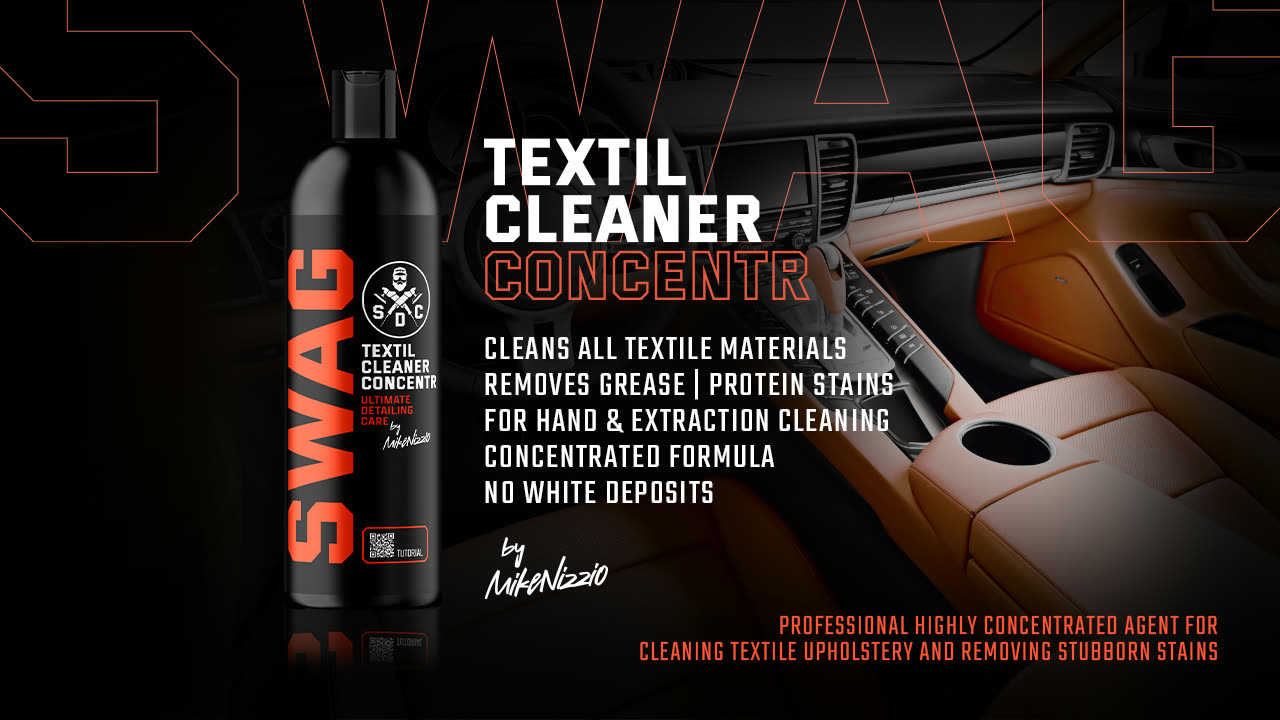
| Textil Cleaner Concentrate Pre-Spray | Concentrate | Deep cleans and extractor work — mix to suit the job |
| Textil Bonnet Cleaner RTU | Ready to use | Everyday cleaning by hand, no machine needed |
| LADY Textil Cleaner RTU | Ready to use | Same stain-free cleaning from our LADY line |
All three are built around the same principle: clean textiles, no stains, no white residue after drying. If you only buy one and don’t own an extractor, take the bonnet cleaner — it was designed for exactly the hand method I describe below.
How to clean car seats step by step
Vacuum, test, spray, agitate, lift, dry — six steps, and none of them optional. This is the universal upholstery routine I teach:
- Vacuum thoroughly. Seams, piping, the gap between base and backrest. Every gram of dry dirt you remove now is dirt you won’t be dissolving into the fabric later.
- Test a hidden area. Spray a little cleaner somewhere out of sight and check the fabric holds its colour. Thirty seconds of insurance.
- Apply the cleaner. Mist it evenly over one section at a time — a seat base, a backrest. You want the fabric damp with product, never soaked through. The foam padding underneath holds water for days, and that’s how musty smells start.
- Agitate with a soft upholstery brush. Light, overlapping strokes to work the cleaner into the fibre. Let the chemistry loosen the dirt; pressing harder just drives dirt deeper.
- Lift the dirt out. Wipe and blot with a clean microfibre — or work a bonnet over the surface — turning to a fresh face as it picks up soil. You’ll see exactly what’s coming out of the seat. Keep going until the cloth stays clean.
- Let it dry fully — doors open, ideally with airflow. Sit on a damp seat and you’ll wick the remaining dirt straight back to the surface.
Work panel by panel across the whole seat rather than spot-cleaning one patch, and finish with another pass of the vacuum once dry to lift the fibre pile back up.
How to clean car seat stains
Treat stains before the full clean, not instead of it. Spray the stain, give the cleaner a moment to work, agitate gently and blot — repeating several gentle cycles rather than one aggressive scrub. Most food, mud and drink marks come out this way.
Then clean the entire panel anyway. A spot-clean on a grubby seat leaves a clean halo that looks worse than the stain did — the classic “clean patch” problem. Cleaning seam to seam is what makes the result look factory rather than patched. For biological stains like milk or urine, repeat the cycle until odour as well as colour is gone; smell that remains means residue remains.
Fabric and leather seats play by different rules
Fabric absorbs; leather resists — so the products and technique don’t transfer between them. On fabric, the dirt sits inside the fibre and your job is to dissolve it and pull it out. On leather, dirt sits on a finished surface, and the job is gentle foam cleaning at a controlled pH — flooding leather with textile cleaner is a fast way to damage it.
If your car has leather or half-leather seats, I’ve written the leather method up separately in how to clean leather car seats properly, including the dilutions I use in the studio. On mixed interiors, do the fabric first, then the leather — brushing fabric throws dust you don’t want landing on freshly conditioned hide. And for plastics and trim around the seats, a balanced all-purpose cleaner like SWAG APC RTU handles everything the textile cleaner shouldn’t.
How to dry seats and avoid water marks
Water marks on fabric are dissolved dirt and residue that migrated to the edge of a wet patch as it dried — so the fix is less liquid, more lifting, faster drying. Keep the fabric damp rather than wet, blot out as much moisture as you can, and get air moving over the seat straight after cleaning.
If you do end up with a ring, don’t scrub the mark itself: lightly mist the whole panel, agitate evenly edge to edge, lift with a clean microfibre and dry the panel as one piece. Rings disappear when the whole panel dries at the same rate. On a UK driveway in winter, this is the honest argument for cleaning seats on a day the car can stand with the doors open — or leaving the blower running.
Frequently asked questions
How do you shampoo car seats without a machine?
Exactly as described above: vacuum, spray a ready-to-use textile cleaner, agitate with a soft brush, then lift the dirt out with a microfibre or bonnet in repeated passes. An extractor speeds up the lifting stage, but a bonnet and clean cloths achieve a very similar result with patience.
Can I clean fabric car seats at home?
Yes — fabric seats are one of the most home-friendly detailing jobs there is. You need a vacuum, a textile cleaner, a soft brush and a stack of clean microfibres. The only real requirements are working panel by panel and giving the seats time to dry fully.
How do you remove water spots from car seats?
Re-wet the whole panel lightly with textile cleaner, agitate evenly across it, lift with a clean microfibre and let the entire panel dry at one rate. Water spots on fabric are dried residue rings, so evening out the residue removes them. Spot-scrubbing the ring alone usually just moves it.
What’s the best upholstery cleaner for cars?
One formulated for automotive textiles that dries without white residue and doesn’t need rinsing with volumes of water. Concentrates suit extractor owners and heavy cleans; ready-to-use bonnet cleaners suit hand cleaning. Household carpet shampoos tend to leave sticky residue that attracts dirt back quickly.
How often should fabric car seats be cleaned?
Vacuum monthly, deep clean once or twice a year, and deal with spills the day they happen. Fresh spills come out of fabric easily; the same spill six months later has bonded with the fibre and takes several cycles.
Everything I used in this guide lives in our upholstery cleaning range, with the supporting cast in interior cleaning. Vacuum first, lift the dirt out, dry it properly — that’s the whole trick.