How do you clean suede car seats? With the least moisture you can get away with, a cleaner made for synthetic suede, a light touch, and no stiff brush anywhere near them. Alcantara and suede aren’t fragile chemically — they’re fragile mechanically. The look comes from a nap of tiny fibres standing up off the backing, and soaking or scrubbing lays that nap flat and shiny for good. So this guide spends as much time on what not to do as on the method.
In this guideAlcantara, suede or microsuede?The real riskStep by stepShiny, matted patchesStains and spillsNever use theseKeeping it looking newFAQ
Alcantara, real suede or microsuede — which have you got?
Nearly every “suede” seat in a modern car is a synthetic microfibre material such as Alcantara, not animal hide — and that’s good news, because synthetic suede tolerates water-based cleaning while real suede genuinely doesn’t.
Alcantara feels slightly springy, has an even nap that shades light and dark as you sweep a hand across it, and usually turns up as inserts: seat centres, wheel rims, gear surrounds, roof linings. Real suede — split hide with a raised nap — appears mostly in older high-end cars and retrims, feels softer and less uniform, and darkens permanently where it gets wet. If you can’t tell, treat it as real suede and be stricter still with moisture. Identify the trim panel by panel, as in my guide to cleaning car seats by material.
The real risk: over-wetting and hard brushing
Two mistakes account for almost every ruined Alcantara panel I’ve been shown: too much liquid, and too much pressure.
Too much liquid carries dirt through the nap into the backing, where nothing you own can retrieve it, and it dries in a ring — that hard-edged pale halo on a lot of DIY-cleaned Alcantara. The material is a dense mat of fine fibres, so moisture spreads sideways further than you expect.
Too much pressure is worse, because it’s permanent. Scrubbing hard, or using a stiff brush, bends and mats the standing fibres, and the panel then reflects light differently — that greasy sheen on a well-used bolster is flattened nap, not dirt. Matting from trapped grime can sometimes be lifted; matting from your own brush cannot. Light passes, repeated, are the entire technique.
Which is why the hidden test matters more here than anywhere else in the car. Under the base or behind the backrest: dampen a small area, work it, let it dry fully, then check for colour change, ring marks and nap texture.
How do you clean suede car seats? Step by step
Vacuum, test, spray onto the cloth rather than the seat, wipe in one direction, blot, dry, then lift the nap back up.
- Vacuum with a soft brush head. Alcantara traps grit between its fibres, and grit left there gets dragged across the surface by your cloth.
- Test a hidden area and let it dry completely before judging it.
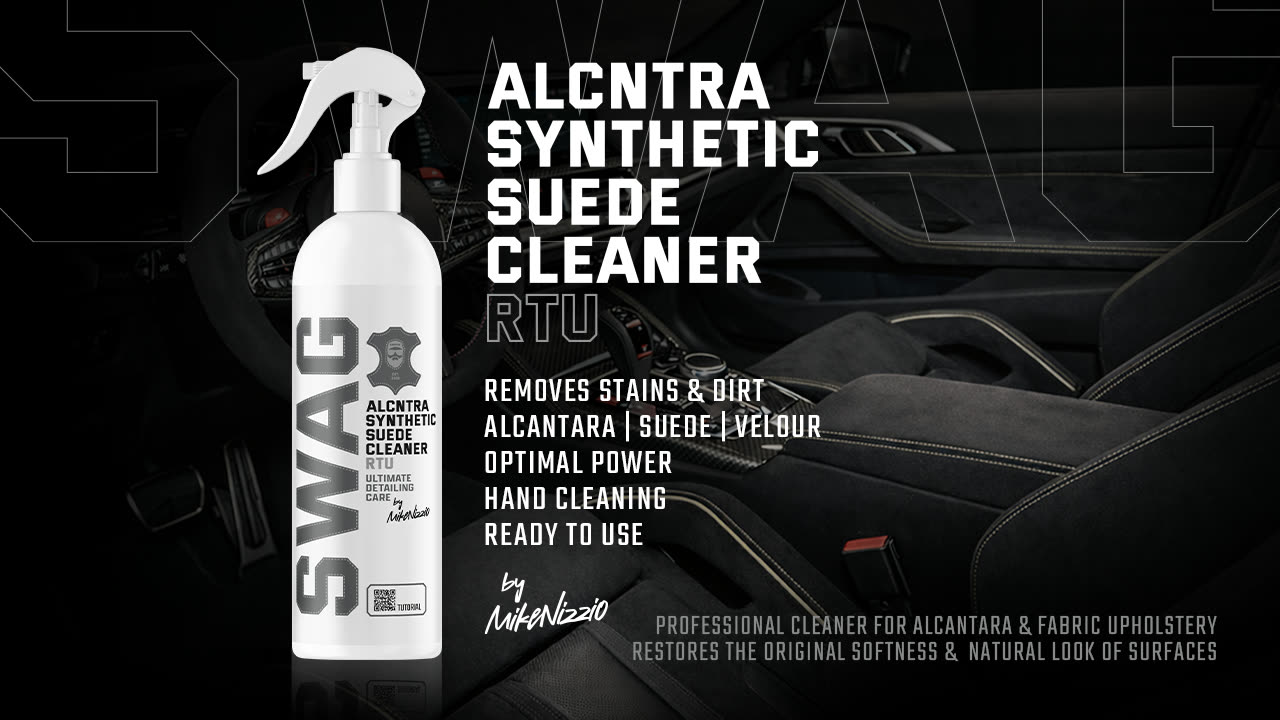
- Spray the cleaner onto a microfibre, not onto the seat. The most useful habit on suede — the cloth meters the moisture and the panel never gets soaked. I use SWAG ALCNTRA Synthetic Suede Cleaner RTU, mixed ready at a strength that’s safe for synthetic suede.
- Wipe gently, in one direction, across a whole panel — seam to seam, never a small circle in the middle. Consistent direction keeps the nap even.
- Blot with a second dry microfibre to take the loosened dirt and moisture straight back off.
- Repeat lightly if it needs it. Two gentle passes with a drying gap beat one wet, determined one.
- Dry, then wake the nap up — once fully dry, sweep the surface with a very soft brush to stand the fibres back up. This is what makes a panel look factory rather than merely clean.
Let each panel dry with the doors open before anyone sits down — damp Alcantara flattens under weight, exactly where you least want it.
Shiny, matted patches — what can be saved
If the sheen comes from body oils and grime holding the fibres down, careful cleaning brings a lot of it back; if the fibres themselves are crushed or worn, it’s permanent. The honest test: clean a small area properly, let it dry, brush the nap up. If texture returns, keep going; if it stays smooth and shiny, you’re looking at wear, not dirt.
Steering wheels, bolsters and gear surrounds are the usual suspects — hand oils plus friction. On those I keep the cleaner light and change cloths often. What you must not do is step up to a stiffer brush to force the issue: that’s how a shiny patch becomes a bald one.
Spills and stains on suede
Blot immediately, never rub, and clean the whole panel rather than the spot — suede shows a cleaned patch more obviously than any other material in a car. Because the surface reflects light through its nap, a locally cleaned area sits differently from the panel around it even when the colour matches perfectly.
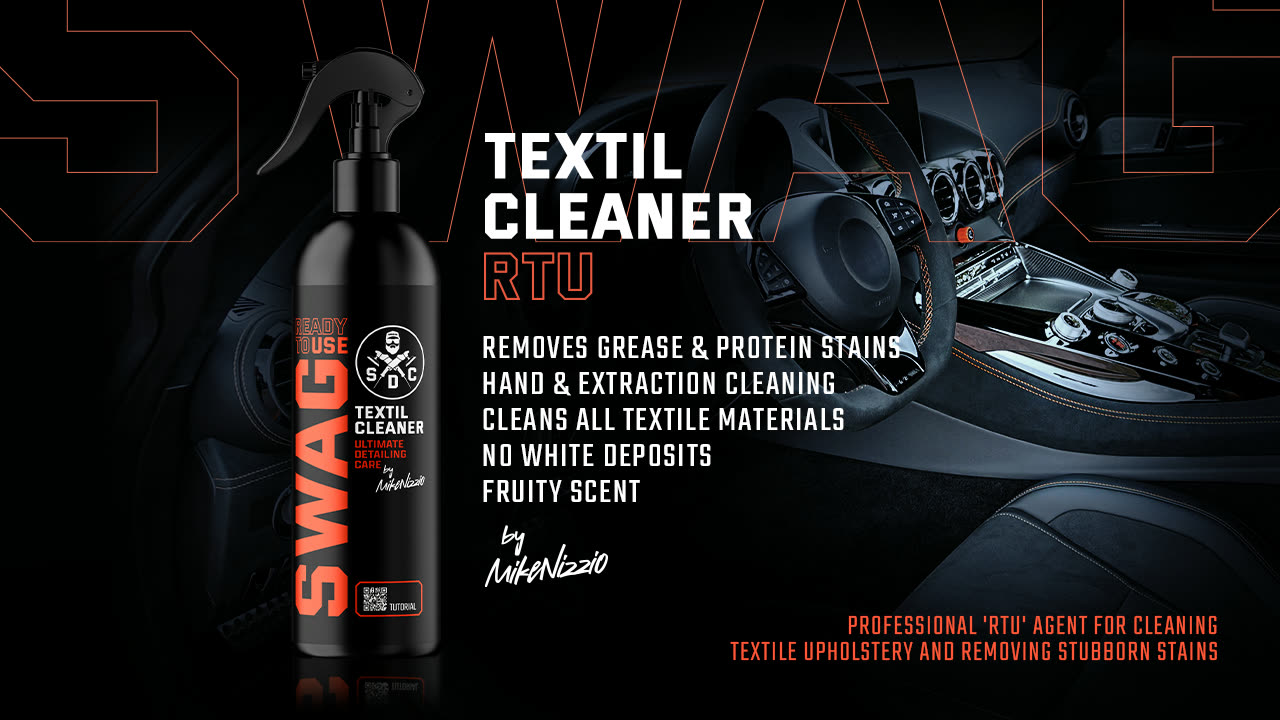
On a fresh spill, press a dry microfibre straight down to absorb what you can, then work the whole panel with the method above. The general stain principles — outside-in, gentle cycles, honest expectations about old marks — are the same as on cloth, and I’ve set them out in how to remove stains from car seats; just apply them with a fraction of the moisture — and leave the textile cleaner you’d use on cloth seats in the cupboard.
What to never put on Alcantara
The list is short and worth memorising, because most Alcantara damage comes from products that are perfectly good elsewhere in the car.
- All-purpose cleaner — too strong for the fibres and the adhesive backing. Brilliant on mats and plastics, wrong here.
- Leather cleaner or conditioner — made to sit on a coated hide. On suede they mat the nap and leave a greasy sheen you can’t wash out.
- Silicone dressings and interior shine products — same problem, and they pull dust straight back.
- Stiff brushes, abrasive pads and melamine sponges — all shear the nap off. Soft brush or nothing.
- Steam and wet extractors — heat and volume together can lift the material off its backing.
- Household cleaners, soap and vinegar mixes — residue in a fibre mat can’t be rinsed out, and it dries stiff.
One thing to take away: a product being gentle on paint, plastic or leather tells you nothing about how it behaves on synthetic suede.
Keeping suede seats looking new
Alcantara rewards little-and-often care more than any other trim, because dirt that never builds up never needs aggressive removal. A weekly vacuum and a monthly light wipe of the panels that touch skin — wheel, bolsters, armrest — is all most cars need.
Two habits help as much as any product. Keep hand cream, suncream and takeaway food off suede panels, since oils cause that shiny bolster look. And park out of long, direct sun where you can — UV fades synthetic suede relentlessly, and faded nap is not something cleaning brings back. Stay on top of it and Alcantara ages beautifully; neglect it and no product restores the nap.
Frequently asked questions
How do you clean suede car seats at home?
Vacuum with a soft brush head, test a hidden area, spray a dedicated suede or Alcantara cleaner onto a microfibre rather than the seat, wipe one panel in a single direction, blot dry with a second cloth, and brush the nap up once dry. No machine, no soaking, no scrubbing.
Can you use water on Alcantara?
A little, on a cloth, yes — but plain water tends to move dirt around and dry as a ring rather than lift anything out. A cleaner made for synthetic suede does the job with less liquid. Never pour or soak, whichever you use.
Will cleaning flatten the nap on my seats?
Not if you keep the moisture low and the pressure light. Nap flattens from soaking and hard brushing, not from cleaning as such. Sweeping with a soft brush once it’s completely dry stands the fibres back up — the step most people miss.
Can I use a leather cleaner on Alcantara?
No. Leather products are built for a coated hide surface; on suede they leave a film that mats the nap and shines it. If your seats mix leather and Alcantara panels, use both products, one panel at a time, as covered in my leather seat guide.
How do you clean an Alcantara steering wheel?
Like a seat panel, but expect it greasier: cleaner onto the cloth, wipe the rim in sections in one direction, blot dry, repeat lightly rather than pressing harder. It’s the highest-contact suede in the car.
Less water, less pressure, more patience — that’s suede in one line. The dedicated cleaner I use for it sits in our upholstery cleaning range.