Before you spray anything, work out what your seats are made of — fabric, coated leather, vinyl and Alcantara each want a different cleaner and a very different amount of water. That one decision does more for the result than any brush or technique that follows it. This guide is the map: how to clean a seat in a car whatever it’s trimmed in, and where to go for the full method.
In this guideThe short answerIdentify your materialFabricLeather and vinylSuede and AlcantaraRules for every materialFAQ
How to clean a seat in a car: the short answer
Vacuum first, match the cleaner to the material, keep the surface damp rather than soaked, lift the dissolved dirt back out instead of letting it dry in, and let the seat dry before anyone sits on it. Every material follows that shape; what changes is the chemistry and how much moisture the seat tolerates.
Using the wrong product rarely goes bang — it goes quiet. Leather that greys at the bolster a year later, cloth with a pale ring round a spot you cleaned, Alcantara with no nap where your elbow rests. Almost every ruined interior I’ve been handed was ruined slowly, by the right product on the wrong material.
How do you tell which material your seats are?
Look closely and press with a fingertip: a woven pile you can see threads in is fabric, a grain that repeats identically is vinyl or coated leather, an irregular grain that creases softly is hide, and a short fuzzy nap that changes shade as you sweep your hand across it is suede or Alcantara.
Most modern cars mix materials in one seat — leather-look bolsters with a cloth centre, Alcantara inserts on a leather seat — so treat every panel as its own job.
| Material | How to spot it | What it needs |
|---|---|---|
| Fabric / cloth | Visible weave, absorbs a drop of water | Textile cleaner, agitation, dirt lifted out |
| Leather (coated) | Soft irregular grain, creases and relaxes | pH-safe leather cleaner as foam, then conditioner |
| Vinyl / leatherette | Perfectly repeating grain, slightly plasticky | Same as leather, minus the need for feeding |
| Suede / Alcantara | Short nap that shades light and dark | Dedicated cleaner, minimum moisture, no scrubbing |
Fabric and cloth seats
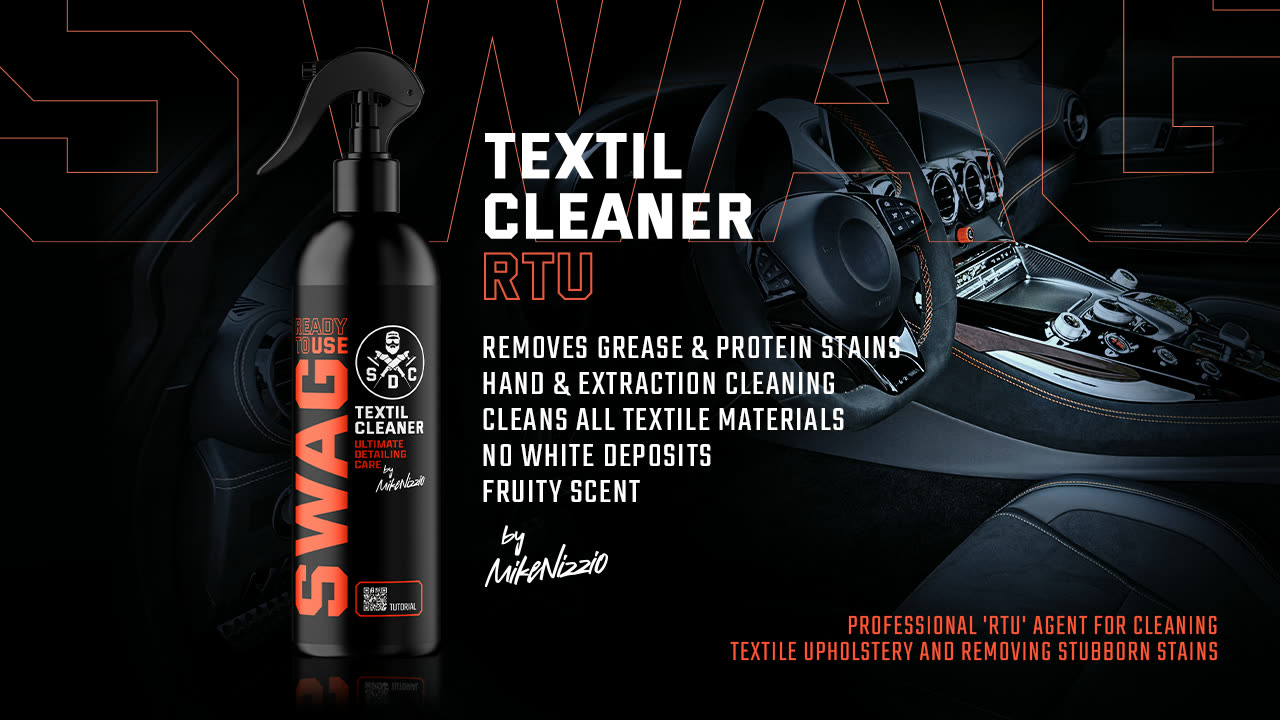
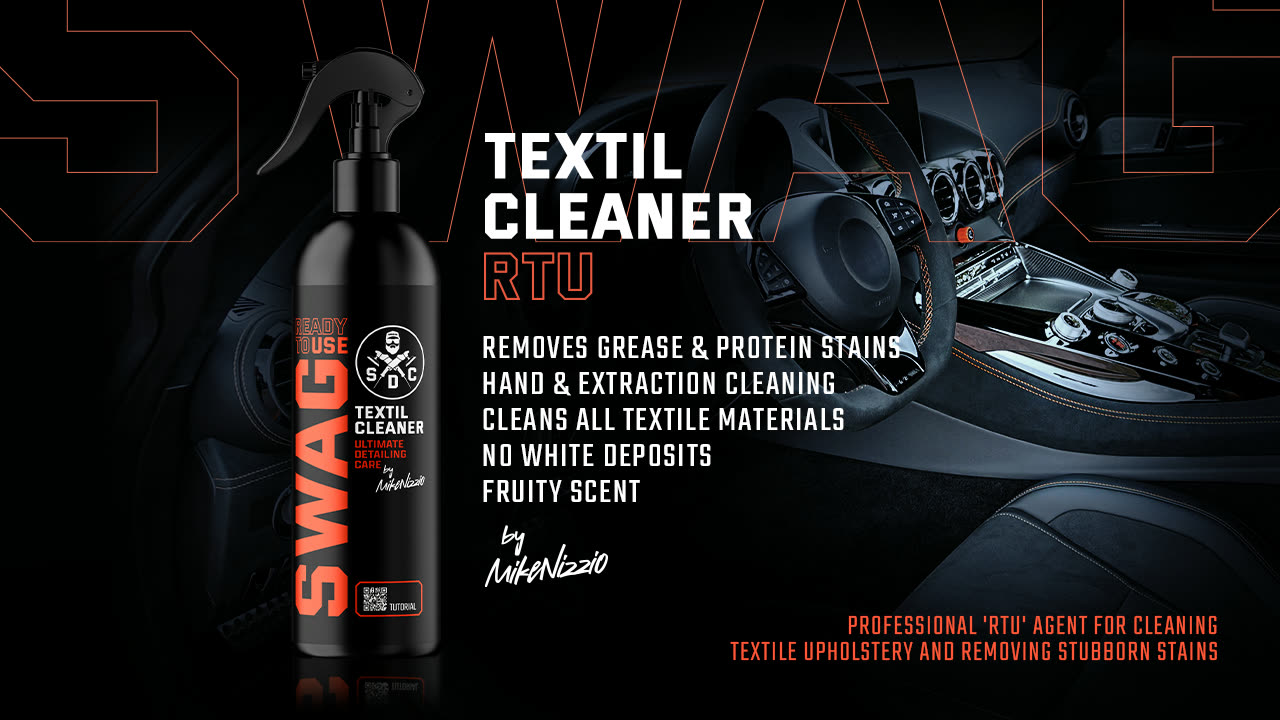
Cloth is the most forgiving material to clean and the easiest to ruin cosmetically, because whatever goes into the fibre has to come back out again. A textile cleaner dissolves the grime, a microfibre or bonnet removes it, and drying decides whether you get a clean seat or a tidemark. The full routine is in how to clean fabric car seats and upholstery.
Leather and vinyl seats
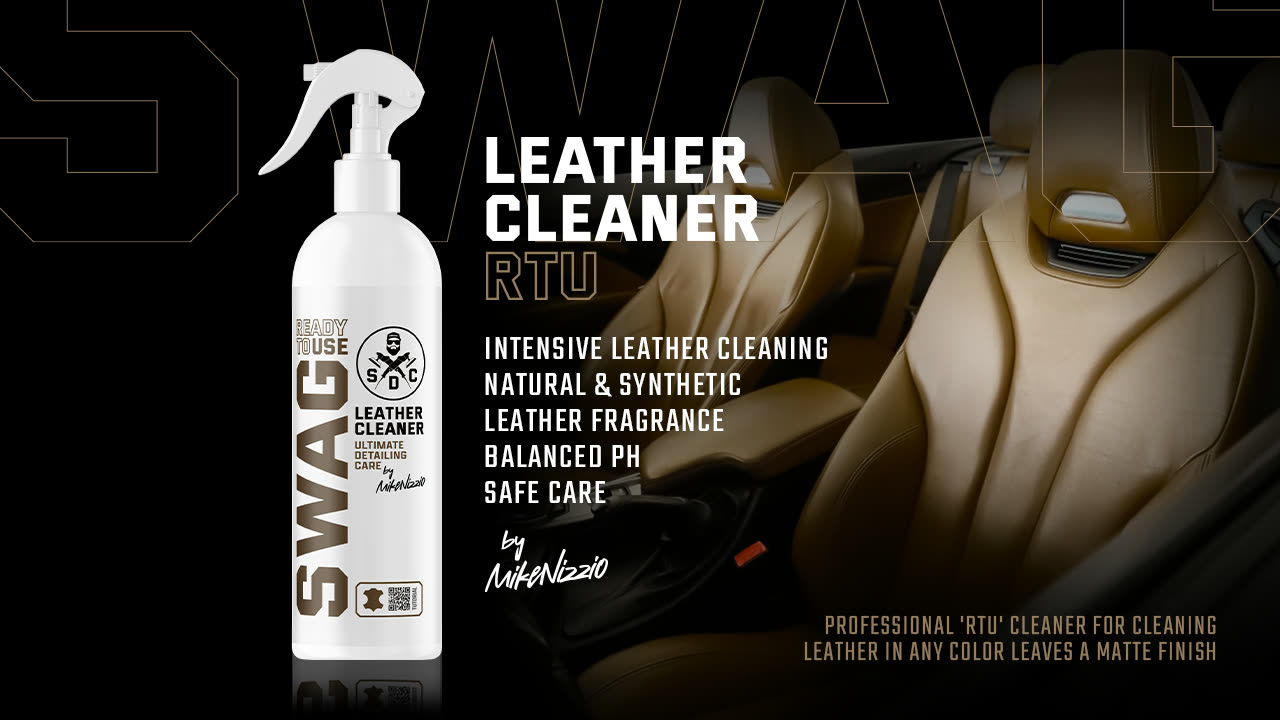
Almost all car leather is coated, so you’re cleaning a finish rather than the hide itself — which is why pH matters and why household sprays quietly wreck seats. Foam on, soft brush, wipe off with a clean microfibre, then a conditioner so the coating stays supple and doesn’t crack at the bolster. Vinyl takes the same routine minus the feeding.
Dilutions and order of work are in how to clean leather car seats properly; the products sit in our leather conditioning range.
Suede and Alcantara seats
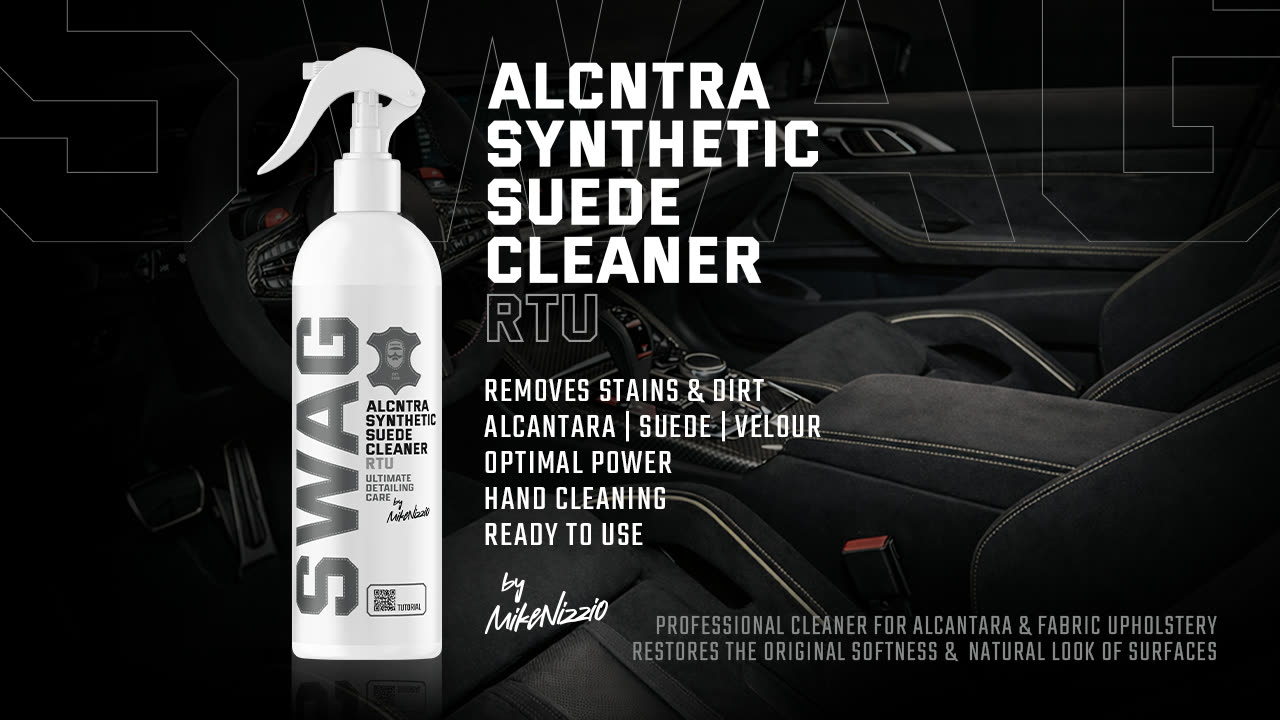
Here the biggest risk isn’t the chemical, it’s you: too much water and too much brushing flatten the nap, and flattened nap doesn’t come back. Suede and Alcantara take the least moisture of any seat in the car, a product made for synthetic suede such as SWAG ALCNTRA Synthetic Suede Cleaner RTU, and a hidden test first. If your car has Alcantara anywhere, read how to clean suede and Alcantara car seats before you touch it with anything else.
Four rules that apply to every seat in the car
Whatever the material: vacuum first, test somewhere hidden, work panel to panel rather than spot to spot, and dry properly.
- Vacuum before anything wet. Spray a dusty seat and you’ve made mud, then rubbed it into the weave.
- Test where nobody looks — under the base, behind the backrest. Half a minute of insurance.
- Clean whole panels, seam to seam. A patch cleaned on a grubby seat leaves a halo worse than the mark — the golden rule for removing stains from car seats too.
- Dry it. Doors open, air moving. Damp trapped in foam is where musty smells begin.
Watch me work through a filthy interior — same logic, panel by panel:
You need less kit than you’d think: a textile cleaner for cloth, a leather cleaner with a foamer for hide and vinyl, a soft brush and clean microfibres.
Frequently asked questions
How do you clean a car seat at home?
With the cleaner matched to the material, a soft brush and clean microfibres — no machine needed. Vacuum, test a hidden spot, apply the product so the surface is damp rather than wet, agitate gently, wipe the dirt away and dry with doors open.
How do you deep clean a car seat?
Deep cleaning is the same process in more passes, not with more force — repeat the clean-and-lift cycle until your cloth stops picking up colour. On cloth, a second vacuum once dry lifts the pile back up.
Can I use one cleaner on fabric and leather seats?
I wouldn’t. A textile cleaner releases dirt from fibre; a leather cleaner sits on a coated surface at a leather-friendly pH. Anything strong enough for both is too strong for the leather.
How often should car seats be cleaned?
A light clean every few weeks keeps a daily driver on top of things. Seats cleaned regularly never need rescuing: dirt left in leather grain or fabric weave acts like fine sandpaper every time someone slides across it.
How do you get stains out of car seats?
Gentle repeated cycles rather than one hard scrub, blot rather than rub, then clean the whole panel so there’s no halo. See how to remove stains from car seats for the stain-by-stain detail.
Work out the material first, then pick the bottle — that’s the whole trick. What I use on cloth seats lives in our upholstery cleaning range; the hide side of the job sits in leather conditioning.