Almost every household product suggested for cleaning alloy wheels will remove the dirt — the problem is what else it removes on the way. Nearly all alloys sold in the last thirty years are lacquered: bare metal underneath, a clear protective coat on top. That lacquer is what you are really cleaning, and it is what oven cleaner, bleach, neat vinegar and strong degreasers attack. The damage is usually invisible for a few weeks, then shows up as dullness, a milky bloom, or white patches creeping out from the spoke edges. This guide goes through the popular suggestions honestly, and explains why a dedicated wheel cleaner exists at all.
In this guideWhat you are actually cleaningWashing-up liquidOven cleaner and caustic degreasersWD-40Vinegar, lemon juice and descalerBleachWhat a wheel cleaner does differentlyThe safe routineFAQ
You are not cleaning metal — you are cleaning lacquer
This one fact explains every warning in this article. A lacquered alloy is a painted part. It has the same basic construction as a body panel: substrate, colour or finish, clear coat on top.
So the right mental test for any product is not “will this shift brake dust?” — plenty of harsh things will. It is “would I put this on my bonnet?” If the answer is no, it does not belong on your wheels either.
There are exceptions that make the advice online so confusing. Genuinely polished, anodised or bare-metal wheels behave differently, and a few older or aftermarket sets are unlacquered. If yours are polished lips or bare alloy, the rules change again and most chemicals become riskier, not safer.
Washing-up liquid: the mildest bad idea
It will not usually damage lacquer, but it strips whatever protection is on the wheel and it barely touches bonded brake dust. Of everything in this article, it is the least harmful and the least effective.
The real cost is what it undoes. If you have any wax, sealant or coating on the wheel, dish soap is designed to cut exactly that kind of film — it is a degreaser for greasy plates. You end up with a clean but unprotected wheel that gets dirtier faster and holds contamination harder next time.
It also does nothing about embedded iron particles, which is what the orange specks on your wheels actually are. That is a chemical problem, not a scrubbing problem, and it is explained fully in iron fallout explained.
Oven cleaner and caustic degreasers: the one that really does damage
This is the suggestion that ruins wheels. Oven cleaners are strongly caustic by design — they are built to destroy baked-on organic matter inside a steel box, with no lacquer anywhere in sight.
On a lacquered alloy, strong caustics can etch the clear coat and, if they reach bare metal through a chip or a kerb scuff, react with the aluminium itself. The signature result is a whitish, chalky bloom that no amount of polishing fully removes, because the surface is no longer smooth — it has been eaten.
What makes it so common is that it appears to work brilliantly. The first wheel looks incredible. The damage announces itself weeks later, and by then nobody connects the two events.
WD-40: the wrong tool, used for the wrong reason
It is a water-displacing oil, not a cleaner. It will loosen tar and sticky residue because it is a solvent-carrying oil, and it will leave a greasy film that makes a wheel look temporarily richer.
That film is the problem. It attracts dust immediately, so the wheel is filthy again quickly. Worse, it contaminates the surface for anything you apply afterwards — no wax, sealant or coating will bond through oil, so your next protection step simply fails and you will not know why.
If tar and sticky deposits are the actual problem, a Swag BASIC TAR GLUE REMOVER is made for it and rinses away cleanly instead of leaving a film. There is a full walkthrough in how to remove tar from car paint.
Vinegar, lemon juice and limescale descaler
Acids do remove some brake dust and water marks, but household acids are uncontrolled and they do not stop working when the job is done. A dedicated acidic wheel product is formulated with inhibitors and a defined working window; a bottle of vinegar has neither.
Left to dry in the sun on a hot wheel — which is exactly what happens on a driveway — acid concentrates as the water evaporates and can etch the lacquer. Descalers are stronger again and are the more dangerous of the two.
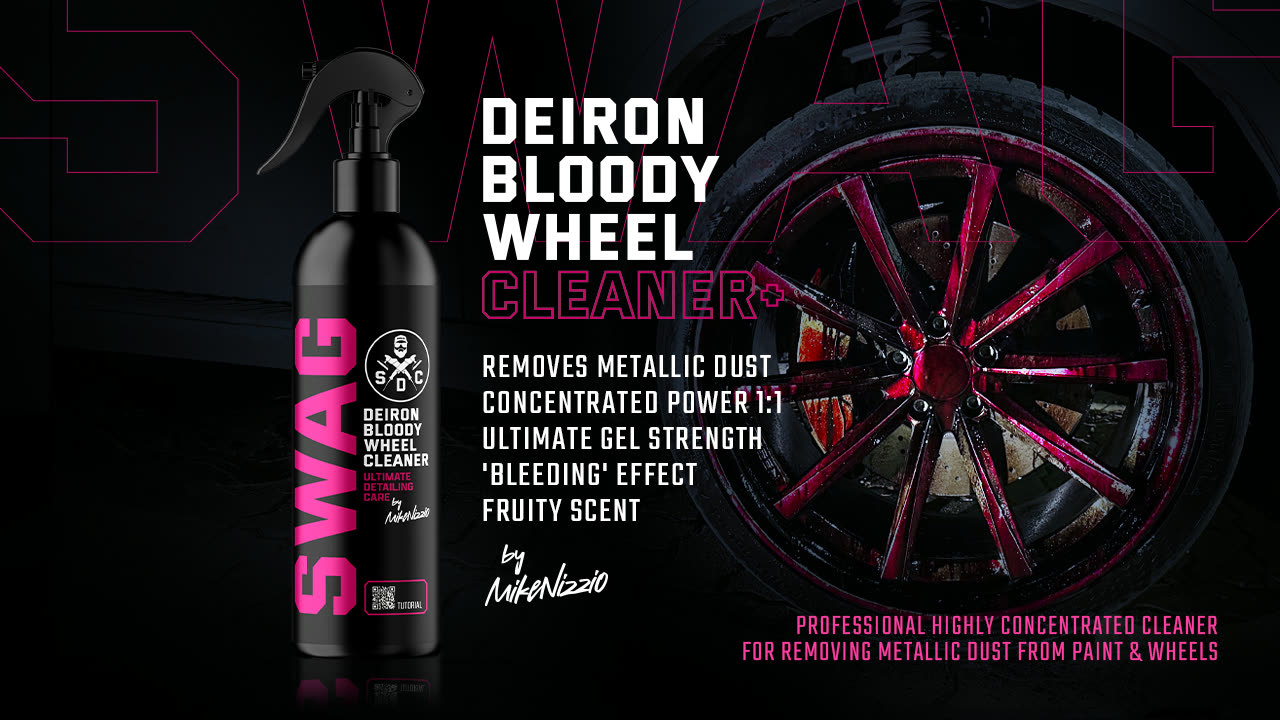
Iron removal is the honest use case here, and it is solved properly by an iron fallout remover such as Swag BASIC DEIRON RED WHEEL CLEANER, which is pH-balanced, bleeds purple as it works so you can see the reaction, and rinses off.
Bleach: no upside at all
Bleach does not remove brake dust, it corrodes aluminium, and it damages everything nearby. There is no version of this that ends well.
It will also attack brake components, wheel weights, valve stems and any exposed fastener, and the run-off is bad for whatever it lands on. This one is simply not worth discussing further.
So what does a wheel cleaner actually do differently?
It is formulated to be aggressive towards brake dust and passive towards lacquer — and that selectivity is the entire product.
Three things separate it from a general cleaner. It has a controlled pH with corrosion inhibitors, so it works on the dirt without working on the metal. It clings — gels and thickened formulas stay on a vertical surface long enough to do the job instead of running straight off. And it tells you what it is doing: colour-changing and bleeding effects are a visible readout of the chemistry, not a marketing trick.
| Wheel type | Sensible choice | Avoid |
|---|---|---|
| Standard lacquered alloy | Alkaline or pH-neutral wheel cleaner | Caustics, bleach, strong acids |
| Heavily contaminated lacquered alloy | Iron fallout remover, then a wheel cleaner | Scrubbing harder with anything |
| Polished, anodised or bare metal | pH-neutral only, tested first | Alkaline and acidic products alike |
| Painted or powder-coated | pH-neutral, treat exactly like paint | Anything you would not use on a panel |
The routine that keeps this from ever becoming a problem
Wheels only need harsh anything when they have been neglected. Kept on top of, they are one of the easier jobs on the car.
- Do the wheels first, and do them cold. Hot wheels flash-dry any product on contact.
- Rinse the loose grit off before touching anything. Dragging brake dust across lacquer is how wheels get scratched.
- Let the cleaner dwell, do not let it dry. Work in shade and in sections.
- Use the right brushes. Soft for faces, long and narrow for barrels — bristle choice does more than chemical strength.
- Rinse thoroughly, including behind the spokes. Residue left in recesses keeps working.
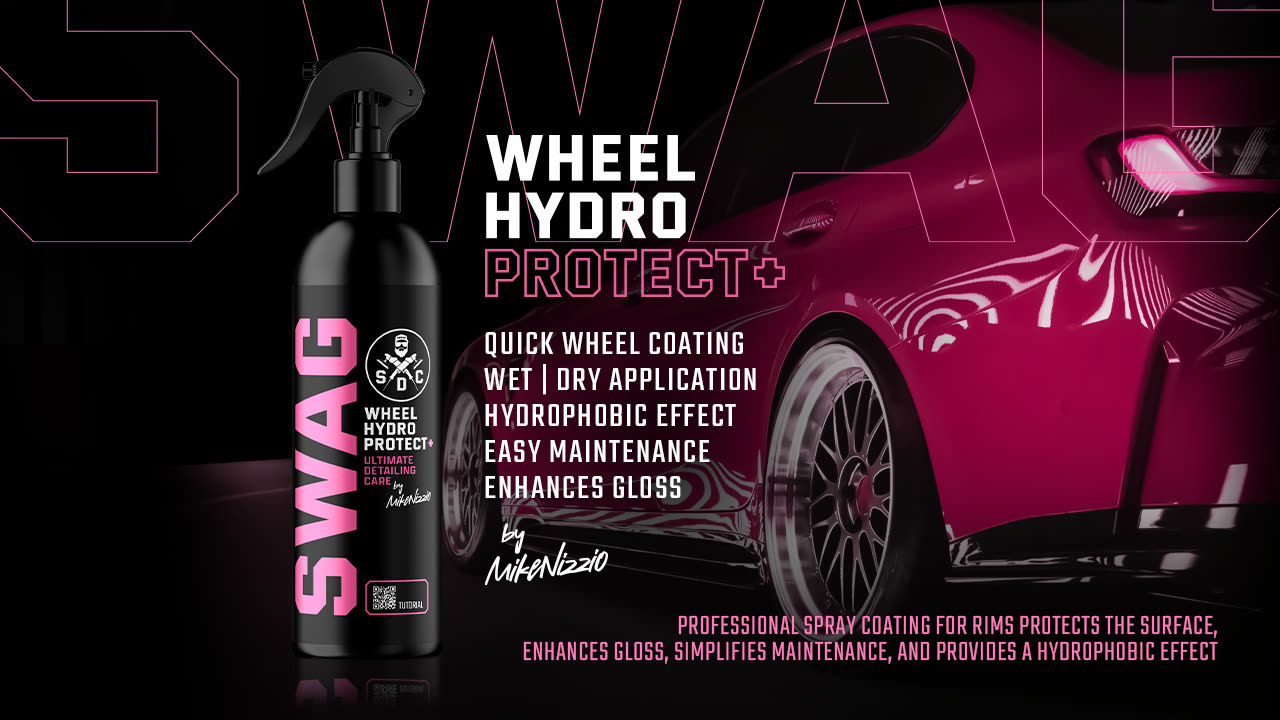
- Protect them. A wheel sealant such as Swag WHEEL HYDRO PROTECT+ means next time is a rinse rather than a battle.
The full step-by-step version lives in how to clean alloy wheels properly.
FAQ
My wheels already look milky and dull — can it be fixed?
It depends how deep it goes. If the lacquer is only hazed, a light machine polish can bring back clarity. If the lacquer has been etched through or has started lifting, polishing will not rebuild it and refurbishment is the honest answer. Test a small area on the back of a spoke before deciding.
Is washing-up liquid really that bad?
It is the least harmful thing in this article, and it will not usually wreck a wheel. But it strips protection, leaves the surface bare, and does nothing about embedded iron — so you get the disadvantages of a degreaser without the results of a wheel cleaner.
Can I use my car shampoo on the wheels instead?
Yes, for lightly soiled wheels that are cleaned regularly, and it is a far better idea than anything from under the sink. It will not shift bonded brake dust or iron, but as maintenance between deeper cleans it is perfectly sensible.
Why do my wheels get dirty again so quickly?
Usually because there is no protection on them. Bare lacquer is slightly porous and hot brake dust bonds to it readily. Sealing the wheel gives the dust nothing to key into, which is why a protected wheel often rinses clean with plain water.
Are the colour-changing and bleeding effects just for show?
No — the colour change is the chemistry reacting with dissolving iron, so it doubles as a map of where the contamination actually is. It is genuinely useful information, and it also tells you when the product has finished working.
The wheel-specific chemistry — cleaners, fallout removers and sealants — lives in Wheels.