To remove tar from car paint properly, work on cool paint in the shade, wet the panel with a dedicated tar remover, let it soften the deposit, then wipe it away with no pressure at all. That is the whole job. The reason it goes wrong for most people is not technique — it is what they reach for first. Petrol, white spirit and the aerosol in the shed all shift tar, and they all quietly cost you something you can’t put back.
In this guideWhat tar is and why it welds itself onDoes petrol remove tar from a car?How to remove tar from car paint, step by stepCool paint, shade, and no rubbingTar on wheels, glass and trimClay after the chemistry, never instead of itRe-protect — tar remover takes your wax tooFAQ
What tar actually is, and why it welds itself on
Those black specks along your sills and behind the wheels are bitumen — road surface, thrown up hot and sticky, that cooled and bonded onto your lacquer. It isn’t dirt sitting on top; it has flowed into the texture of the surface and set there, which is why a shampoo wash drives straight past it.
You get the worst of it in three places: the lower quarter of the doors, the front bumper and the area immediately behind each wheel arch. Motorway miles in summer are the classic cause, and freshly resurfaced roads are worse still. Left alone it hardens, collects road film around itself and makes the whole lower half of the car look grey — and when someone eventually attacks a hardened spot with a fingernail, that’s when the scratch appears.
Does petrol remove tar from a car? Yes — and that’s the problem
Petrol dissolves tar brilliantly. It also dissolves things you very much want to keep. That’s the uncomfortable part: it works, so people assume it’s fine, and the damage doesn’t announce itself on the day.
A modern clear coat is a cured resin, not glass. Uncontrolled solvents can soften it, and softened lacquer marks under the very cloth you’re wiping with — so you get a dull, hazy patch where the tar used to be. On repainted panels it’s worse, because a respray’s clear is often thinner and less fully cured.
Plastic and rubber take it harder still. Bumpers, arch liners, black trim and window seals are the parts nearest the tar, and they’re the ones that go chalky, white-edged or permanently stained. I’ve seen a good car let down by a bleached stripe along the bottom of the doors, and every time it came from a rag and something off the garage shelf.
| What people reach for | Does it shift tar? | What it costs you |
|---|---|---|
| Petrol or diesel | Yes, fast | Can soften clear coat, stains trim, oily residue left behind — and it’s flammable on a hot panel |
| White spirit / turps | Yes | Uncontrolled strength, dries out rubber seals, marks matte and satin finishes |
| Nail varnish remover | Yes | The most destructive of the lot on paint and plastics — never let it near a car |
| Penetrating spray from the shed | Partly | Leaves an oily film that ruins any protection you apply afterwards |
| Picking it off with a nail | Slowly | A ring of scratches around every spot you remove |
| Dedicated tar remover | Yes | Your wax — which you were going to refresh anyway |
That last row is the point. A product made for this job uses a solvent blend strong enough for bitumen but tested against automotive clear coat, and it flashes off cleanly instead of leaving an oily film.
How to remove tar from car paint, step by step
Wash first, treat second, rinse third, protect last — and never skip the wash. Here’s the order I use on every car that comes into the studio.
- Wash the car and leave it damp. Tar remover applied over grit just grinds that grit around. Not optional.
- Move into the shade and let the panels cool. Warm paint flashes the solvent off before it has done anything.
- Spray the affected area generously. A thin misting dries out; a wet coat keeps working.
- Let it dwell for the time the label states. You’ll see the tar run in dark streaks down the panel — that’s the product doing your work for you.
- Wipe with a soft microfibre, one direction, almost no pressure. Fold to a clean face constantly. A tar-loaded towel is sandpaper.
- Repeat on anything stubborn rather than pressing harder.
- Rinse thoroughly, then re-wash the treated areas so no residue sits on trim or seals.
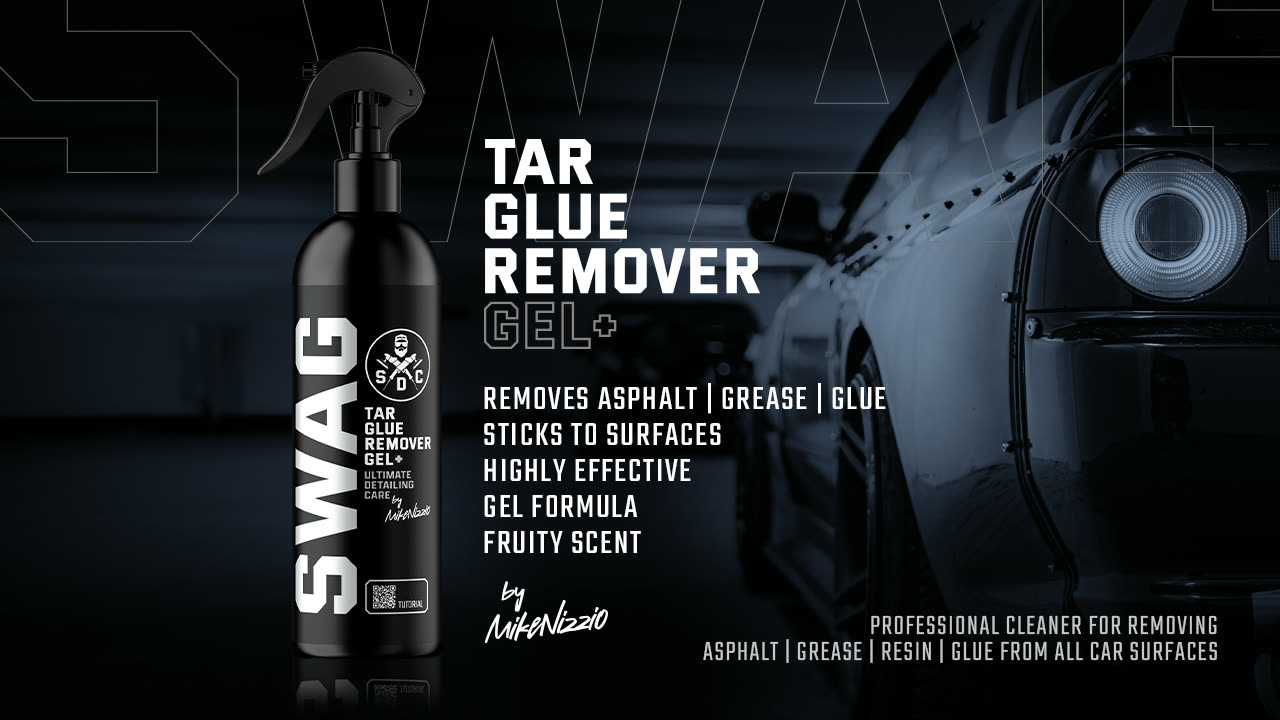
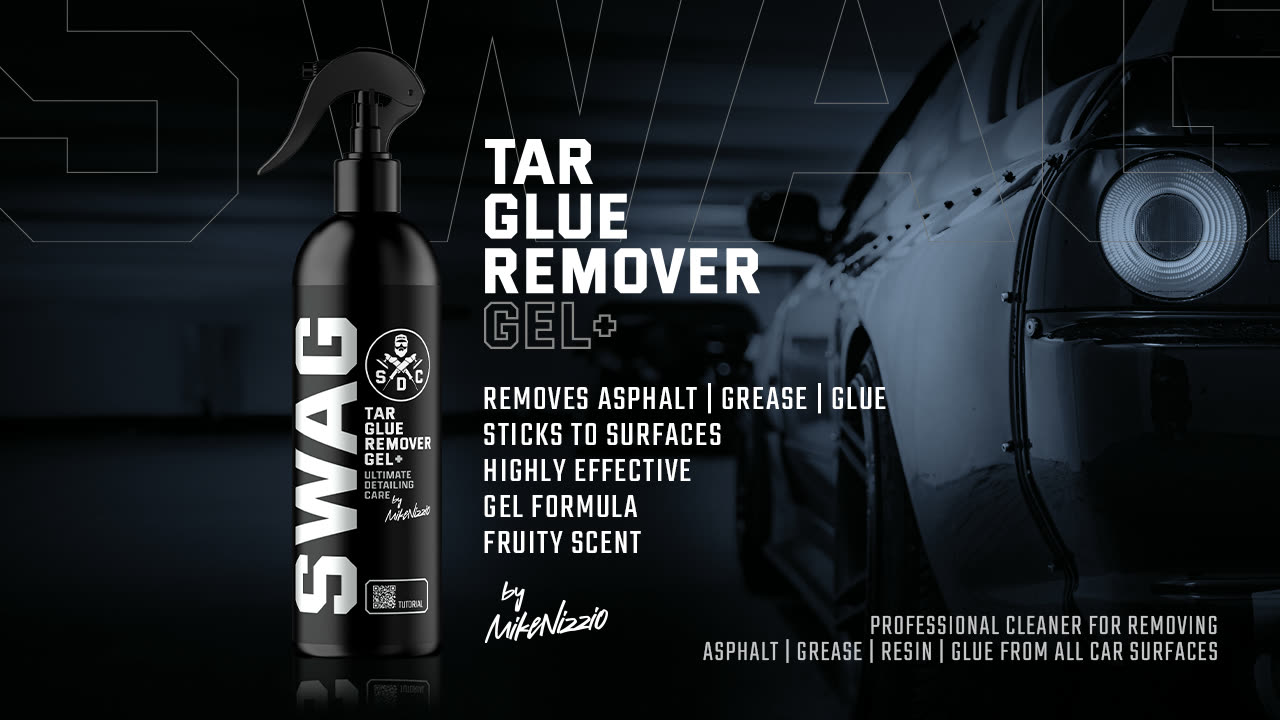
On a badly affected motorway car I use a gel so it clings to vertical panels instead of running onto the floor — TAR GLUE REMOVER GEL+ V.2 lives on my trolley. For ordinary tar spotting a straight sprayable like BASIC TAR GLUE REMOVER uses less product. Both also handle adhesive, so old dealer stickers and badge glue come off in the same pass.
Cool paint, shade, and absolutely no rubbing
Every mistake I see with tar removal comes down to one of three things: hot paint, direct sun, or impatience. Hot paint evaporates the solvent before it can soften the bitumen, so you get no result, assume the product is weak and start scrubbing. Direct sun does the same and adds streaking on top.
Impatience is the expensive one. Rubbing a partly softened spot drags a hard, gritty particle across your lacquer under finger pressure, and that leaves a mark no wash will remove. So: garage or shade, panels cool to the touch, dwell time instead of elbow grease. If a spot won’t go it needs another application, not more force. And keep the doors open if you’re working indoors — these are solvent products and they smell like it.
Tar on wheels, glass and plastic trim
The same product works across all of them, but the rules change slightly. Glass is the easy one — the most solvent-tolerant surface on the car, and tar wipes off it with barely any effort. Wheels catch tar as well as brake dust, usually on the inner barrel and the face nearest the arch; treat that before you reach for a wheel cleaner, because wheel chemistry isn’t designed for bitumen and just runs over the top of it.
Plastic trim, arch liners and rubber seals are where I slow down. A dedicated remover is far kinder here than anything from the shed, but I still work in short passes, wipe promptly rather than letting it pool, and rinse afterwards. Textured black plastic holds residue in the grain and goes patchy if you leave product sitting in it.
Clay comes after the chemistry, never instead of it
Claying a car that still has tar on it is the fastest way to marr your paint. The clay grabs the sticky deposit, the deposit smears, and now you’re dragging a loaded bar across a panel.
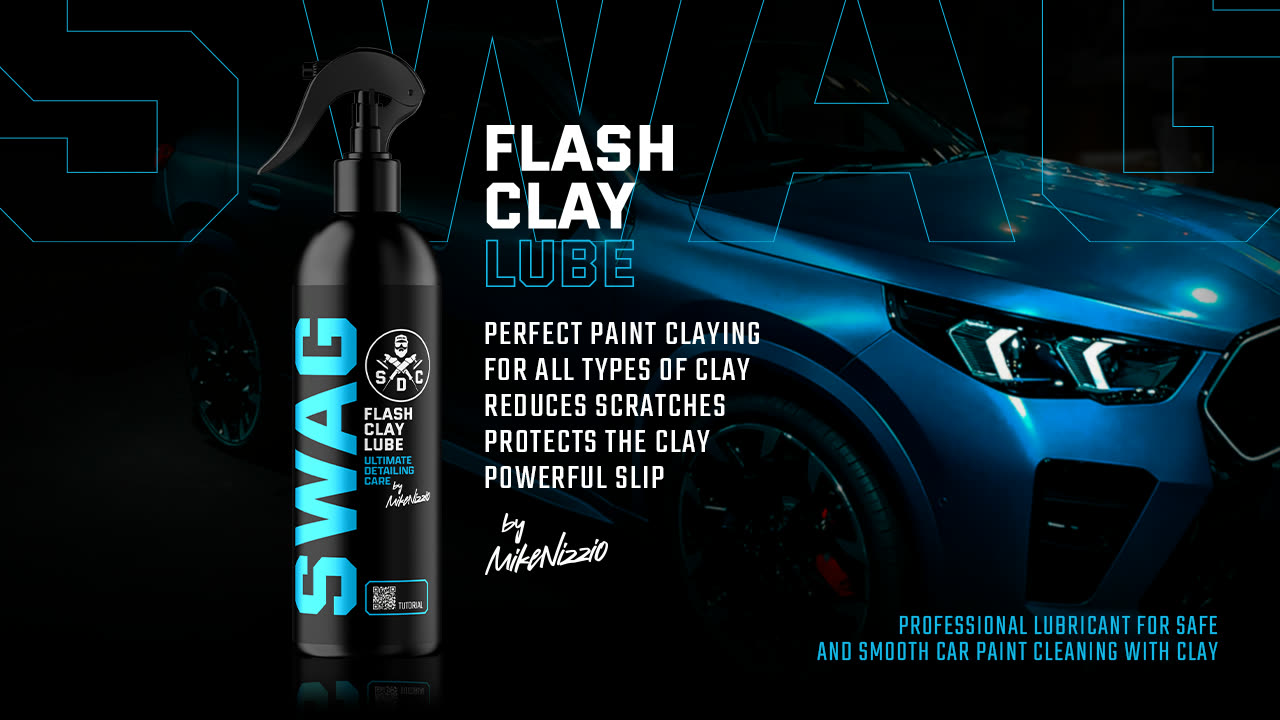
The proper order is chemical first, mechanical second: wash, tar remover, iron fallout remover, then clay for whatever is left. Less work for the clay means less risk to the lacquer. Keep the surface flooded with FLASH CLAY LUBE V.3 the whole time; if the bar starts to drag, you haven’t used enough. And if your paint also carries orange rust-coloured specks, that’s a different contaminant with a different fix — covered in iron fallout explained.
Re-protect afterwards, because tar remover takes your wax with it
Any solvent strong enough to dissolve bitumen has already dissolved the wax or sealant sitting on top of it. This is the step people forget, and it matters more than the tar did.
Bare lacquer on the lower half of a car is exactly where you don’t want it — that’s the area taking road film, salt and the next lot of tar, so it re-contaminates faster than before. The job isn’t finished when the panel is clean; it’s finished when there’s something back on it. If you’ve decontaminated the whole car, put a proper layer back on. If you’ve only spot-treated a bumper, a spray-on ceramic like CERAMIC COAT RELOADER UV restores protection to the treated area in a couple of minutes and blends invisibly with the rest. Here’s the reloading step done on a full car:
Protection is also prevention. Tar bonds far less aggressively to a slick, sealed surface, and comes off with much less effort next time.
Frequently asked questions
Does petrol remove tar from car paint?
It does, and that’s why the myth persists — but it’s an uncontrolled solvent that can soften modern clear coat, stain plastic trim and dry out rubber seals. It also leaves an oily film that stops any wax bonding afterwards. A dedicated tar remover does the same job with chemistry that has been tested against automotive paint.
Will a tar remover damage my paint?
Used as directed on cool paint in the shade, no. It’s formulated for cured automotive clear coat and rinses away cleanly. What it will remove is your wax or sealant, so plan on re-protecting the treated area afterwards.
Can I use a clay bar to remove tar?
You can, but you shouldn’t lead with it. Clay grabs sticky tar and smears it, and a loaded bar then drags contamination across the panel. Dissolve the tar chemically first, and use clay only for what’s left behind — always with plenty of lubricant.
Does tar remover take off wax or a ceramic coating?
It will strip wax and most sealants — assume it has. A cured ceramic coating is far more resistant and normally survives a sensible spot treatment, but its hydrophobic behaviour can feel flat afterwards until you top it up with a spray ceramic.
The tar removers, the clay lube and everything else that gets bonded contamination off paint sit together in our Decontamination range — and the products that go back on afterwards are in Paint Maintenance. Leave the petrol in the car where it belongs.