

Car carpet cleaning fails for two reasons, and neither of them is the product: people wet the carpet before all the dry grit is out, and they put down far more liquid than they can get back out again. Take the mats out and deal with them separately, vacuum until the pile stops giving anything up, then clean damp rather than wet and dry it properly. Do that and a footwell comes up genuinely clean; skip it and the carpet looks better for a fortnight and smells worse for a year.
In this guideMats out firstRubber vs carpet matsDry debris before liquidCarpet, step by stepControlling moistureSalt and winter gritFAQ
Mats out first — always
The floor mats are the dirtiest item in the car and the only part of the floor you can carry outside, so they come out before anything else happens. Cleaning a mat while it lies in the footwell just transfers its grit into the carpet you are about to spend an hour on.
While they are out, run your hand over the carpet where each mat sat; it should feel as dry as the rest of the floor. If it is cool and clammy, you have a moisture problem that cleaning will not solve and will make worse — better to know now than after you have added two litres of water to it.
Rubber and carpet mats need different treatment
Rubber and TPE mats are washed and rinsed like an exterior part; carpet mats are cleaned like upholstery, damp and lifted. Treating one like the other is how people end up with slippery rubber mats or soaking carpet ones.
| Mat type | How I clean it | The thing to watch |
|---|---|---|
| Rubber / TPE all-weather | APC diluted to the label ratio, stiff brush, rinse, drain on edge | Never dress the driver’s mat — a slippery mat under a pedal is a real hazard |
| Carpet / velour | Vacuum, textile pre-spray, agitate, lift with a bonnet or cloth | Damp, not soaked — the backing holds water for days |
| Rubber-backed carpet | As carpet, then dry face-down so water drains out of the pile | Water trapped behind the backing is the classic slow-dry mat |
| Boot liner / tray | Same as rubber, out on the driveway | Check the spare wheel well underneath while it is out |
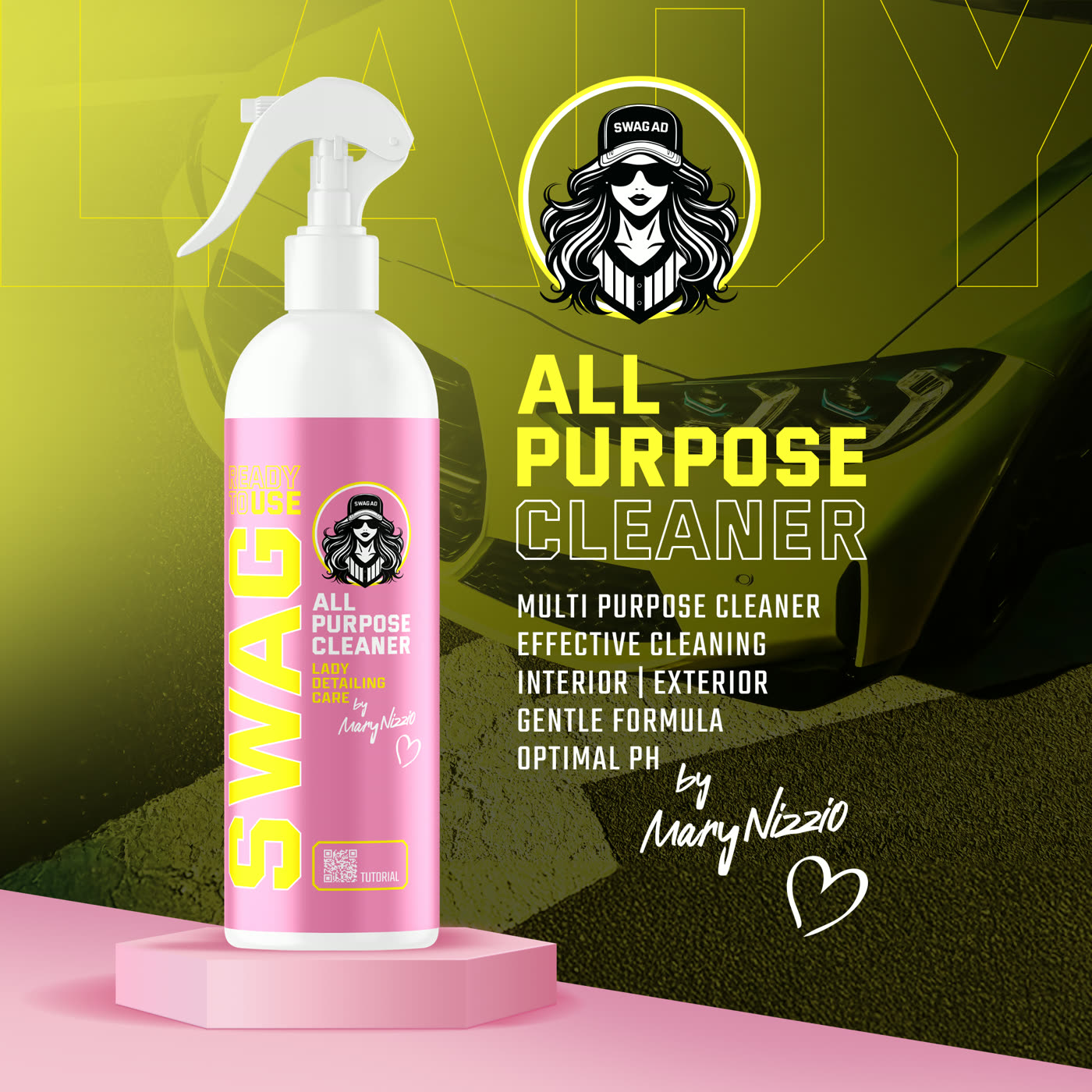
For rubber mats a concentrate earns its keep, because you go through more product here than anywhere else in the interior — SWAG APC Concentr. Gel+ 1:20 mixed to the label ratio does it. Drain them standing on edge; a mat that goes back damp puts that moisture straight into the carpet beneath it.
Get every bit of dry debris out before any liquid
Vacuum, then brush the pile against its lay, then vacuum again — the second pass always brings up more than the first. Car carpet is short, dense pile that holds grit at the base where the nozzle will not reach.
A medium-stiff brush worked back and forth stands the fibres up and walks the grit to the surface. You can hear the difference: gritty at first, then quiet. When it goes quiet, the dry stage is done. Use the crevice tool down the seat rails, under the seats, and into the corner where carpet meets sill.
Car carpet cleaning, step by step
Pre-treat the worst areas, pre-spray a section, agitate, lift the dirt out, and only move on when the cloth stops coming up dirty. Work one footwell at a time, so you are always cleaning a whole area rather than a patch.
- Vacuum and brush as above, until nothing more comes out dry.
- Pre-treat the heel pad and traffic lines — the polished, darker areas where shoes land. Give the cleaner a moment before brushing.
- Pre-spray the section evenly with a textile cleaner such as SWAG Textil Cleaner Concentrate Pre-Spray, mixed to the label. Damp and even, not puddled.
- Agitate with a medium brush in overlapping passes, then again at ninety degrees so the fibre is worked both ways.
- Lift the dirt out. An extractor is quickest; a bonnet or folded microfibre dragged across the pile does the same job with more patience. Turn to a fresh face constantly.
- Repeat where it still comes up dirty rather than scrubbing harder in one place.
- Dry with air moving, then vacuum again when fully dry to stand the pile back up — that final pass is what makes a carpet look new rather than merely clean.
If you would rather not mix anything, a ready-to-use option like SWAG Textil Bonnet Cleaner RTU is designed for this hand method. Individual marks get treated before the general clean, using the approach in removing stains from car seats, which applies to carpet just as well. Here is the APC side of the job — the one that does the rubber mats and the sills:
Controlling moisture — the part nearly everyone skips
Under your carpet there is foam padding, sound deadening, sometimes wiring, and no ventilation whatsoever. Water that soaks through does not evaporate back out the way it went in; it sits between carpet and floor pan for weeks. That is where the classic damp car smell comes from, and why I do four light passes rather than one soaking one.
The signs are easy to spot: a smell strongest first thing in the morning, condensation inside the windows overnight, carpet that feels cooler than the seats. If that sounds like your car, read how to get rid of a damp or musty smell in a car — cleaning the carpet again will not fix a smell coming from underneath it.
Control is simple: use the least liquid that does the work, lift more than you put down, do one footwell at a time, then get air moving with the doors open or the blower on fresh air. Do not put the mats back until carpet and mats are both dry. One honest warning — if a footwell is genuinely wet rather than dirty, you have a leak, not a cleaning job. Blocked scuttle drains, a perished door membrane or a windscreen seal will all put water into a footwell, and cleaning over an active leak is wasted effort.
Salt, grit and the British winter
White tidemarks in a footwell in February are road salt crystallising as the water dries — and you remove them by re-wetting the whole area, not by scrubbing the mark. Attack the ring on its own and you just move it outward.
Lightly re-wet the entire panel, agitate evenly edge to edge, lift with a clean cloth and let the whole area dry at one rate. Salt is water-soluble, so it lifts readily once back in solution; the trick is drying the area as a single piece. Through winter, rubber mats over the carpet are the most effective thing you can do. The rest of the routine is in winter car care: road salt, grit and frost.
Frequently asked questions
How do you clean car carpets without a machine?
Vacuum thoroughly, brush the pile to release grit, vacuum again, pre-spray a textile cleaner, agitate with a medium brush and lift the dirt out with a bonnet or folded microfibre. An extractor is faster at the lifting stage, but that is the only stage it replaces.
Can you pressure wash car floor mats?
Rubber and TPE mats, yes — outside the car, pressure kept sensible, mats stood on edge to drain. Carpet mats, no. A pressure washer drives water through the pile into the backing, where it takes days to dry and often lifts the backing away from the fabric.
How do you get salt stains out of car carpet?
Re-wet the whole area with a textile cleaner rather than spot-treating the white mark, agitate evenly, lift with a clean cloth and dry it as one piece. Salt dissolves easily; the tidemark reappears when only part of the area is re-wetted.
How long do car carpets take to dry?
With sensible amounts of liquid and air moving through the car, a few hours. If the carpet is wet through to the underlay, days — and that is the situation that causes smells. Still damp the next morning means more airflow before the mats go back.
Can I use household carpet shampoo in a car?
I would not. Domestic carpet products are made for rinsing and extraction with a lot of water, and leave a sticky residue in automotive pile that pulls dirt back within weeks. An automotive textile cleaner that dries without white residue suits a car far better.
The textile cleaners and the APC I use for floors are in our upholstery cleaning range, with the rest of the kit in interior cleaning. Mats out, grit out, damp not wet, dry properly — in that order.