The reliable way to remove a stain from a car seat is several gentle cycles — dampen with a suitable cleaner, let it dwell a moment, agitate lightly, blot the dirt out — instead of one hard scrub. Force spreads the mark, drives it deeper into the foam and on some fabrics polishes the fibre so the patch shines even after the colour has gone. Below is how to clean car seat stains by type, because coffee, chip fat, biro and a dog’s bad morning all behave differently — plus an honest account of which stains come out and which you’ll only ever improve.
In this guideBefore you touch the stainThe universal methodCoffee, tea and drinksGrease, food and makeupInk and dye transferPet accidents and sickWhat really comes outFAQ
Before you touch the stain: four checks
Vacuum the area, identify the material, test your cleaner somewhere hidden and blot up anything still wet — in that order, before any product goes near the mark.
Vacuuming matters because a wet cleaner turns loose dust into a grey slurry that spreads past the stain. The material decides which bottle you pick up — my guide to cleaning car seats by material settles that in a minute — and testing it takes thirty seconds under the seat base. If the spill is fresh, blot rather than wipe: wiping is how a 5 cm spill becomes a 20 cm one.
Time is the biggest factor of all: coffee dealt with in the car park disappears, while the same coffee found three weeks later in a hot car has bonded to the fibre and oxidised.
How to clean car seat stains: the universal method
Work from the outside of the stain inwards, keep the fabric damp rather than wet, and repeat until your cloth stops picking up colour. The sections below only change the product and the patience.
- Apply the cleaner to the stain and just past its edge. Working inwards stops you pushing a ring out into clean fabric.
- Give it a moment to dwell. Follow the label for the ratio and let the chemistry start lifting — dwell is what replaces scrubbing.
- Agitate gently with a soft upholstery brush: short, overlapping strokes, no weight behind them.
- Blot it out with a clean microfibre folded into quarters, turning to a fresh face each time.
- Repeat. Three light cycles beat one heavy one.
- Then clean the whole panel, seam to seam, and dry it with the doors open.
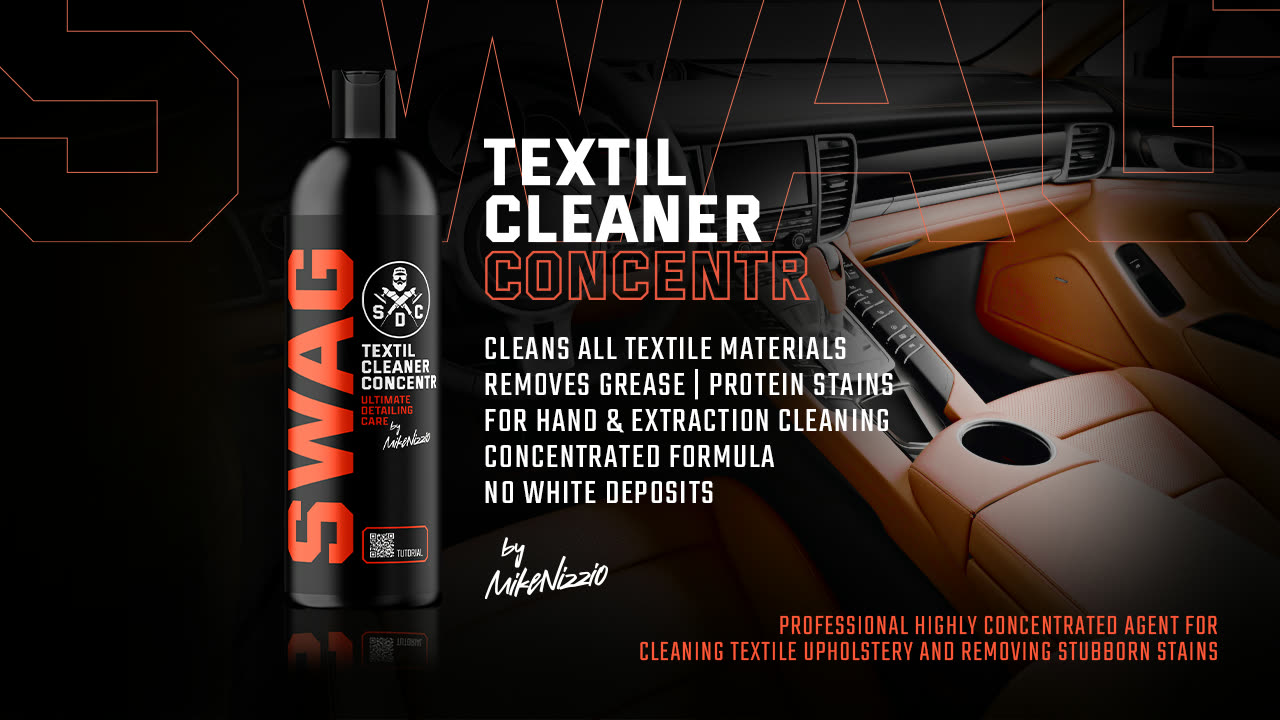
That last step is the one people skip, and it’s why DIY stain removals often look worse than the stain: a spot-clean on a seat with three years of honest grime leaves a bright clean halo. On cloth I use SWAG Textil Cleaner Concentrate Pre-Spray — mixed stronger for the mark, weaker for the panel around it — or the ready-to-use bonnet cleaner when I’d rather not measure.
Coffee, tea and soft drinks
Drink stains are water-soluble and come out easily when fresh — the trap is the tannin shadow that dried tea and coffee leave once the obvious brown has gone. Deal with the liquid first: blot straight down with a dry microfibre until nothing more transfers.
Then run the cycle above. A fresh spill clears in one or two passes; a dried one takes three or four, and the last 10% is tannin — patience rather than pressure. Fizzy drinks add sugar, so keep going until the fabric feels like fabric again, not fabric with a film on it. Milk and milky coffee belong in the biological group below.
Grease, food and makeup
Greasy stains need a cleaner that can emulsify oil and more dwell time than any other type — but they punish over-application, because oil pushed deeper into the foam wicks back to the surface for weeks. Chips, suncream, foundation, hand cream and the classic chain-oil handprint all sit here.
Lift anything solid off first with the edge of a plastic card, so you’re not smearing it into the weave. Then apply your textile cleaner, dwell a little longer than for a drink stain, agitate lightly and blot with a fresh microfibre each pass — you’ll watch the grease come off onto the cloth.
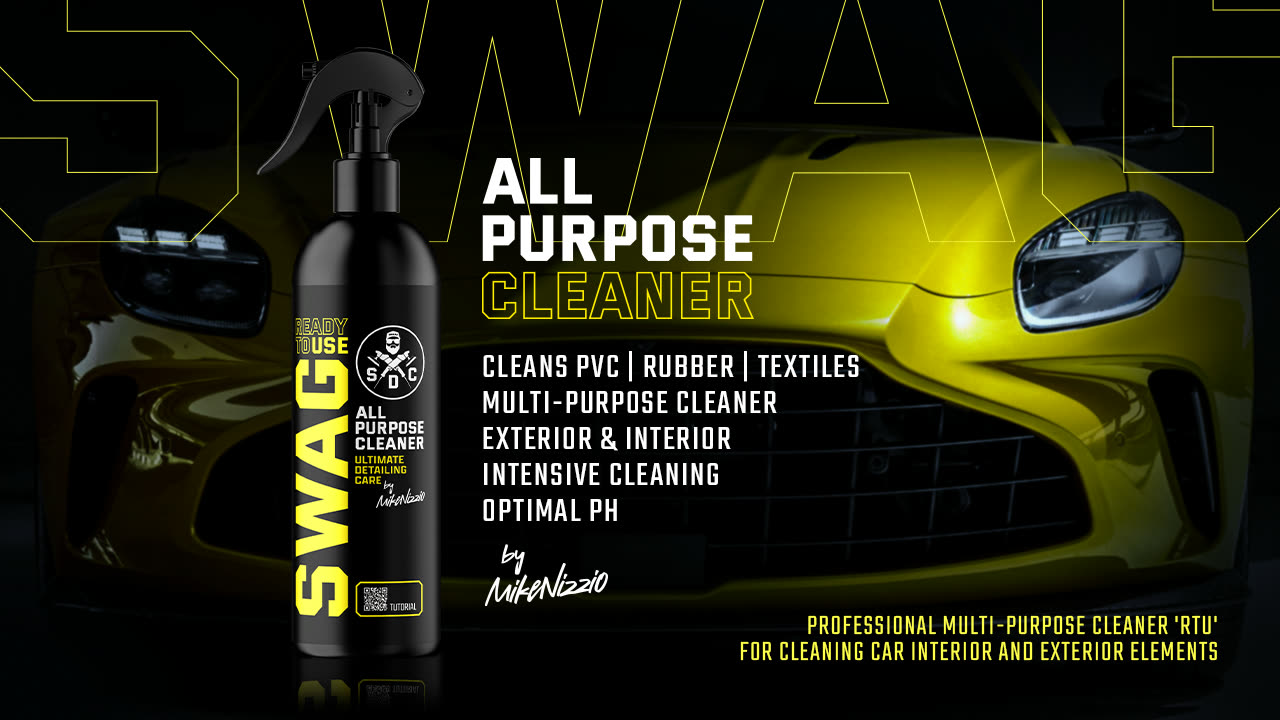
For heavier grease on carpets, mats and hard trim, an all-purpose cleaner earns its keep: SWAG APC RTU, with ratios in my APC dilution guide. Two warnings — an APC is stronger than a textile cleaner, so test it on seat fabric first, and keep it away from leather and Alcantara. Here’s how I use it around an interior:
Ink, biro and dye transfer
Ink is the hardest stain in a car, and I’d rather tell you that now than sell you a miracle. A pen that has leaked into cloth has dyed the fibre, and dye in fibre is not dirt on fibre — you’re trying to remove colour without taking the fabric’s own colour with it.
Work small and slow: dampen a microfibre with cleaner rather than spraying the seat, press it onto the mark, lift, check the cloth. If ink is transferring, keep going with fresh faces. Never rub a biro line — you’ll lengthen it. The solvent tricks you’ll read about online do sometimes shift ink, and they also sometimes lift the seat’s own dye; I don’t use them on customer cars.
Dye transfer is the friendlier cousin — dark jeans on light seats. That’s pigment on the surface, and it usually comes out over repeated gentle passes. Realistically: fresh ink fades a lot, older ink partially, and some leaves a shadow you live with.
Pet accidents, sick and other biological messes
With anything biological the smell tells you whether you’ve finished — if odour returns as the seat dries, residue is still in the foam. Urine, vomit and spilt milk soak far deeper than the visible mark, which is why a surface clean seems to work and then betrays you on the first warm day.
Remove the solids, blot up every bit of liquid with dry towels — press hard — then clean an area wider than the stain: dwell, agitate gently, blot out, repeat. You’re diluting and extracting, so the repetition is the method, not a sign it isn’t working.
Keep the moisture controlled even so: a soaked cushion holds water for days and becomes the damp, musty smell you were trying to remove. If a faint smell survives two full cycles and a proper dry, the mess reached the foam — that’s extractor or trim-specialist territory.
Which stains actually come out?
Here’s my scorecard after thirteen years of other people’s interiors — fresh beats old, and no product changes that.
| Stain | Fresh | Weeks or months old |
|---|---|---|
| Coffee, tea, soft drinks | Comes out fully | Usually out, faint shadow possible |
| Grease, food, makeup | Comes out with dwell time | Mostly out, may take several sessions |
| Ink and biro | Fades a lot | Rarely leaves completely |
| Dye transfer from clothing | Comes out | Out over repeated passes |
| Urine, sick, milk | Colour and smell both go | Colour goes, smell may need extraction |
| Bleach or sun-faded patches | Not a stain — colour is gone | Cannot be cleaned out |
Two rules follow. Don’t keep attacking a stain that has stopped improving — three cycles with no change means you’ve reached what chemistry can do. And if the seat is generally tired rather than spot-stained, cleaning every panel does more for the car than any amount of work on one mark.
Frequently asked questions
How do you clean stains on fabric car seats?
Vacuum, test your cleaner in a hidden spot, then apply it to the stain and slightly beyond, dwell, agitate with a soft brush and blot out with a clean microfibre, repeating in light cycles. Finish by cleaning the whole panel so there’s no halo.
How do you get urine out of a car seat?
Blot out every bit of liquid first with dry towels, then clean an area wider than the stain in repeated cycles, checking the smell as it dries. Odour that returns means residue is still in the foam — repeat rather than mask it. If it survives two thorough rounds, you want a wet extractor.
Can you use washing-up liquid or baking soda on car seats?
I’d avoid both. Washing-up liquid leaves residue that dries sticky and attracts dirt to the patch you just cleaned; dry powders end up in the foam and seams where no vacuum reaches.
Why does the stain come back after the seat dries?
Because it was pushed into the foam rather than lifted out, and drying wicks it back to the surface. The fix is more blotting and less liquid.
What about stains on leather or Alcantara seats?
Different materials, different chemistry. On leather, use a leather cleaner in repeated gentle passes as in my leather guide; on suede and Alcantara, far less moisture and no hard brushing — see how to clean suede and Alcantara car seats.
Gentle cycles, clean cloths, honest expectations. The cleaners I reach for on these stains live in our upholstery cleaning range.