Snow foam is not a gimmick, but the thickness everybody judges it by very nearly is. The genuine job of a pre-wash is to remove loose grit before anything touches the paint, and that is worth doing — most swirl marks in a car’s finish were put there by washing it. What is oversold is the idea that a deep blanket of foam cleans the car on its own. It does not, and the foams that look most impressive are not always the ones that work best. Here is an honest split of what snow foam does, what it does not, and when it is worth the effort.
In this guideWhat snow foam is forThe gimmick part: thicknessWhat it genuinely does wellWhat it does not doFoam without a pressure washerNeutral or alkaline?When it is worth itFAQ
What snow foam is actually for
It is a touchless first stage whose only purpose is to reduce how much grit your mitt has to drag across the paint. That is the whole idea.
Almost all the fine scratching in a car’s clear coat — the swirls you see under a low sun or a petrol station canopy — was caused during washing. Not by the mitt itself, but by particles of road grit the mitt picked up and pushed around. Remove the majority of that grit before you touch anything and you have removed the majority of the risk.
So the correct measure of a pre-wash is not how it looks. It is how much dirt is on the floor before you pick up a wash mitt. The broader thinking is in what is a pre-wash.
The gimmick part: thickness is not cleaning power
Foam thickness is largely a function of the foaming agents and your equipment, not of how well the product cleans. This is the honest answer to the question in the title.
A product can be engineered to produce a spectacular shaving-foam blanket while being a mediocre cleaner, and a thinner, wetter foam that clings and runs slowly can shift far more dirt. What actually matters is dwell time — how long the chemistry stays in contact with the dirt before it slides off or dries.
Very thick foam sometimes works against that. It can sit on top of the grime rather than wetting into it, and it can dry on the panel in warm weather, which is the one thing you must not let a pre-wash do. A foam that clings for a few minutes while staying wet is doing more work than one that looks like a Christmas card.
The other reality is that a lot of the visual difference comes from your lance, your nozzle and your water pressure rather than the bottle. Same product, different setup, completely different photograph.
What it genuinely does well
- Softens and lifts loose grit so the contact wash starts on a much safer surface
- Gets into places a mitt cannot — grilles, badges, shuts, mirror housings, behind spoilers
- Makes coverage visible, so you can see what you have and have not treated
- Extends dwell on vertical panels, which plain shampoo through a hose cannot do
- Reduces how hard you have to work in the contact stage, which is where damage happens
That last point is the one people underrate. The value of a pre-wash is not measured in how clean the car looks after rinsing it off. It is measured in how gently you can wash the car afterwards.
What it does not do
It will not replace the contact wash, and treating it as a full wash on its own is where disappointment comes from.
Snow foam will not remove bonded contamination — tar, iron fallout or tree sap are all chemically bonded and need their own products, covered in iron fallout explained and removing tar from car paint. It will not remove a road film that has been baked on for months. It will not touch water spots. And it will not clean the lower quarter of a car in winter, where the grime is thickest and most stubborn.
It also does not add protection. A foam is a cleaner; if you want gloss and beading you need a separate step, such as a quick detailer or a wax.
Do you need a pressure washer and a foam lance?
For actual foam, yes. For a pre-wash, no. These are two different questions and conflating them is why people think the whole thing is a con.
The thick clinging foam requires a lance that mixes air, water and product under pressure. A pump sprayer produces a wetter, thinner application — but it still delivers chemistry to the dirt and still lets it dwell, which is the part that matters. A hand-pumped pre-wash on a filthy car is dramatically better than going straight in with a mitt.
If you have no pressure washer at all, the honest advice is to spend your money on the wash technique instead: two buckets, a grit guard, and a rinse before contact. Those do more for your paint than any foam. There is a full walkthrough in how to wash a car by hand.
pH-neutral or alkaline — this is the real choice
Far more important than thickness is whether the foam is safe for what is already on your paint.
| Type | Best for | Trade-off |
|---|---|---|
| pH-neutral foam | Regular washes on a waxed, sealed or coated car | Gentler on grime; relies on dwell time |
| Alkaline foam / TFR | Heavy road film, winter salt, neglected cars | Much stronger; will shorten the life of waxes and sealants |
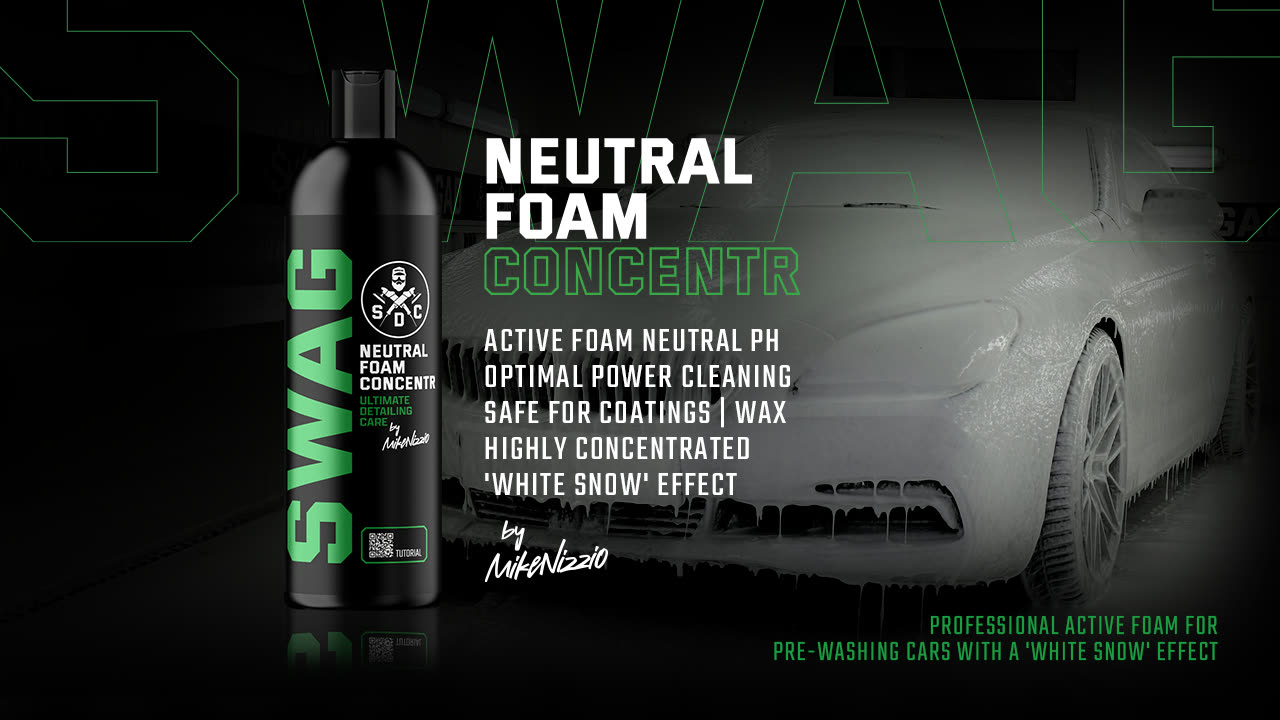
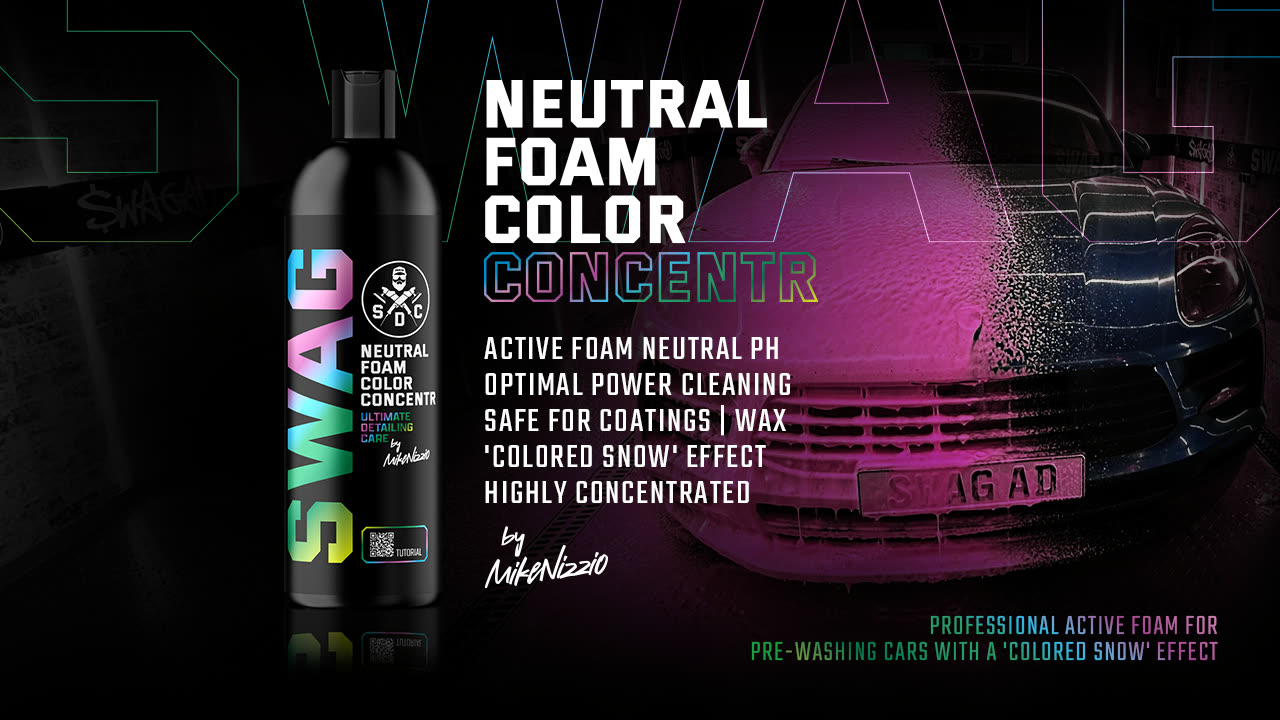
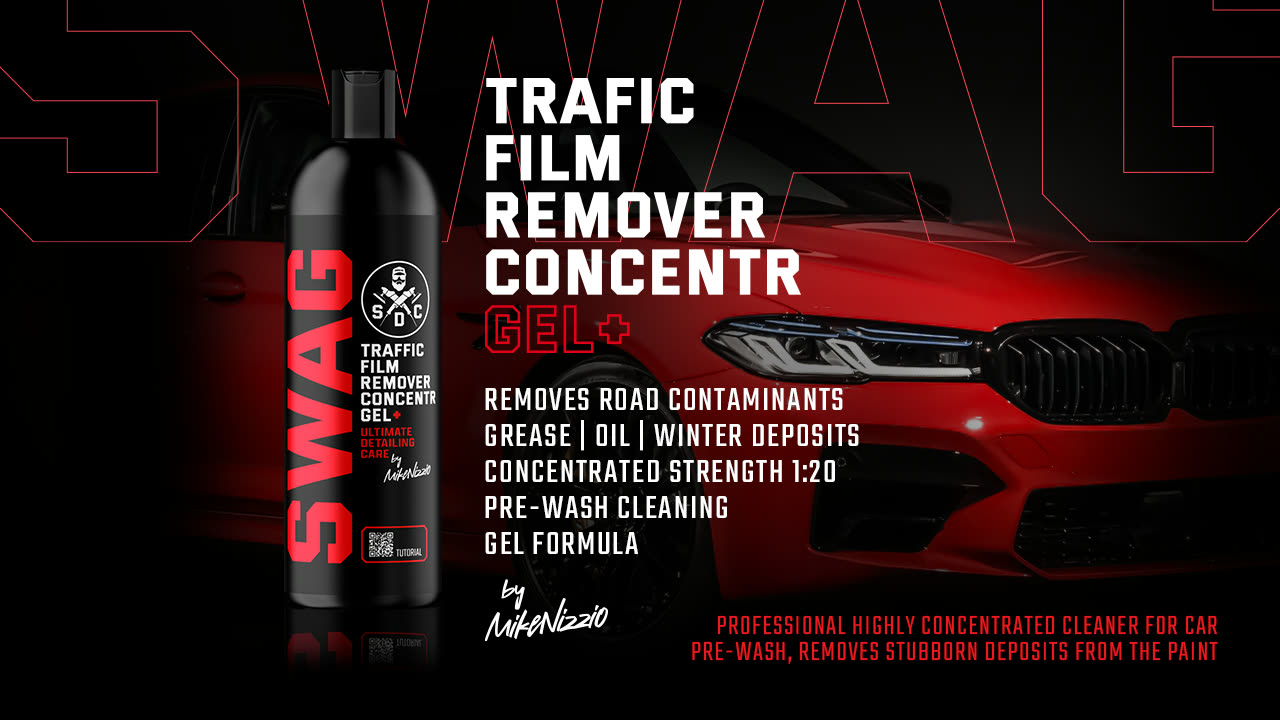
If your car is protected and washed regularly, a neutral foam such as Swag NEUTRAL FOAM 1:20 is the sensible default — it cleans without stripping what you paid for. When a car is genuinely filthy, a traffic film remover like Swag TFR CONCENTRATE GEL+ does what a neutral foam cannot, on the understanding that you will be topping up protection afterwards.
So — worth it, or not?
Worth it if your car gets genuinely dirty and you care about swirl marks. Marginal if you wash a clean car weekly in a soft-water area with good technique.
The people who get the most from snow foam are those with dark paint, cars parked outside, and winter mileage. The people who get the least are those washing an already-clean car, where a rinse and a careful two-bucket wash achieves nearly the same thing.
And if you buy one thing from this article, make it the habit rather than the product: rinse first, let chemistry do the loosening, touch the paint as little and as gently as possible. Snow foam is one convenient way to do that. It is not the only one, and it is not magic.
FAQ
Is thicker foam better?
Not inherently. Thickness comes largely from foaming agents and your equipment, while cleaning comes from the chemistry and how long it stays wet on the panel. A clinging, slightly wetter foam that runs slowly often outperforms a thick blanket that sits on top of the dirt.
Can I snow foam without a pressure washer?
You can pre-wash without one using a pump sprayer, and you will get most of the benefit. You will not get the thick foam appearance, because that needs air mixed under pressure. The dirt does not care what it looked like.
Will snow foam strip my wax or ceramic coating?
A pH-neutral foam is formulated not to. Alkaline foams and traffic film removers are stronger by design and will shorten the life of a wax or sealant, which is a fair trade in winter and a bad one in summer on a freshly protected car.
How long should I leave it on?
Long enough to work, never long enough to dry. Work in the shade, on a cool panel, and rinse before any part of it starts drying — dried product is harder to remove than the dirt you started with. Follow the dwell guidance on the label.
Do I still need to wash the car afterwards?
Yes. A pre-wash removes loose grit and softens the rest; the contact wash is what actually cleans the paint. Anyone selling foam as a complete touchless wash is selling you the gimmick version.
The foams, shampoos and traffic film removers all live in Exterior Washing.