A properly cured ceramic coating cannot be washed, stripped or dissolved off — it has to be abraded off with a machine polish. That is the honest answer, and it is worth knowing before you spend money on products that promise otherwise. A coating bonds to the clear coat and becomes, functionally, a very thin sacrificial layer on top of it. Removing it means removing that layer, which means polishing. This guide covers when removal is genuinely necessary, how it is done, and the cases where the right answer is to leave it and simply top it up instead.
In this guideFirst: do you actually need to remove it?Why chemicals do not workWhat removal really involvesThe methodHigh spots and fresh mistakesA word about paint thicknessWhat to do afterwardsFAQ
First: do you actually need to remove it?
Most people asking this question do not need full removal — they need decontamination or a top-up. It is worth ruling those out first, because they cost nothing in clear coat.
A coating that has stopped beading is often not dead. It is more commonly clogged with road film, iron fallout and traffic grime sitting on top of it, which flattens the water behaviour completely. A proper decontamination — chemical first, then clay if the paint still feels rough — restores hydrophobics on a surprising number of cars people had written off. Start with iron fallout explained and how to use a clay bar.
These are the situations that genuinely call for removal:
- High spots — streaky, rainbow-ish patches left where excess product cured on the surface
- Patchy failure, where beading has gone on some panels and not others and cannot be revived
- Water spots etched into the coating that will not come out
- You want to machine polish the paint underneath — you cannot correct through a coating
- You are applying a new coating and want it to bond to bare, prepared paint
And these do not: dulled gloss, weak beading on a dirty car, or a coating simply reaching the end of its life. In that last case a top-up product is the sensible route — see what is a quick detailer.
Why chemicals do not work
The whole point of a coating is chemical resistance, so a chemical strong enough to remove it would be strong enough to worry about your clear coat.
An alkaline traffic film remover or a strong degreaser will strip a wax or a sealant easily. That works because waxes and sealants sit on the paint as a film. A cured coating is not a film sitting on top — it has formed a hard, cross-linked layer bonded to the surface, and it was engineered specifically to shrug off exactly this kind of chemistry.
You may see a temporary change after a strong TFR — reduced beading, a different feel — and mistake it for removal. What has usually happened is that the surface has been dulled or dried rather than removed, and the coating is still there underneath. Which means a new coating applied on top of it will not bond properly, and you have created a worse problem than you started with.
The exception is fresh, uncured product, which is covered further down.
What removal really involves
Machine polishing with an abrasive compound, panel by panel, followed by a proper degrease. That is the entire process. There is no fast version.
How much cut you need depends on the coating and how well it was applied. A thin consumer spray coating often comes off with a medium polish; a professional multi-layer system genuinely fights back and may need a compound with real bite.
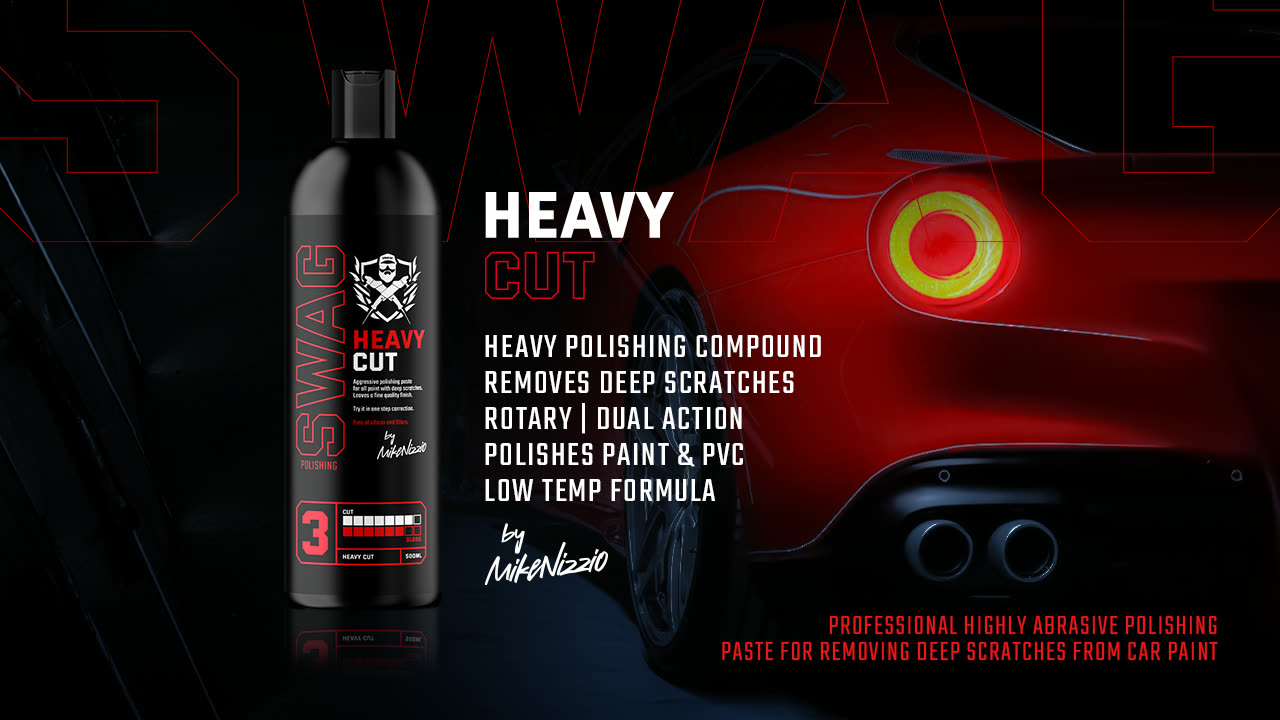
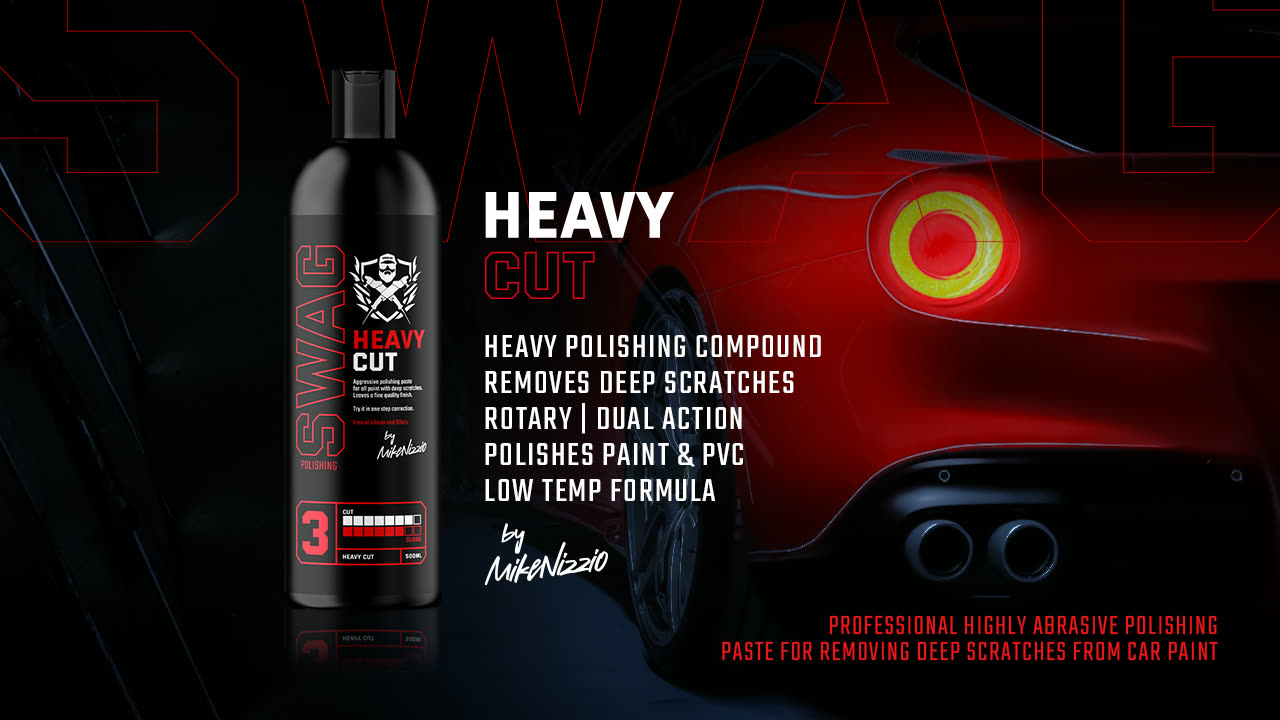
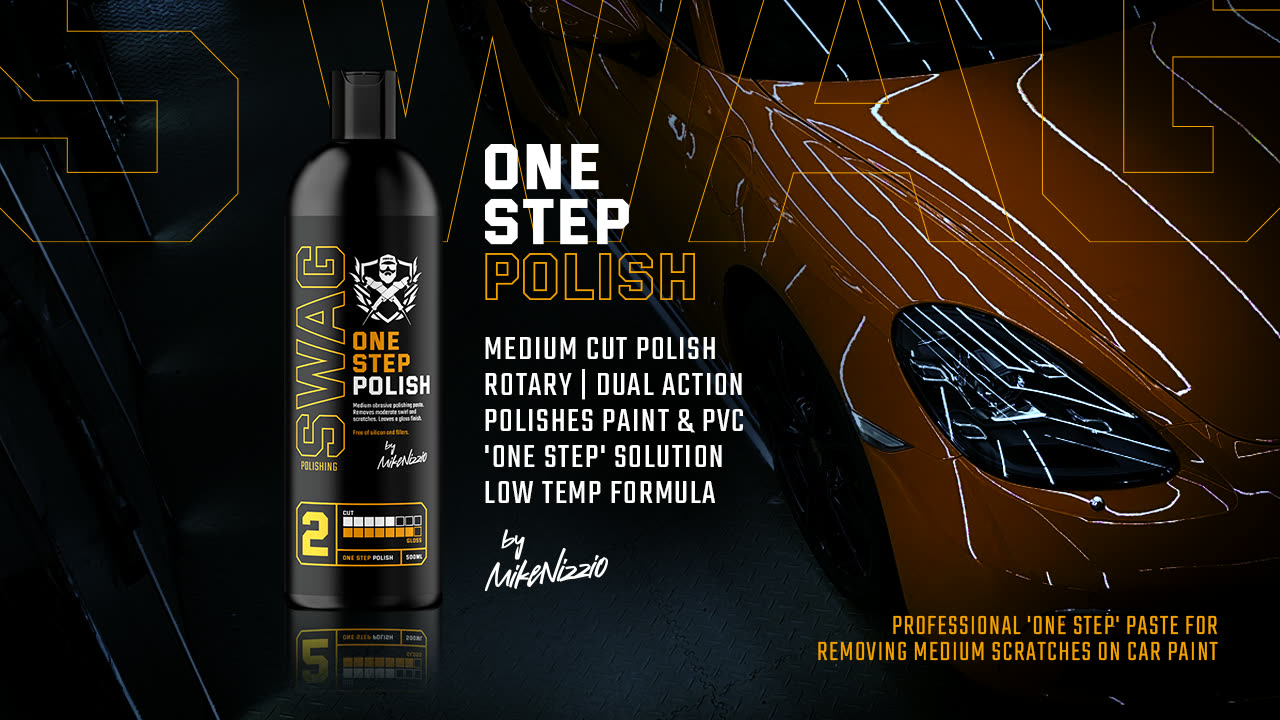
The governing principle is the same as all paint correction: start with the least aggressive combination that gets the job done. Test a small section with a medium polish such as Swag ONE STEP POLISH on a suitable pad first, and only move to Swag HEAVY CUT V.2 if it will not shift. Choosing between them is covered in which polishing compound to use.
The method
- Wash and decontaminate fully. Iron, tar and bonded contamination first — polishing over grit drags it across the paint.
- Clay if the paint still feels rough after chemical decontamination.
- Test one section. Pick an inconspicuous panel, try your mildest polish and pad, and check the result properly under good light.
- Check with water. Rinse or mist the test section — flat water that sheets away rather than beading means the coating is gone there.
- Work panel by panel in small sections, keeping the pad clean and refreshing it regularly. Coating residue loads a pad quickly.
- Degrease as you go with a panel wipe such as Swag FINAL INSPECT V.2. Polishing oils hide both remaining coating and any defects you have not yet dealt with — see the panel wipe guide.
- Refine if needed. A heavy compound leaves its own haze; follow with a finishing polish such as Swag PERFECT FINISH V.2.
- Final degrease over the whole car before anything new goes on.
If you have not machine polished before, this is not the ideal first project — the technique matters and a coating makes the pad behave unusually. DA versus rotary and how to polish a car are the groundwork.
High spots and fresh mistakes are a different case
Caught early enough, a high spot is not a removal job at all. Timing is everything here.
Within the flash window, while the product is still levelling, a high spot usually buffs away with a clean microfibre and light pressure — the fix most people need. Once it is past that but still curing, in the first hours, a dedicated coating remover or panel wipe worked gently on a small area will often take it back without machine work.
Once it has fully cured, it is a machine job like everything else. Which is why the standard advice when applying a coating is to inspect every panel from several angles under strong light before moving on — a high spot found in ten seconds costs nothing, and the same high spot found next week costs an afternoon.
The thing nobody mentions: paint thickness
Every removal costs clear coat, and clear coat does not grow back.
A single careful removal on a healthy factory finish is not something to worry about. Repeated cycles of coat, remove, coat, remove are — and so is aggressive compounding on a car that has already been corrected once or twice, or on a panel that has been resprayed with a thin clear.
Be especially careful on edges and body lines, where clear coat is thinnest and where machines concentrate pressure. If you are unsure how much paint you have to work with, that is exactly the point at which a professional with a paint depth gauge is worth paying — the reasoning around when to pay is in how much car detailing costs.
Do not leave it bare
Paint stripped of its coating has no protection at all, and that state is worse than the failing coating you removed.
Whatever the plan, apply something before the car goes back out. If a new coating is going on, do it after a full degrease so it bonds to genuinely clean paint. If you are not ready, a wax or sealant as an interim is far better than nothing — see how to wax a car and how long paint protection lasts.
FAQ
Will a traffic film remover strip a ceramic coating?
No. It will strip waxes and sealants, and it can dull or dry a coating temporarily so it looks like it worked, but a cured coating stays bonded. If you apply a new coating on top of one that was only dulled, it will not bond properly.
Can I put a new coating over an old one?
Not reliably. Coatings are designed to bond to prepared paint, not to each other, and applying over a degraded layer usually gives poor bonding and a short life. What you can do is use a purpose-made top-up or booster product, which is formulated specifically to refresh an existing coating.
How do I know if the coating is actually gone?
Degrease the section properly, then rinse or mist it with water. Coated paint beads tightly; bare, polished paint lets water sheet and lie flat. Do this after degreasing, because polishing oils will fake either result.
Does removing a coating damage the paint?
It removes a small amount of clear coat, which is normal for any machine polish. Done once, carefully, on a healthy finish, it is not a problem. Done repeatedly, or aggressively on thin or previously corrected paint, it becomes one.
My coating stopped beading after a year. Is it dead?
Often not. Test it properly first: decontaminate the paint chemically, clay if it still feels rough, and see whether the beading returns. A great many coatings written off as failed were simply buried under bonded road film — see how long paint protection actually lasts.
The compounds and polishes are in Paint Polishing, and the coatings themselves live in SWAG Ceramics.